
Endoluminal
Endoluminal refers to medical procedures performed within the lumen, or interior space, of a hollow organ or structure in the body. This approach represents a significant advancement in minimally invasive medicine, offering numerous benefits over traditional open surgery.
Glossary
- Endoluminal procedures involve accessing and treating conditions inside hollow organs through natural orifices or small incisions.
- They are characterized by their minimally invasive nature, often leading to reduced pain, faster recovery, and fewer complications.
- Common applications include diagnostic imaging, therapeutic interventions like stent placement, and tumor removal within the gastrointestinal, respiratory, and vascular systems.
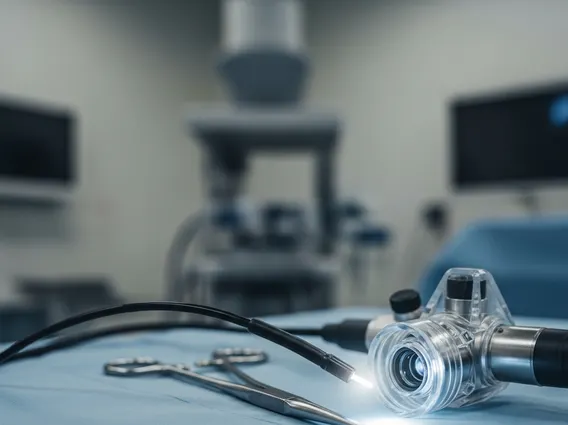
- Techniques rely on specialized instruments such as endoscopes, catheters, and guidewires.
- The field continues to evolve, expanding the range of conditions treatable without extensive surgical intervention.
What is Endoluminal: Definition and Scope
Endoluminal refers to medical interventions performed entirely within the lumen of a tubular organ or structure. This broad term encompasses a range of diagnostic and therapeutic techniques that access internal body spaces, such as the gastrointestinal tract, respiratory airways, blood vessels, or urinary system, through natural openings or small percutaneous punctures. The primary characteristic of an endoluminal procedure is its minimally invasive nature, avoiding large external incisions by working from within the body’s existing pathways.
The endoluminal definition and uses highlight its application in various medical specialties. For instance, in gastroenterology, it allows for the examination and treatment of conditions within the esophagus, stomach, and intestines. In cardiology, it facilitates interventions inside blood vessels, while in pulmonology, it addresses issues within the bronchial tree. These procedures often utilize specialized instruments like endoscopes, catheters, and guidewires, which are advanced through the lumen to visualize, diagnose, and treat pathologies. The scope extends from simple diagnostic biopsies to complex therapeutic interventions, significantly reducing patient recovery times and surgical risks compared to traditional open surgeries.
Endoluminal Procedures: Types and Applications
Endoluminal surgery explained involves a diverse array of techniques designed to treat conditions from within the body’s hollow structures. These procedures are typically performed using flexible or rigid endoscopes equipped with cameras and channels for instruments, allowing surgeons to navigate and operate in confined spaces. The benefits often include smaller incisions (or no incisions at all), less pain, reduced blood loss, lower risk of infection, and quicker return to daily activities. According to a report by the World Health Organization (WHO), minimally invasive surgeries, including endoluminal approaches, have seen a significant increase in adoption globally due to these advantages, improving patient outcomes and healthcare efficiency.
The types of endoluminal treatments are extensive and continue to expand with technological advancements. They can be broadly categorized by the body system they target:
- Gastrointestinal Endoluminal Procedures: Such as endoscopic mucosal resection (EMR) for early-stage gastrointestinal cancers, placement of stents for strictures, and endoscopic retrograde cholangiopancreatography (ERCP) for issues in the bile or pancreatic ducts.
- Vascular Endoluminal Procedures: Including angioplasty and stenting for blocked arteries (e.g., coronary artery disease), endovascular aneurysm repair (EVAR) for abdominal aortic aneurysms, and thrombectomy for blood clot removal.
- Pulmonary Endoluminal Procedures: Involving bronchoscopy for diagnostic biopsies or removal of foreign bodies, and endobronchial valve placement for severe emphysema.
- Urological Endoluminal Procedures: Like cystoscopy for bladder examination and stone removal, and ureteroscopy for kidney stones.
These applications demonstrate the versatility of endoluminal approaches in managing a wide range of medical conditions, often providing effective alternatives to more invasive surgical options.



















