Electrosurgery
Electrosurgery is a widely used surgical technique that employs high-frequency electrical current to cut, coagulate, desiccate, or fulgurate tissue. This method offers precision and efficiency, making it indispensable in various medical specialties.
Key Takeaways
- Electrosurgery utilizes high-frequency electrical current for precise tissue modification.
- It operates through monopolar or bipolar modes, each with distinct mechanisms and applications.
- Common uses include cutting, coagulation, desiccation, and fulguration of tissue.
- Devices vary from simple handheld units to advanced systems, tailored for specific surgical needs.
- Proper understanding and application are crucial for patient safety and optimal surgical outcomes.
What is Electrosurgery (ES): Principles and Mechanisms
Electrosurgery (ES) refers to the application of high-frequency electrical current to biological tissue as a means to achieve surgical effects such as cutting, coagulation, desiccation, or fulguration. This technique is distinct from electrocautery, which involves direct heat transfer from a heated probe. In electrosurgery, the tissue itself generates heat as it resists the passage of the electrical current, leading to cellular changes. The frequency of the current used is typically between 300 kHz and 5 MHz, which is high enough to prevent neuromuscular stimulation, thus avoiding muscle contraction and nerve stimulation.
The underlying principle of this surgical method involves the interaction of electrical current with tissue resistance. When the high-frequency current passes through tissue, the cellular water within the tissue heats up rapidly. If the heat is generated quickly enough, the intracellular and extracellular water boils and vaporizes, causing cells to explode and tissue to be cut. If the heat is generated more slowly, the cells dehydrate and shrink, leading to coagulation. The specific effect—cutting or coagulation—depends on the waveform, voltage, and power settings of the electrosurgical unit (ESU), as well as the contact area and duration of application.
Electrosurgical systems typically operate in one of two modes:
- Monopolar Electrosurgery: In this mode, the current flows from an active electrode at the surgical site, through the patient’s body, to a return electrode (grounding pad) placed elsewhere on the patient’s skin, and back to the ESU. This mode is suitable for large surgical fields and offers versatile cutting and coagulation capabilities.
- Bipolar Electrosurgery: Here, both the active and return electrodes are incorporated into a single instrument, such as forceps. The current flows only between the two tips of the instrument, through a small amount of tissue. This provides precise, localized tissue effects and is particularly useful in delicate procedures or for patients with pacemakers, as it minimizes current spread through the body.
Clinical Applications and Types of Electrosurgery Devices
Electrosurgery uses and applications are extensive, spanning nearly all surgical specialties due to its versatility and precision. It is commonly employed for hemostasis (stopping bleeding) by coagulating blood vessels, and for tissue dissection by precisely cutting through various tissues with minimal blood loss. Specific applications include general surgery, gynecology, urology, orthopedics, plastic surgery, and dermatology. For instance, in dermatology, it’s used for removing skin lesions, while in general surgery, it assists in abdominal procedures. The ability to achieve both cutting and coagulation simultaneously or sequentially makes it an invaluable tool for surgeons.
The types of electrosurgery devices vary significantly, ranging from simple, handheld units to complex, integrated systems. These devices are designed to deliver controlled high-frequency electrical current to the surgical site.
Here are common types of devices based on their function and design:
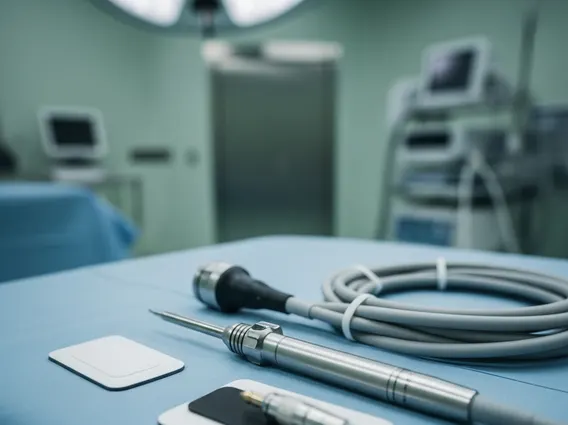
- Electrosurgical Generators (ESUs): These are the main power units that produce and control the high-frequency electrical current. They offer various waveforms (cut, coagulate, blend) and power settings.
- Active Electrodes: These are the instruments that come into direct contact with the tissue. They come in many forms, such as scalpels, needles, loops, balls, and spatulas, each designed for specific surgical tasks.
- Return Electrodes (Dispersive Pads): Used in monopolar electrosurgery, these large pads are placed on the patient’s skin to safely return the current to the ESU, preventing burns by dispersing the current over a wide area.
- Bipolar Forceps: These instruments have two tips that act as active and return electrodes, confining the current to the tissue grasped between them. They are ideal for precise coagulation in small areas.
- Argon Plasma Coagulators (APCs): While technically a form of electrosurgery, APCs use argon gas to deliver the electrosurgical current to the tissue in a non-contact fashion, creating a superficial, broad area of coagulation, often used in endoscopy.
The choice of device and mode depends on the specific surgical procedure, the type of tissue, and the desired effect, ensuring optimal outcomes and patient safety.