Chest Wall
The chest wall is a complex anatomical structure that protects vital organs and facilitates respiration. Understanding its components and purpose is crucial for comprehending various health conditions affecting this region.
Key Takeaways
- The chest wall is a protective cage of bones, cartilage, and muscles safeguarding the heart and lungs.
- Its primary role involves supporting breathing mechanics and providing structural integrity to the upper body.
- Conditions affecting the chest wall can range from muscular strains to inflammatory issues like costochondritis.
- Chest wall pain is a common symptom with diverse origins, often musculoskeletal but sometimes indicative of more serious issues.
- Accurate diagnosis of common chest wall conditions is essential for effective management and relief.
What is the Chest Wall? Anatomy and Function
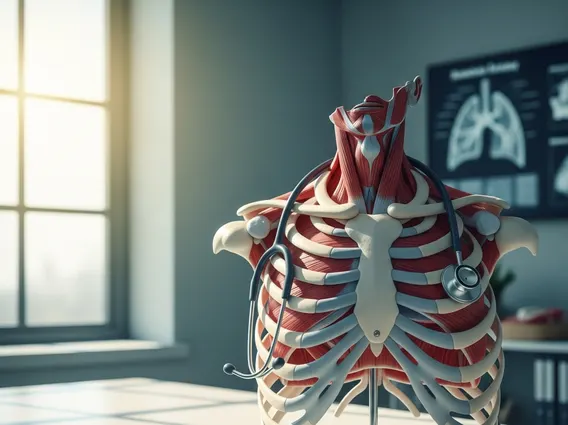
The chest wall is the bony and cartilaginous structure surrounding the thoracic cavity, playing a critical role in protecting internal organs and enabling respiration. It forms a protective cage that houses the heart, lungs, and major blood vessels, defining what is the chest wall in its fundamental sense.
Chest Wall Anatomy
The intricate chest wall anatomy and function are defined by its various components. It primarily consists of the sternum (breastbone) at the front, 12 pairs of ribs curving around the sides, and the 12 thoracic vertebrae at the back. Cartilage connects the ribs to the sternum, allowing for flexibility and movement. Intercostal muscles, located between the ribs, along with the diaphragm, are essential for breathing. Nerves and blood vessels also traverse this region, contributing to its complex structure and sensation.
Key Functions of the Chest Wall
The primary functions of the chest wall are protection and respiration. It acts as a robust shield for the delicate organs within, such as the heart and lungs, against external trauma. Furthermore, its structural integrity and the coordinated movement of its muscles and bones are fundamental for the mechanics of breathing. During inhalation, the intercostal muscles contract, lifting the ribs and expanding the chest cavity, while the diaphragm contracts and flattens. This increases the volume of the thoracic cavity, drawing air into the lungs. Exhalation typically involves passive relaxation of these muscles, though forced exhalation can engage additional muscles.
Common Chest Wall Conditions and Pain
Discomfort or pain in the thoracic region often originates from the structures of the chest wall itself, rather than internal organs. Understanding the various conditions that can affect this area is vital for proper diagnosis and treatment.
Overview of Chest Wall Conditions
A range of common chest wall conditions can lead to discomfort or pain. One prevalent condition is costochondritis, an inflammation of the cartilage that connects the ribs to the sternum, often causing sharp, localized pain. Tietze’s syndrome is similar but involves swelling. Muscle strains, particularly of the intercostal muscles, can occur due to injury, overuse, or vigorous coughing. Rib fractures, though less common, can result from trauma and cause severe pain. Other conditions include nerve impingements, such as intercostal neuralgia, and referred pain from spinal issues. Musculoskeletal causes are a significant contributor to non-cardiac chest pain presentations, underscoring the importance of recognizing chest wall-related issues.
Causes of Chest Wall Pain
The causes of chest wall pain are diverse, ranging from benign musculoskeletal issues to more serious underlying conditions. Musculoskeletal causes are the most frequent, including muscle strains from physical activity or injury, rib contusions, or inflammation of the rib cartilage (costochondritis). Neuropathic pain, arising from nerve irritation or damage, can also manifest as chest wall discomfort, often described as burning or shooting pain. Less common but important causes include infections (e.g., shingles affecting intercostal nerves), tumors, or referred pain from conditions affecting the spine or diaphragm. While often benign, persistent or severe chest wall pain warrants medical evaluation to rule out cardiac or pulmonary involvement, especially if accompanied by other concerning symptoms like shortness of breath or arm pain.