Cardia
The cardia is a crucial anatomical region of the stomach, serving as the gateway between the esophagus and the main body of the stomach. Understanding its structure and function is vital for comprehending the initial stages of digestion and common gastrointestinal issues.
Key Takeaways
- The cardia is the uppermost part of the stomach, located at the junction with the esophagus.
- Its primary role is to prevent the reflux of stomach contents back into the esophagus.
- The lower esophageal sphincter (LES) within the cardia is key to this anti-reflux mechanism.
- Dysfunction of the cardia can lead to conditions like GERD, achalasia, and hiatal hernia.
- Maintaining cardia health is important for efficient digestion and preventing discomfort.
What is Cardia? Location and Anatomy
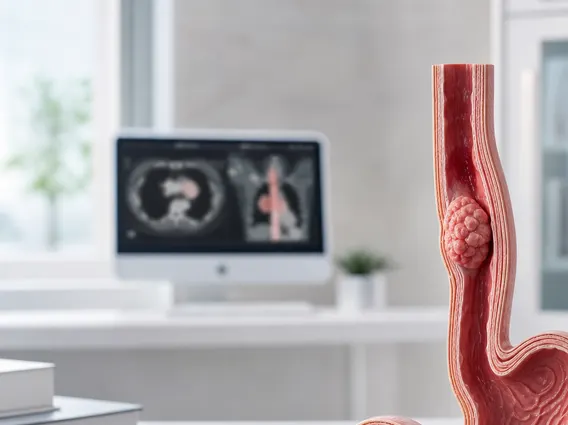
The term cardia refers to the superior opening of the stomach where it connects with the esophagus. To answer the question, “What is the cardia of the stomach?“, it is essentially the entry point for food and liquids into the stomach, positioned just below the diaphragm. This region is distinct from the fundus, body, and pylorus of the stomach, forming a critical anatomical junction.
The location of cardia in digestive system is precisely at the esophagogastric junction, where the stratified squamous epithelium of the esophagus transitions into the columnar epithelium of the stomach. A key anatomical feature of the cardia is the lower esophageal sphincter (LES), a muscular ring that, while not a true anatomical sphincter, functions physiologically to regulate the passage of food and prevent reflux. The angle of His, an acute angle formed between the esophagus and the fundus of the stomach, also contributes to the anti-reflux barrier, working in conjunction with the LES and the diaphragm.
Function and Purpose of the Cardia
The cardia stomach function and purpose are primarily centered around controlling the entry of food into the stomach and, more importantly, preventing the backflow of acidic stomach contents into the esophagus. As food travels down the esophagus, the lower esophageal sphincter (LES) within the cardia relaxes to allow the bolus to pass into the stomach. Once food has entered, the LES contracts, forming a barrier.
This barrier is crucial because the esophagus is not designed to withstand the highly acidic environment of the stomach. The strong muscular contractions of the LES, combined with the diaphragm’s pinchcock effect and the angle of His, create a robust mechanism to maintain gastric contents within the stomach. Without this protective function, individuals would frequently experience heartburn and esophageal damage due to acid reflux.
Conditions Affecting the Cardia
Various cardia medical conditions explained can arise when this critical region malfunctions, leading to significant digestive discomfort and health issues. One of the most common conditions is Gastroesophageal Reflux Disease (GERD), which occurs when the LES weakens or relaxes inappropriately, allowing stomach acid and sometimes bile to flow back into the esophagus. This reflux can cause symptoms like heartburn, chest pain, and difficulty swallowing, and prolonged exposure can lead to esophagitis or even Barrett’s esophagus.
Another condition is achalasia, a rare disorder where the LES fails to relax properly, making it difficult for food and liquid to pass into the stomach. This can lead to food accumulation in the esophagus, regurgitation, and weight loss. Hiatal hernia is also closely related to the cardia; it occurs when a portion of the stomach protrudes upward through the diaphragm into the chest cavity, often weakening the LES and contributing to reflux symptoms. These conditions highlight the importance of the cardia’s integrity for overall digestive health.