
Bronchi
The bronchi are vital components of the human respiratory system, serving as the primary passageways for air to reach the lungs. These tubes branch off from the trachea, playing a crucial role in both air conduction and protection against airborne particles.
Key Takeaways
- The bronchi are the main air passages connecting the trachea to the lungs, branching into smaller airways.
- Their structure includes cartilage, smooth muscle, and ciliated epithelium, facilitating air transport and defense.
- The primary bronchi function in the respiratory system is to conduct, warm, humidify, and filter air before it reaches the gas exchange units.
- They also play a protective role, trapping foreign particles and moving them out of the airways.
- Common diseases affecting bronchi include asthma, bronchitis, and Chronic Obstructive Pulmonary Disease (COPD).
What Are Bronchi? Anatomy & Structure
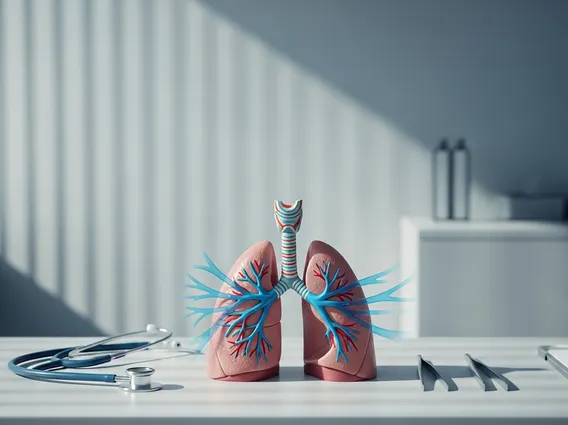
The term bronchi refers to the large air passages that branch from the trachea (windpipe) into the lungs. Specifically, the trachea divides into two main or primary bronchi: the right main bronchus and the left main bronchus. These primary bronchi then further divide into smaller, secondary (lobar) bronchi, which supply air to the lobes of the lungs. The secondary bronchi continue to branch into tertiary (segmental) bronchi, leading to even smaller airways called bronchioles.
The bronchi anatomy and physiology are intricately designed for their function. Their walls contain C-shaped rings of cartilage, similar to the trachea, which provide structural support and prevent collapse. As the bronchi branch into smaller airways, the amount of cartilage decreases, and the proportion of smooth muscle increases. The inner lining of the bronchi consists of a mucous membrane with ciliated epithelial cells. These cilia, tiny hair-like projections, work in conjunction with mucus-producing goblet cells to trap and sweep foreign particles, dust, and pathogens upwards towards the throat, where they can be swallowed or expelled.
Bronchi’s Role in the Respiratory System
The principal bronchi function in the respiratory system is to efficiently conduct air from the trachea to the alveoli, where gas exchange occurs. Beyond simple air transport, the bronchi perform several critical tasks. They contribute to warming and humidifying the inhaled air, ensuring it reaches the delicate lung tissue at an optimal temperature and moisture level. This protective mechanism prevents damage to the alveolar sacs.
Furthermore, the smooth muscle within the bronchial walls allows for regulation of airflow. During physical exertion, these muscles relax, causing bronchodilation and increasing the diameter of the airways to allow more air to enter the lungs. Conversely, during exposure to irritants or in certain conditions like asthma, these muscles can contract, leading to bronchoconstriction and restricted airflow. The continuous cleansing action of the mucociliary escalator, driven by the cilia, is also a vital defense mechanism, preventing harmful substances from reaching the deeper parts of the lungs.
Diseases Affecting the Bronchi
A range of conditions can impact the health and function of these crucial airways, collectively known as diseases affecting bronchi. These diseases often lead to symptoms such as coughing, wheezing, shortness of breath, and chest tightness. One common condition is bronchitis, an inflammation of the bronchial lining, which can be acute (often viral) or chronic (typically linked to long-term irritant exposure like smoking).
Asthma is another prevalent chronic disease characterized by airway inflammation, hyperresponsiveness, and reversible bronchoconstriction. According to the World Health Organization (WHO), asthma affects an estimated 262 million people globally. Chronic Obstructive Pulmonary Disease (COPD), which includes chronic bronchitis and emphysema, is a progressive lung disease primarily caused by long-term exposure to irritants, leading to irreversible airflow limitation and damage to the bronchial tubes and alveoli. Other conditions include bronchiectasis, a permanent widening of the airways due to recurrent infection or inflammation, making them prone to mucus buildup and further infections.



















