Black Snakeroot
Black Snakeroot, scientifically known as Actaea racemosa (formerly Cimicifuga racemosa), is a perennial herb native to eastern North America. It has a long history of use in traditional medicine, particularly for its potential health benefits.
Key Takeaways
- Black Snakeroot is a distinctive perennial herb found in North American woodlands.
- Accurate identification is crucial, focusing on its unique leaves and tall, white flower spikes.
- Historically, it has been valued for various medicinal purposes, especially in women’s health.
- Modern research continues to explore its potential therapeutic properties.
- Consult a healthcare professional before using Black Snakeroot for medicinal purposes.
What is Black Snakeroot?
To understand what is Black Snakeroot, it’s essential to recognize it as a prominent member of the buttercup family (Ranunculaceae). This robust plant is also commonly known as Black Cohosh, Bugbane, or Fairy Candle, reflecting its various characteristics and historical perceptions.
Botanical Profile and Characteristics
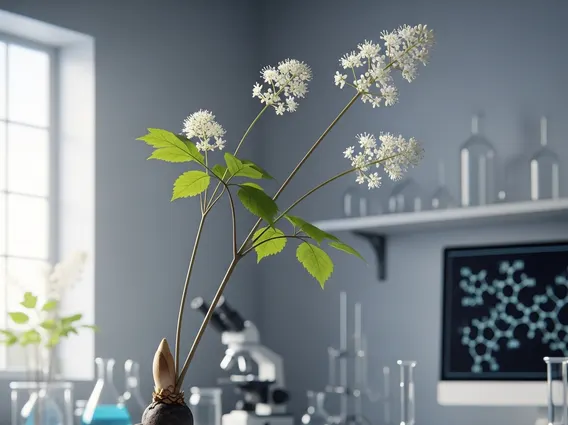
The black snakeroot plant is characterized by its impressive stature, often reaching heights of 3 to 8 feet (1 to 2.4 meters). It features large, deeply cut, compound leaves with serrated edges, typically arranged in groups of three. The most striking feature is its tall, slender, white flower spikes, or racemes, which bloom in late summer to early fall, emitting a somewhat musky fragrance. The plant grows from a thick, knotty rhizome, which is the part traditionally used for medicinal preparations.
Natural Habitat and Growth
Black Snakeroot thrives in the moist, shady environments of deciduous woodlands, forest edges, and clearings across eastern and central North America. Its natural range extends from southern Ontario, Canada, south to Georgia, and west to Missouri. It prefers rich, well-drained soils and is often found growing alongside other native woodland flora, contributing to the biodiversity of these ecosystems.
Identifying Black Snakeroot
Accurate identification of Black Snakeroot is important, especially given its historical medicinal applications and the presence of other plants with similar common names. Learning how to identify black snakeroot involves observing several key visual features.
Key Visual Features
When identifying Black Snakeroot, look for the following characteristics:
- Height: Mature plants can grow quite tall, often exceeding 5 feet.
- Leaves: The leaves are large, compound, and divided into three main sections, each further divided into smaller, toothed leaflets. They are typically dark green.
- Flowers: The distinctive white, bottle-brush-like flower spikes emerge from late summer into early autumn, standing tall above the foliage. Unlike some other plants, the flowers lack true petals and instead feature numerous prominent stamens.
- Rhizome: The root system consists of a thick, dark, knotty rhizome, which is the part harvested for medicinal use.
Distinguishing from Look-Alikes
It is crucial to differentiate Black Snakeroot from other plants, particularly White Snakeroot (Ageratina altissima), which is highly toxic. While both share “snakeroot” in their common names, their botanical features are quite distinct. White Snakeroot has simpler, untoothed leaves and clusters of small, white, flat-topped flowers that appear earlier in the season. The tall, spiky inflorescence and deeply divided leaves of Actaea racemosa are key distinguishing features.
Black Snakeroot: Benefits and Medicinal Uses
The interest in Black snakeroot benefits and uses dates back centuries, with indigenous peoples recognizing its therapeutic potential long before European settlement. Its applications have evolved, but its reputation as a valuable herbal remedy persists.
Traditional and Folk Applications
Historically, Native American tribes utilized Black Snakeroot for a variety of ailments, particularly those related to women’s health. It was traditionally employed to alleviate menstrual discomfort, ease labor pains, and address symptoms associated with menopause. Beyond gynecological uses, it was also applied for musculoskeletal pain, fever, coughs, and as an anti-inflammatory agent. Early European settlers adopted many of these traditional uses, further cementing its place in folk medicine.
Potential Health Benefits
Modern scientific research has begun to investigate the black snakeroot medicinal properties, focusing on compounds such as triterpene glycosides and phenolic acids. Studies have explored its potential efficacy in managing menopausal symptoms, particularly hot flashes and night sweats, although results have been varied. Some research suggests it may exert estrogen-like effects or interact with neurotransmitters, but the exact mechanisms are still being elucidated. Additionally, its anti-inflammatory properties are being examined for conditions involving pain and inflammation.
Disclaimer: The information provided in this article about Black Snakeroot is for educational purposes only and is not intended to be a substitute for professional medical advice, diagnosis, or treatment. Always seek the advice of your physician or other qualified health provider with any questions you may have regarding a medical condition or before starting any new treatment. The use of herbal supplements should always be discussed with a healthcare professional, especially if you are pregnant, nursing, have a medical condition, or are taking other medications.