Bispecific T Cell Engager
Bispecific T cell engagers represent a groundbreaking class of immunotherapy designed to harness the body’s own immune system to fight cancer. These innovative agents act as a bridge, connecting immune cells directly to cancer cells to facilitate their destruction.
Key Takeaways
- A Bispecific T Cell Engager is a type of immunotherapy that links T cells and cancer cells.
- They function by having two binding sites: one for a T cell receptor (CD3) and another for a specific antigen on cancer cells.
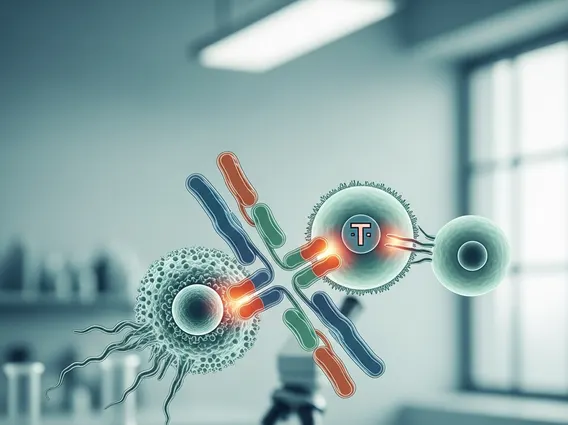
- This dual binding brings T cells into close proximity with tumor cells, activating the T cells to eliminate the cancer.
- These therapies are primarily used in oncology, showing significant promise in treating various hematological malignancies and solid tumors.
- Ongoing research continues to expand their applications and improve their safety profiles.
What is a Bispecific T Cell Engager?
A Bispecific T Cell Engager (BiTE) is a specialized type of monoclonal antibody engineered to bind to two different targets simultaneously. To answer what are bispecific t cell engagers, they are essentially molecular bridges. One arm of the BiTE molecule specifically binds to the CD3 receptor complex found on the surface of T cells, which is crucial for T cell activation. The other arm targets a specific antigen expressed on the surface of cancer cells. This dual-targeting mechanism allows the BiTE to physically bring a patient’s T cells into direct contact with tumor cells, regardless of the T cell’s original specificity, thereby initiating an immune response against the cancer.
This innovative approach overcomes limitations of traditional immunotherapies by directly engaging and activating T cells against malignant cells, offering a highly targeted and potent therapeutic strategy. The development of these molecules has significantly advanced the field of immuno-oncology, providing new avenues for treating difficult-to-manage cancers.
How Bispecific T Cell Engagers Work and Their Uses
Understanding how bispecific T cell engagers work is key to appreciating their therapeutic potential. These agents are designed to redirect the body’s immune cells to specifically attack cancerous cells. The therapeutic intent behind bispecific T cell engager therapy explanation is to leverage the inherent power of the immune system with enhanced precision.
Mechanism of Action
The primary mechanism of action for bispecific T cell engagers involves their unique ability to form a synaptic-like connection between a T cell and a cancer cell. Upon administration, the engager molecules circulate in the bloodstream. When an engager encounters a T cell, one of its binding sites attaches to the CD3 protein on the T cell surface. Simultaneously, the other binding site seeks out and attaches to a specific tumor-associated antigen (TAA) present on the cancer cell. This physical linkage brings the T cell and the cancer cell into close proximity.
Once this bridge is formed, the T cell becomes activated, leading to a cascade of events. The activated T cell releases cytotoxic granules containing perforin and granzymes, which induce apoptosis (programmed cell death) in the target cancer cell. This process is highly efficient and can lead to the destruction of multiple cancer cells by a single T cell, as the T cell can detach and re-engage with other cancer cells after eliminating its target. This mechanism ensures a potent and localized anti-tumor response.
Clinical Applications
The bispecific T cell engager applications are primarily in the field of oncology, particularly for hematological malignancies and, increasingly, for solid tumors. They have shown remarkable efficacy in patients with certain types of leukemia and lymphoma who have relapsed or are refractory to conventional treatments. For instance, Blinatumomab, one of the first approved BiTEs, has demonstrated significant response rates in adults and children with relapsed or refractory B-cell precursor acute lymphoblastic leukemia (ALL).
According to the American Cancer Society, ALL is a rapidly progressing cancer that can be challenging to treat, highlighting the critical need for innovative therapies like BiTEs. Beyond ALL, ongoing clinical trials are exploring the use of bispecific T cell engagers in multiple myeloma, non-Hodgkin lymphoma, and various solid tumors such, as lung, gastric, and ovarian cancers. While these therapies offer significant promise, research continues to refine their design, improve safety profiles, and expand their reach to a broader range of cancers, aiming to provide more effective and durable treatment options for patients.