
Atypical Ductal Breast Hyperplasia
Atypical Ductal Breast Hyperplasia (ADH) is a non-cancerous breast condition characterized by an abnormal increase in cells lining the milk ducts. While not cancer itself, it signifies an elevated risk for developing breast cancer in the future.
Key Takeaways
- ADH is a benign (non-cancerous) condition involving abnormal cell growth in breast ducts.
- It typically presents with no noticeable atypical ductal hyperplasia symptoms and is often found incidentally during biopsies.
- Diagnosis relies on microscopic examination of breast tissue obtained through biopsy.
- Women with ADH have an increased atypical ductal hyperplasia breast cancer risk, necessitating enhanced surveillance.
- Atypical ductal hyperplasia treatment often involves surgical excision and close monitoring.
What is Atypical Ductal Breast Hyperplasia?
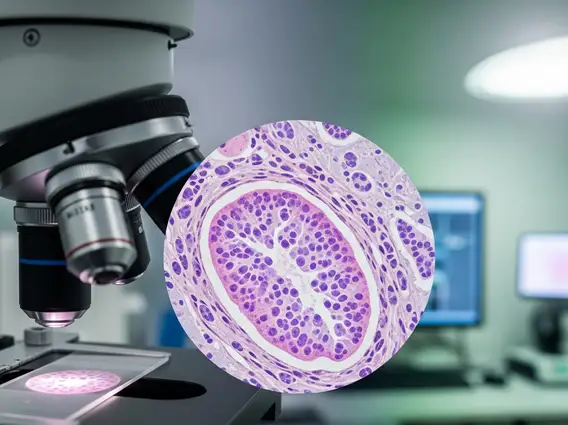
What is Atypical Ductal Breast Hyperplasia (ADH)? It is a benign (non-cancerous) breast condition where there is an overgrowth of cells within the milk ducts of the breast, and these cells show some abnormal features under a microscope. Unlike typical hyperplasia, where cells grow excessively but appear normal, ADH cells exhibit architectural and cytological changes that are a step closer to ductal carcinoma in situ (DCIS) and invasive breast cancer. It is considered a marker of increased risk rather than a pre-cancerous lesion itself. According to the American Cancer Society, ADH is found in about 4-5% of benign breast biopsies, indicating its relative rarity but significant clinical importance.
Recognizing Atypical Ductal Hyperplasia
Unlike many breast conditions, atypical ductal hyperplasia symptoms are typically absent. Women usually do not feel a lump or experience pain related to ADH. Instead, it is most often discovered incidentally when a biopsy is performed for another reason, such as an abnormal finding on a mammogram (like microcalcifications) or during a biopsy for a benign-appearing mass. Its silent nature underscores the importance of regular screening and thorough diagnostic follow-up for any suspicious breast changes.
How Atypical Ductal Hyperplasia Is Diagnosed
Diagnosis of ADH begins with imaging studies, such as mammography, ultrasound, or MRI, which may reveal suspicious areas. If an abnormality is detected, a breast biopsy is performed to obtain tissue for microscopic examination. This can be a core needle biopsy or a surgical excisional biopsy. A pathologist then examines the tissue, looking for specific cellular characteristics and growth patterns that define ADH. The presence of these atypical cells within the ducts confirms the diagnosis. Due to the potential for ADH to coexist with or mask a more serious condition, an excisional biopsy is often recommended after a core needle biopsy diagnosis to ensure the entire area of concern has been removed and thoroughly evaluated.
Management and Breast Cancer Risk
The primary concern with ADH is its association with an increased risk of developing invasive breast cancer. Studies have shown that women diagnosed with ADH have a significantly higher lifetime risk of breast cancer, approximately 4 to 5 times that of women without ADH, according to the National Cancer Institute. This elevated risk applies to both breasts, not just the one where ADH was found.
Regarding atypical ductal hyperplasia treatment, once ADH is diagnosed via core needle biopsy, surgical excision is often recommended to remove the entire area of atypical cells and ensure no co-existing cancer was missed. After excision, management focuses on risk reduction and enhanced surveillance. This typically includes:
- Increased Surveillance: Regular clinical breast exams, annual mammograms, and often supplemental imaging like MRI, especially for women with additional risk factors.
- Risk-Reducing Medications: For some women, medications such as tamoxifen or raloxifene may be considered to reduce the risk of future breast cancer, after a thorough discussion with their healthcare provider about potential benefits and side effects.
- Lifestyle Modifications: Maintaining a healthy weight, limiting alcohol consumption, and regular physical activity can contribute to overall breast health.
Understanding the implications of atypical ductal hyperplasia breast cancer risk is crucial for patients and their healthcare providers to develop an individualized management plan aimed at early detection and, where appropriate, risk reduction strategies.



















