Antibody
Antibodies are crucial components of the adaptive immune system, defending the body against pathogens. These Y-shaped proteins are key to understanding how the immune system identifies and neutralizes threats.
Key Takeaways
- Antibodies are Y-shaped proteins produced by B cells, essential for adaptive immunity.
- They specifically recognize and bind to unique foreign molecules called antigens.
- Antibodies neutralize pathogens, mark them for destruction, and activate other immune responses.
- Five main classes (IgG, IgA, IgM, IgE, IgD) each have distinct functions and locations.
- Their precise action is fundamental to vaccine efficacy and long-term protection.
What is an Antibody?
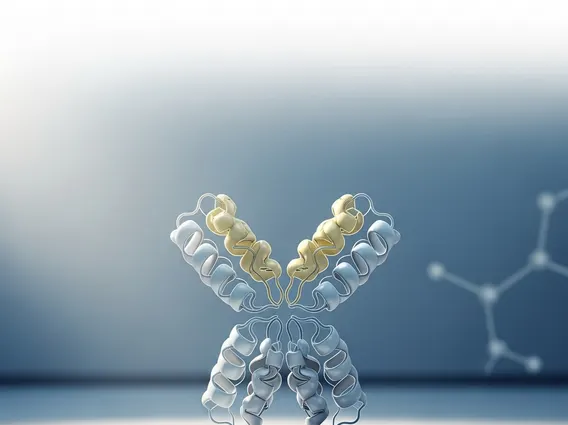
An antibody (immunoglobulin or Ig) is a large, Y-shaped protein produced by plasma cells. It identifies and neutralizes foreign objects like bacteria and viruses. Essentially, what is an antibody is the body’s specific defense mechanism, targeting particular threats.
Basic Structure and Components
Each antibody molecule has four polypeptide chains: two heavy and two light, linked by disulfide bonds. This forms two identical antigen-binding sites (Fab regions). The stem (Fc region) interacts with other immune cells.
How Antibodies Recognize Antigens
Antibodies’ unique ability is exquisite specificity. They recognize and bind to specific molecular structures, called antigens, found on pathogens or toxins. This selective binding ensures each antibody targets only a particular threat, fundamental to understanding what is an antibody and its immune role.
How Antibodies Function in the Immune System
Antibodies primarily eliminate pathogens and toxins. The diverse mechanisms by which how do antibodies work contribute to robust immunity, from direct neutralization to signaling other immune components.
Neutralization and Opsonization
Neutralization involves antibodies binding to pathogens or toxins, preventing their interaction with host cells (e.g., blocking viral entry). Opsonization coats a pathogen, making it more recognizable for phagocytic cells (e.g., macrophages) to engulf and destroy.
Complement Activation and ADCC
Antibodies also activate the complement system, a cascade of plasma proteins that can lyse pathogens or enhance phagocytosis. The Fc region of bound antibodies initiates this. Furthermore, antibodies mediate Antibody-Dependent Cell-mediated Cytotoxicity (ADCC). Here, antibodies bind to infected or tumor cells, and their Fc regions are recognized by natural killer (NK) cells, which then kill the target cells. These actions highlight the multifaceted antibody function in immune system.
Types of Antibodies Explained
The human immune system produces five main classes of antibodies: IgG, IgA, IgM, IgE, and IgD. Each has distinct structural features, locations, and biological functions. Understanding these classes is crucial for comprehending the full scope of types of antibodies explained.
IgG, IgA, IgM: Primary Classes
- IgG (Immunoglobulin G): Most abundant (approx. 75% of total serum Ig). Crucial for long-term immunity, crosses the placenta, and involved in neutralization, opsonization, and complement activation.
- IgA (Immunoglobulin A): Found in mucosal secretions (tears, saliva, breast milk). Forms dimers, protecting external body surfaces.
- IgM (Immunoglobulin M): Pentamer in serum, making it the largest. First antibody produced in initial infection, highly effective at activating the complement system.
IgE and IgD: Specialized Roles
- IgE (Immunoglobulin E): Very low serum concentrations. Associated with allergic reactions and defense against parasitic infections. Binds to mast cells and basophils, triggering histamine release.
- IgD (Immunoglobulin D): Mainly on naive B lymphocyte surfaces, acting as a B cell receptor. Involved in B cell activation and signaling; its precise function is still being researched.