131i Mibg
131I MIBG, or Iobenguane, is a specialized radiopharmaceutical used in nuclear medicine for both diagnosing and treating certain neuroendocrine tumors. This agent leverages specific biological pathways to target diseased cells.
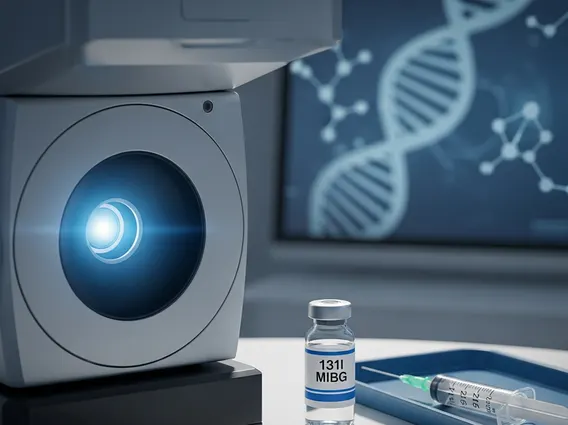
Key Takeaways
- 131I MIBG (Iobenguane) is a radioactive drug targeting neuroendocrine tumors.
- It consists of a molecule similar to norepinephrine, labeled with radioactive iodine-131.
- Used diagnostically to locate tumors and assess disease extent through imaging.
- Employed therapeutically to deliver targeted radiation directly to cancer cells.
- Primarily treats conditions like neuroblastoma, pheochromocytoma, and paraganglioma.
What is 131i MIBG (Iobenguane) and How It Works
131I MIBG, short for Iobenguane labeled with iodine-131, is a radiopharmaceutical agent crucial in the field of nuclear medicine. It is a synthetic analog of guanethidine, which structurally resembles norepinephrine, a neurotransmitter. This structural similarity allows 131I MIBG to be selectively taken up by cells that have norepinephrine transporters, such as those found in certain neuroendocrine tumors.
The “131I” in 131I MIBG refers to Iodine-131, a radioactive isotope. This isotope emits both gamma rays, which are detectable by specialized cameras for diagnostic imaging, and beta particles, which deliver therapeutic radiation to destroy targeted cells. The mechanism of action for 131I MIBG involves its active transport into adrenergic neurons and neuroendocrine cells, where it is then stored in intracellular vesicles. Once inside these cells, the radioactive iodine-131 delivers its radiation directly to the tumor, minimizing exposure to healthy surrounding tissues.
This targeted approach makes 131I MIBG particularly effective for conditions characterized by cells that overexpress norepinephrine transporters. These include:
- Neuroblastoma, a common childhood cancer originating from immature nerve cells.
- Pheochromocytoma, a rare tumor of the adrenal glands.
- Paraganglioma, tumors that arise from paraganglia, which are clusters of neuroendocrine cells.
According to the American Cancer Society, neuroblastoma accounts for about 6% of all cancers in children, highlighting the importance of targeted therapies like 131I MIBG in pediatric oncology.
131i MIBG: Diagnostic Scans and Therapeutic Applications
The versatility of 131I MIBG extends to both diagnostic imaging and targeted radionuclide therapy. The specific application depends on the dose of the radiopharmaceutical administered and the clinical objective.
For diagnostic purposes, 131I MIBG scan uses involve administering a small, tracer dose of the agent. Once injected, the 131I MIBG accumulates in neuroendocrine tumors. A gamma camera then detects the emitted gamma rays, creating detailed images that highlight the location, size, and extent of the tumors. This diagnostic scan is invaluable for initial staging, detecting metastases, and monitoring disease progression or response to other treatments. It helps clinicians determine if a patient has MIBG-avid disease, which is crucial for considering 131I MIBG as a therapeutic option.
Conversely, 131I MIBG therapy explanation focuses on delivering a much higher, therapeutic dose of the radiopharmaceutical. In this context, the beta particles emitted by iodine-131 are the primary agents of treatment. These particles have a short range in tissue, typically only a few millimeters, ensuring that the radiation is concentrated within the tumor cells that have absorbed the 131I MIBG. This internal radiation therapy aims to destroy cancer cells while sparing adjacent healthy tissues as much as possible. Patients undergoing therapeutic administration require specific preparations, including blocking the thyroid gland with non-radioactive iodine to prevent its uptake of 131I, and often hospitalization for radiation safety protocols.
The dual role of 131I MIBG underscores its significance in managing specific neuroendocrine cancers. Its ability to both visualize and treat these challenging conditions makes it a cornerstone in personalized oncology approaches.