
Sphenoid Bone
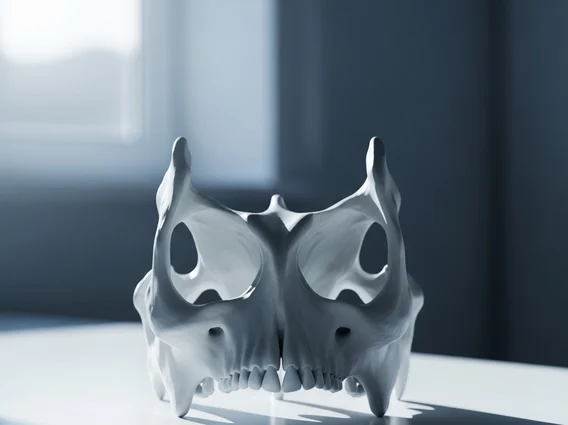
The Sphenoid Bone is a complex and vital component of the human skull, playing a crucial role in forming the base of the cranium and contributing to the structure of the eye orbits, nasal cavity, and middle cranial fossa. Its unique shape and central location make it a cornerstone bone, articulating with almost all other cranial bones.
Key Takeaways
- The Sphenoid Bone is a butterfly-shaped cranial bone situated at the base of the skull, central to the cranium.
- It forms significant portions of the eye orbits, nasal cavity, and the floor of the middle cranial fossa.
- Its intricate anatomy comprises a body, greater wings, lesser wings, and pterygoid processes.
- The Sphenoid Bone houses critical structures such as the sella turcica, which cradles the pituitary gland, and numerous foramina for the passage of nerves and blood vessels.
- Its clinical importance stems from its role in protecting vital neurological and vascular structures, and its involvement in various medical conditions, including fractures and tumors.
What is the Sphenoid Bone?
The Sphenoid Bone is an unpaired bone of the neurocranium, characterized by its distinctive butterfly or bat-like shape. Located at the base of the skull, it is a central bone that articulates with the frontal, parietal, temporal, occipital, ethmoid, and palatine bones, as well as the vomer and zygoma. This anatomical position makes it a critical structural link between the facial skeleton and the neurocranium, contributing significantly to the stability and integrity of the skull. It is a highly pneumatized bone, containing the sphenoidal sinuses, which are air-filled cavities that lighten the skull and contribute to voice resonance.
Sphenoid Bone Anatomy, Location, and Function
The sphenoid bone anatomy and function are remarkably complex, reflecting its central role in the skull. Structurally, it is divided into several key parts:
- Body: The central cubical portion, housing the sphenoidal sinuses and the sella turcica, a saddle-shaped depression that cradles the pituitary gland.
- Greater Wings: Extending laterally from the body, these wings form part of the floor of the middle cranial fossa and the lateral walls of the skull, as well as the posterior walls of the orbits.
- Lesser Wings: Projecting anteriorly and superiorly from the body, they form part of the floor of the anterior cranial fossa and the roof of the orbits.
- Pterygoid Processes: Descending vertically from the junction of the body and greater wings, these processes provide attachment points for muscles of mastication and form part of the lateral walls of the nasal cavity.
The Sphenoid Bone is located as the keystone of the cranial base, situated anterior to the temporal bones and basilar part of the occipital bone, and posterior to the frontal and ethmoid bones. Its strategic placement allows it to contribute to the formation of multiple cranial fossae, the orbital cavities, and the nasal cavity. Functionally, the Sphenoid Bone serves several vital purposes. It protects the pituitary gland within the sella turcica, provides pathways for cranial nerves and blood vessels through numerous foramina (such as the optic canal, superior orbital fissure, foramen rotundum, foramen ovale, and foramen spinosum), and offers attachment sites for various muscles. These functions underscore its importance in vision, sensation, mastication, and overall neurological integrity.
Clinical Significance of the Sphenoid Bone
The sphenoid bone importance in clinical practice is substantial due to its intricate anatomy and central location. Its close proximity to vital neurovascular structures means that pathologies affecting the Sphenoid Bone can have widespread implications. Fractures of the Sphenoid Bone, often resulting from severe head trauma, can lead to serious complications such as cerebrospinal fluid leaks, damage to cranial nerves (particularly the optic nerve), and internal carotid artery injury. The sphenoidal sinuses are a common site for sinusitis, and their surgical access is crucial for procedures like transsphenoidal hypophysectomy, a common approach for removing pituitary tumors. Tumors originating from or invading the Sphenoid Bone, such as chordomas or meningiomas, pose significant challenges due to their proximity to the brainstem, cranial nerves, and major blood vessels. Furthermore, congenital anomalies or developmental variations of the Sphenoid Bone can impact skull base integrity and neurological function, necessitating careful diagnostic imaging and management. Its role as a central hub for cranial nerve and vascular passage makes it a critical landmark for radiologists and surgeons alike.



















