Spermatic Cord
The Spermatic Cord is a crucial anatomical structure in males, extending from the deep inguinal ring through the inguinal canal to the testis. It serves as a vital conduit, housing various components essential for testicular function and support.
Key Takeaways
- The Spermatic Cord is a tube-like structure in males that connects the abdomen to the testicles.
- It contains essential components like the vas deferens, blood vessels, nerves, and lymphatic vessels.
- Its primary functions include sperm transport, blood supply to the testes, and nerve innervation.
- Conditions affecting the Spermatic Cord, such as varicocele or torsion, can lead to significant pain and other complications.
- Understanding its anatomy and potential issues is key to diagnosing and treating related medical conditions.
What is the Spermatic Cord?
The Spermatic Cord refers to the cord-like structure in males that extends from the abdominal cavity to each testicle. It is formed by the gathering of various structures that supply the testes and epididymis, and it traverses the inguinal canal. This essential anatomical bundle plays a critical role in the male reproductive system, providing both structural support and vital connections for testicular function. Its integrity is fundamental for sperm production, transport, and overall testicular health.
Spermatic Cord Anatomy and Function
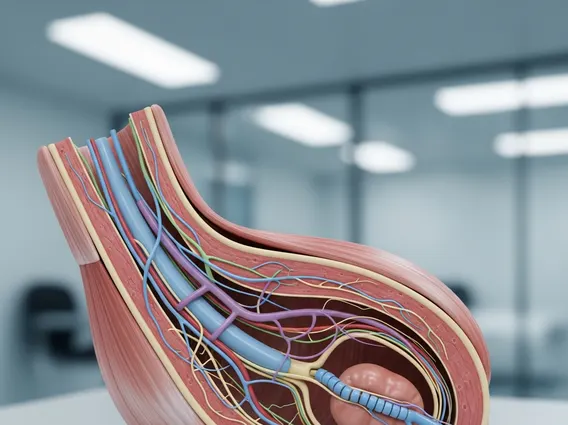
The spermatic cord anatomy and function are intricate, involving several distinct components working in concert. Encased within layers of fascia, the cord houses structures vital for testicular viability and reproductive capability. Understanding these components is key to appreciating its multifaceted role in male physiology.
The primary components of the Spermatic Cord include:
- Vas Deferens: A muscular tube responsible for transporting sperm from the epididymis to the ejaculatory duct.
- Testicular Artery: Supplies oxygenated blood to the testis and epididymis.
- Pampiniform Plexus: A network of veins that drains deoxygenated blood from the testis and helps regulate testicular temperature through a countercurrent heat exchange mechanism.
- Nerves: Including branches of the genitofemoral and ilioinguinal nerves, which provide sensory innervation to the scrotum and motor innervation to the cremaster muscle.
- Lymphatic Vessels: Drain lymph from the testis and epididymis.
- Cremaster Muscle: A thin layer of skeletal muscle that surrounds the testis and Spermatic Cord, responsible for elevating and lowering the testis to regulate temperature.
Collectively, these structures ensure the proper functioning of the testes, from sperm transport and blood supply to temperature regulation and sensory feedback, all crucial for male fertility and health.
Spermatic Cord Conditions and Pain Causes
Various conditions can affect the Spermatic Cord, leading to discomfort or significant pain. Understanding spermatic cord conditions explained is vital for diagnosis and treatment. Spermatic cord pain causes can range from inflammatory processes to structural abnormalities, each presenting with distinct symptoms and requiring specific medical attention.
Common conditions affecting the Spermatic Cord include:
- Varicocele: This condition involves the enlargement of the pampiniform plexus veins within the Spermatic Cord, often described as feeling like a “bag of worms.” It is a common cause of male infertility and can lead to a dull ache or heavy sensation in the scrotum, particularly after physical activity or prolonged standing. Varicoceles are estimated to affect about 15% of the general male population and up to 40% of men presenting with primary infertility, according to the American Urological Association.
- Spermatic Cord Torsion: A medical emergency where the Spermatic Cord twists, cutting off blood supply to the testicle. This causes sudden, severe testicular pain, swelling, and tenderness. It requires immediate surgical intervention to save the testicle.
- Epididymitis: While primarily an inflammation of the epididymis, it can cause pain that radiates along the Spermatic Cord. It is often caused by bacterial infection and presents with gradual onset of pain, swelling, and tenderness.
- Hydrocele: A collection of fluid around the testicle, often within the tunica vaginalis, which can sometimes extend along the Spermatic Cord. While usually painless, a large hydrocele can cause a feeling of heaviness or discomfort.
- Inguinal Hernia: Occurs when a portion of the intestine or fatty tissue protrudes through a weak spot in the abdominal wall, often into the inguinal canal, alongside or within the Spermatic Cord. This can cause a bulge in the groin, pain, and discomfort, especially when coughing, bending over, or lifting heavy objects.
Pain associated with these conditions can vary in intensity and character, from a persistent dull ache to sudden, sharp, and debilitating pain. Prompt medical evaluation is crucial for accurate diagnosis and effective management of any Spermatic Cord-related symptoms.