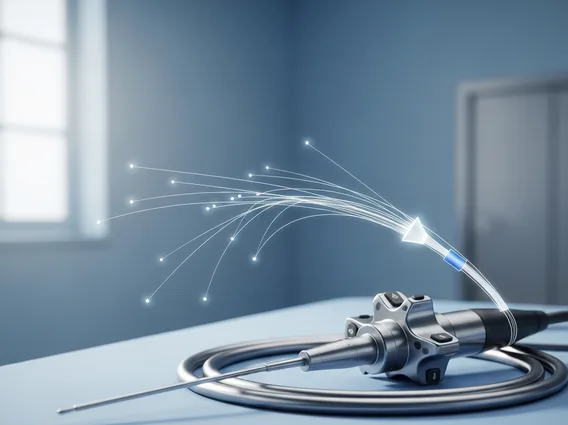
Spectroscopy
Spectroscopy is a fundamental analytical technique used across various scientific disciplines, including medicine. It involves the study of the interaction between matter and electromagnetic radiation, providing crucial insights into the composition and structure of biological samples.
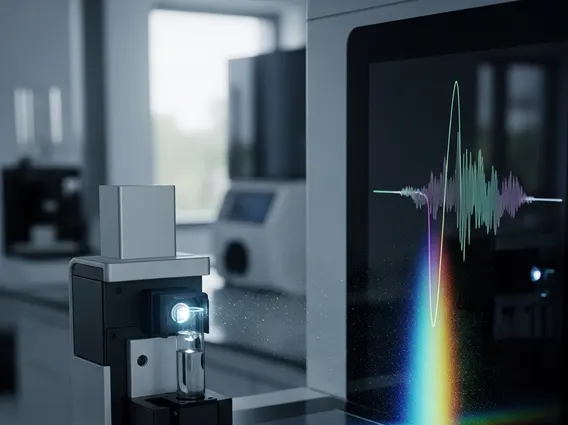
Key Takeaways
- Spectroscopy analyzes how matter interacts with electromagnetic radiation.
- It provides insights into the composition, structure, and properties of substances at a molecular level.
- Different techniques, such as UV-Vis, IR, and NMR, utilize various parts of the electromagnetic spectrum.
- In medicine, it is invaluable for diagnostics, disease monitoring, and advancing research.
What is Spectroscopy?
Spectroscopy is the scientific study of the interaction between matter and electromagnetic radiation. This interaction can involve absorption, emission, or scattering of light, providing a unique “fingerprint” of the substance being analyzed. By examining how different wavelengths of light interact with a sample, scientists and clinicians can deduce information about its atomic and molecular composition, structure, and physical properties. This technique is non-invasive and offers a powerful tool for qualitative and quantitative analysis in various fields, including medical diagnostics and research, enabling precise characterization of biological materials.
Principles and Mechanisms of Spectroscopy
The fundamental principle behind spectroscopy involves exciting a sample with electromagnetic radiation and then measuring its response. When a sample absorbs energy from incident radiation, its atoms or molecules transition from a lower energy state to a higher one. Conversely, when these excited states return to lower energy levels, they can emit radiation. The specific wavelengths of light absorbed or emitted are characteristic of the elements and compounds present in the sample. The mechanism involves directing a beam of electromagnetic radiation (such as visible light, X-rays, or radio waves) through or onto a sample. A detector then measures the amount of radiation absorbed, transmitted, or emitted at different wavelengths. This data is plotted as a spectrum, which is a graph showing intensity versus wavelength or frequency. The peaks and troughs in the spectrum correspond to specific energy transitions within the sample, revealing its unique chemical signature. For instance, different molecules absorb light at distinct wavelengths, allowing for their identification and quantification, which is critical for understanding biochemical processes.
Common Spectroscopy Techniques and Medical Applications
There are numerous types of spectroscopy techniques, each utilizing different parts of the electromagnetic spectrum and measuring distinct interactions. These techniques vary in their sensitivity, specificity, and the type of information they provide about a sample. Some common techniques include:
- UV-Vis Spectroscopy: Measures the absorption of ultraviolet and visible light, often used to quantify concentrations of substances like proteins, nucleic acids, or pharmaceutical compounds in solutions.
- Infrared (IR) Spectroscopy: Detects molecular vibrations, providing information about functional groups and molecular structure, which is highly useful in identifying organic compounds and their conformational changes.
- Nuclear Magnetic Resonance (NMR) Spectroscopy: Utilizes radio waves in a strong magnetic field to probe the nuclei of atoms, offering detailed structural information, particularly for complex biomolecules such as proteins and metabolites.
- Raman Spectroscopy: Measures inelastic scattering of monochromatic light, providing vibrational information about molecules. It is particularly useful for analyzing biological tissues and cells in a non-destructive manner.
The applications of spectroscopy in medicine are extensive and continually expanding. For example, in oncology, spectroscopy can be used for early cancer detection by analyzing tissue biopsies or body fluids for specific biomarkers, offering a non-invasive or minimally invasive diagnostic approach. Raman spectroscopy, a type of vibrational spectroscopy, is being explored for real-time surgical margin assessment to ensure complete tumor removal during operations. NMR spectroscopy, in its imaging form (Magnetic Resonance Imaging or MRI), is a cornerstone of diagnostic imaging, providing detailed anatomical and functional information about tissues and organs without ionizing radiation. Furthermore, spectroscopy aids in drug discovery, monitoring drug metabolism, understanding disease mechanisms at a molecular level, and even in point-of-care diagnostics.