
Small Cell Lung Cancer
Small Cell Lung Cancer (SCLC) is an aggressive form of lung cancer that accounts for about 10-15% of all lung cancer diagnoses. Understanding its nature, symptoms, and available treatments is crucial for early detection and effective management.
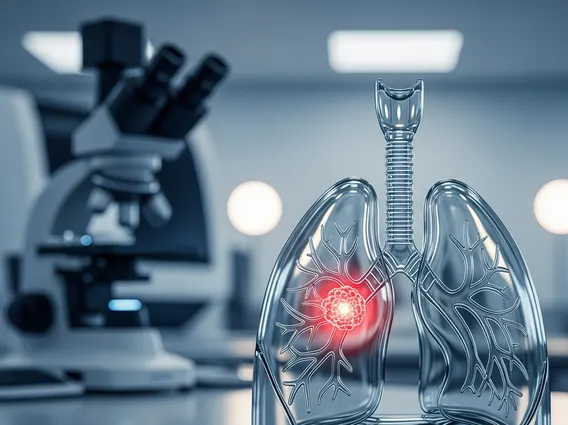
Key Takeaways
- Small Cell Lung Cancer (SCLC) is a highly aggressive type of lung cancer, strongly linked to tobacco smoking.
- Symptoms often include a persistent cough, shortness of breath, chest pain, and unexplained weight loss, frequently appearing in advanced stages.
- Diagnosis relies on imaging tests, biopsy, and staging to determine if the cancer is limited or extensive.
- Treatment primarily involves chemotherapy and radiation therapy, with immunotherapy emerging as a significant option for extensive-stage disease.
- Prognosis is generally challenging due to the cancer’s rapid progression, but advancements in treatment aim to control the disease and improve quality of life.
What is Small Cell Lung Cancer?
Small Cell Lung Cancer (SCLC) is a highly aggressive form of lung cancer that accounts for approximately 10-15% of all lung cancer diagnoses. It originates in the cells lining the bronchi and tends to grow and spread much faster than non-small cell lung cancer (NSCLC). This rapid proliferation and early metastasis to distant sites, such as the brain, liver, and bones, make SCLC particularly challenging to treat. The overwhelming majority of SCLC cases, about 95%, are directly linked to a history of tobacco smoking, highlighting the critical role of smoking cessation in prevention.
Under a microscope, the cancer cells appear small and round, giving the disease its distinctive name. This cellular characteristic differentiates it from other lung cancer types. According to the World Health Organization (WHO), lung cancer remains a leading cause of cancer-related mortality globally, and SCLC contributes significantly to this burden due to its aggressive behavior and often late diagnosis.
Recognizing Small Cell Lung Cancer Symptoms and Diagnosis
Recognizing small cell lung cancer symptoms is vital for timely intervention, though they often appear only when the disease is advanced. Common symptoms are often non-specific and can include a persistent cough, shortness of breath, chest pain, hoarseness, and unexplained weight loss. As the cancer spreads, symptoms may also arise from metastases, such as bone pain, neurological changes, or jaundice.
Diagnosis of SCLC typically involves several steps to confirm the presence of cancer and determine its stage. These may include:
- Imaging Tests: Chest X-rays, CT scans, PET scans, and MRI scans help visualize tumors and identify potential spread.
- Biopsy: A tissue sample from the lung or a metastatic site is taken and examined under a microscope to confirm the type of cancer. This is crucial for distinguishing SCLC from other lung cancers.
- Staging: Once SCLC is confirmed, staging is performed to determine if the cancer is limited (confined to one side of the chest and can be treated with a single radiation field) or extensive (spread beyond one side of the chest or to distant sites).
Early and accurate diagnosis is paramount due to the aggressive nature of SCLC.
Small Cell Lung Cancer Treatment Options and Prognosis
The approach to small cell lung cancer treatment options depends largely on the stage of the disease, the patient’s overall health, and other individual factors. For limited-stage SCLC, treatment often involves a combination of chemotherapy and radiation therapy to the chest. Prophylactic cranial irradiation (PCI) may also be recommended to prevent brain metastases, as SCLC has a high propensity to spread to the brain.
For extensive-stage SCLC, systemic treatments are the primary approach. Chemotherapy, often combined with immunotherapy, is the cornerstone of treatment to target cancer cells throughout the body. Immunotherapy drugs, such as PD-L1 inhibitors, have shown promise in improving outcomes for some patients with extensive-stage SCLC by helping the body’s immune system fight the cancer.
The small cell lung cancer prognosis is generally more challenging than for NSCLC due to its aggressive nature and tendency for early metastasis. However, advancements in treatment have led to improved outcomes. For limited-stage SCLC, the median survival can be significantly longer than for extensive-stage disease. While SCLC is often difficult to cure, treatment aims to control the disease, alleviate symptoms, and improve quality of life. Regular follow-up and supportive care are integral parts of managing SCLC.



















