
Sclerosing Adenosis
Sclerosing adenosis is a common benign (non-cancerous) breast condition characterized by an overgrowth of glandular tissue in the breast, often accompanied by fibrous tissue. While it can sometimes mimic the appearance of cancer on imaging or physical examination, it is not malignant.
Key Takeaways
- Sclerosing Adenosis is a benign breast condition involving an overgrowth of glandular and fibrous tissue.
- It is often asymptomatic, but can present as a palpable lump or cause breast pain.
- Diagnosis typically involves mammography, ultrasound, and often a biopsy to confirm its benign nature.
- It is not considered a serious condition and does not usually require treatment unless it causes symptoms or diagnostic uncertainty.
- While it slightly increases the risk of breast cancer, this increase is minimal, and regular screening is recommended.
What is Sclerosing Adenosis?
Sclerosing Adenosis refers to a benign proliferative lesion of the breast characterized by an increase in the number of glandular components (lobules and ducts) and fibrous tissue within the breast. This overgrowth leads to distortion and compression of the breast glands, giving it a hardened or “sclerosed” appearance. It is a common finding in breast biopsies, with some studies suggesting its presence in approximately 1-12% of benign breast lesions. Despite its sometimes alarming appearance on imaging or palpation, it is important to understand that sclerosing adenosis is not a serious condition; it is non-cancerous and does not directly evolve into cancer.
While sclerosing adenosis is benign, it is considered a non-proliferative lesion with atypical features, which means it involves an increase in cells but without the abnormal cell changes seen in atypical hyperplasia. It is generally associated with a very slight, almost negligible, increase in the lifetime risk of breast cancer, primarily due to the increased cellular activity within the breast tissue. Regular breast cancer screening, as recommended by healthcare providers, remains crucial for individuals with this condition, as it is for all women.
Symptoms and Underlying Causes
Many individuals with sclerosing adenosis symptoms causes are asymptomatic, meaning they experience no noticeable symptoms. The condition is often discovered incidentally during routine mammograms or breast examinations performed for other reasons. However, when symptoms do occur, they can include:
- A palpable lump or area of thickening in the breast, which may feel firm or rubbery.
- Localized breast pain or tenderness, which can sometimes fluctuate with the menstrual cycle.
- Nipple discharge, though this is less common.
The exact underlying causes of sclerosing adenosis are not fully understood, but it is believed to be related to hormonal influences, particularly estrogen, which plays a significant role in breast tissue development and changes. It is more commonly seen in women during their reproductive years and perimenopause, suggesting a link to fluctuating hormone levels. The condition represents a localized exaggeration of the normal physiological changes that occur in the breast, leading to the characteristic overgrowth of glandular and fibrous tissue.
Diagnosis, Treatment, and Outlook
The diagnosis of sclerosing adenosis diagnosis treatment typically begins with imaging studies. On a mammogram, it can appear as a mass, calcifications, or architectural distortion, which can sometimes be mistaken for breast cancer. Ultrasound may show a solid mass, and MRI can also be used for further evaluation. Due to its potential to mimic malignancy on imaging, a definitive diagnosis usually requires a tissue biopsy.
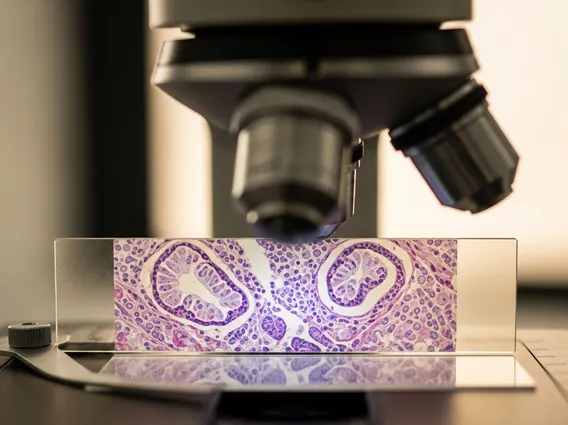
A biopsy, often performed as a core needle biopsy or excisional biopsy, allows a pathologist to examine the tissue under a microscope. The characteristic microscopic features of sclerosing adenosis, such as compressed and distorted glandular structures surrounded by dense fibrous tissue, confirm the benign nature of the lesion. Once diagnosed, treatment for sclerosing adenosis is often not necessary if it is asymptomatic and the diagnosis is confirmed as benign. Observation with regular follow-up imaging is usually sufficient.
In cases where the lesion causes significant pain, is large, or if there is persistent diagnostic uncertainty despite biopsy, surgical excision may be recommended. The outlook for individuals with sclerosing adenosis is excellent, as it is a benign condition with no direct threat to life. While it is associated with a very slightly increased risk of breast cancer, this risk is minimal, and the primary recommendation is adherence to standard breast cancer screening guidelines, including regular mammograms and clinical breast exams, as advised by your healthcare provider.



















