
Proximal Urethra
The urethra is a vital tube that carries urine from the bladder out of the body. Understanding its different segments is crucial for comprehending urinary system function and potential health issues.
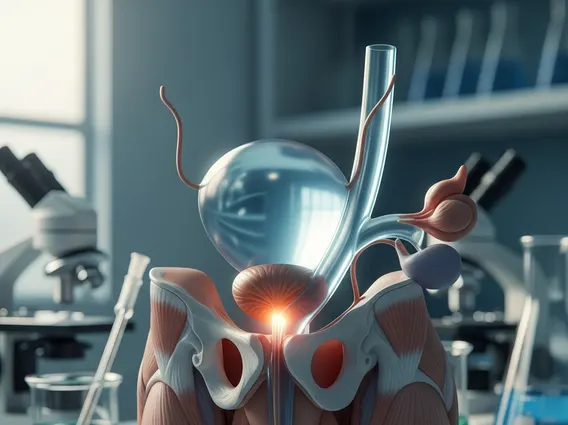
Key Takeaways
- The proximal urethra is the segment closest to the bladder, playing a key role in urinary continence.
- In males, it includes the pre-prostatic and prostatic urethra, passing through the prostate gland.
- In females, the entire urethra is relatively short and corresponds largely to the proximal segment.
- Its primary functions involve urine transport and, in males, semen transport during ejaculation.
- Distinguishing it from the distal urethra helps understand regional differences in anatomy and clinical relevance.
What is the Proximal Urethra?
The Proximal Urethra refers to the initial segment of the urethra, which is the tube responsible for expelling urine from the bladder. This section is located closest to the bladder neck and plays a crucial role in the urinary system’s function, particularly concerning continence. Its anatomical features vary significantly between males and females, influencing its specific roles and susceptibility to certain conditions. This segment is critical for the controlled release of urine and is often the site of the internal urethral sphincter, a muscular structure that helps maintain bladder control.
Proximal Urethra Anatomy and Function
The anatomy of the proximal urethra anatomy and function differs considerably between sexes, influencing its specific roles and susceptibility to certain conditions. In males, the proximal urethra is longer and more complex. It encompasses two main parts: the pre-prostatic urethra and the prostatic urethra. The pre-prostatic urethra is a short segment extending from the bladder neck to the prostate gland. The prostatic urethra then passes directly through the prostate gland, where it receives ejaculatory ducts carrying sperm and seminal fluid. This explains the dual function of the male urethra in both urination and ejaculation. The location of proximal urethra in males is thus intimately associated with the bladder and prostate gland, making it a critical area for conditions like benign prostatic hyperplasia (BPH) or prostate cancer, which can impact urinary flow.
In females, the urethra is much shorter, typically 3-4 cm long, and is generally considered to be largely equivalent to the proximal segment. It extends from the bladder neck to the external urethral orifice, located anterior to the vaginal opening. Its primary function is solely the transport of urine. Both male and female proximal urethras are surrounded by smooth muscle and contain a sphincter mechanism that helps control urine flow, contributing significantly to urinary continence.
Key functions of the proximal urethra include:
- Urine Transport: Facilitates the passage of urine from the bladder out of the body.
- Urinary Continence: Contains internal sphincter mechanisms that help prevent involuntary urine leakage.
- Semen Transport (Males): In males, it serves as a conduit for semen during ejaculation, integrating reproductive and urinary functions.
Proximal vs. Distal Urethra
Understanding the distinction between the proximal urethra vs distal urethra is essential for medical professionals and patients alike, as different parts of the urethra can be affected by distinct conditions and require different diagnostic approaches or treatments. The proximal urethra, as discussed, is the segment originating from the bladder, characterized by its involvement in continence and, in males, reproductive functions. The distal urethra, conversely, is the segment further away from the bladder, extending towards the external urethral opening.
In males, the distal urethra includes the membranous urethra, which is the shortest and narrowest part, passing through the deep perineal pouch and surrounded by the external urethral sphincter (a voluntary muscle). Following this is the penile (or spongy) urethra, which is the longest segment, traveling through the corpus spongiosum of the penis and opening at the glans. In females, due to the urethra’s short length, the distinction between proximal and distal is less pronounced, with the entire structure often considered functionally proximal, though a very short distal portion exists near the external meatus. These anatomical differences are key to understanding various urological conditions, from infections to strictures.
| Feature | Proximal Urethra | Distal Urethra |
|---|---|---|
| Location (Males) | Bladder neck through prostate gland (pre-prostatic, prostatic) | Through deep perineal pouch and penis (membranous, spongy/penile) |
| Location (Females) | Entire urethra (from bladder neck to external orifice) | Less distinct; the entire short urethra is often considered proximal |
| Primary Function | Urine transport; semen transport (males); continence control | Urine transport; semen transport (males); voluntary continence (external sphincter) |
| Associated Structures (Males) | Bladder, prostate gland, ejaculatory ducts, internal urethral sphincter | Deep perineal muscles, corpus spongiosum, external urethral sphincter |



















