Polymerase Chain Reaction
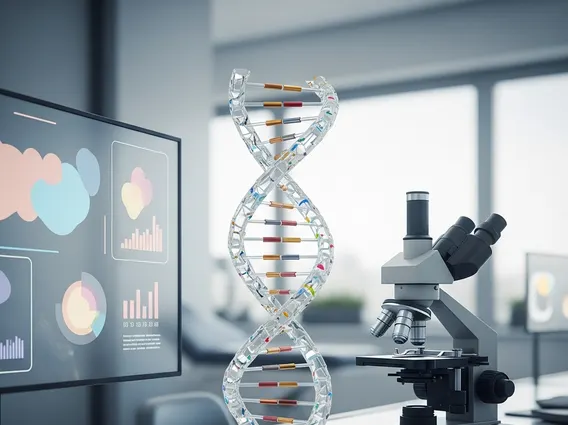
Polymerase Chain Reaction is a revolutionary molecular biology technique used to amplify a specific segment of DNA across several orders of magnitude, generating thousands to millions of copies of a particular DNA sequence.
Key Takeaways
- Polymerase Chain Reaction (PCR) is a laboratory method for making millions of copies of a specific DNA segment.
- The process involves three main steps: denaturation, annealing, and extension, repeated in cycles.
- PCR is crucial for diagnosing infectious diseases, identifying genetic disorders, and forensic analysis.
- It offers high sensitivity and specificity, allowing detection of even minute amounts of target DNA.
What is Polymerase Chain Reaction (PCR)?
Polymerase Chain Reaction (PCR) is a powerful and widely used laboratory technique in molecular biology that enables scientists to make millions of copies of a specific DNA sequence in a relatively short period. Developed in 1983 by Kary Mullis, this technique has become indispensable for various applications, from medical diagnostics to forensic science. It essentially acts as a molecular photocopier, selectively amplifying a target DNA segment from a complex mixture of genetic material.
The fundamental principle behind PCR is the ability to synthesize new DNA strands that are complementary to a template DNA. This process is highly specific, targeting only the desired region of DNA through the use of short synthetic DNA fragments called primers. The efficiency and precision of this method have transformed genetic research and clinical diagnostics, making it possible to detect and analyze DNA even when present in very small quantities.
How Does Polymerase Chain Reaction (PCR) Work?
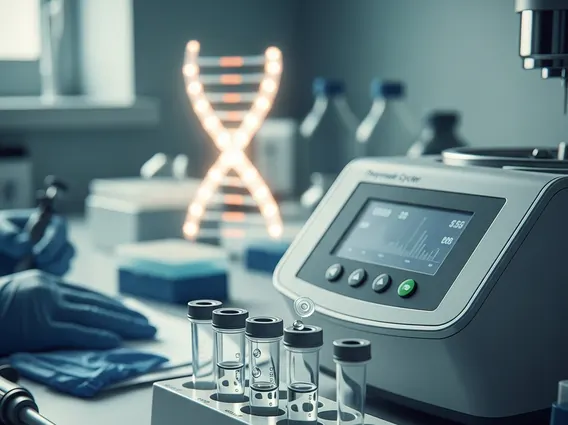
The mechanism of Polymerase Chain Reaction involves a series of temperature-dependent steps that are repeated cyclically, typically 20-40 times, in a thermal cycler. This cyclical process leads to an exponential increase in the number of target DNA copies. A clear pcr technique explanation involves understanding these three core stages:
- Denaturation: The reaction mixture is heated to a high temperature (typically 94-98°C) for a short period (20-30 seconds). This heat breaks the hydrogen bonds between the complementary base pairs of the double-stranded template DNA, separating it into two single strands.
- Annealing: The temperature is then lowered (typically 50-65°C) for 20-40 seconds. At this temperature, short, single-stranded DNA primers bind (anneal) to their complementary sequences on the separated single-stranded template DNA. Two primers are used, one for each strand, flanking the target DNA region.
- Extension: The temperature is raised again (typically 70-75°C) for 20-60 seconds, which is the optimal temperature for the DNA polymerase enzyme (commonly Taq polymerase) to synthesize new DNA strands. Starting from the primers, the polymerase adds nucleotides complementary to the template strand, extending the primers to create new double-stranded DNA molecules.
Each cycle effectively doubles the amount of target DNA, leading to exponential amplification. After 30 cycles, for example, a single DNA molecule can be amplified into over a billion copies, making even trace amounts of genetic material detectable.
Purpose and Applications of Polymerase Chain Reaction (PCR)
The primary purpose of Polymerase Chain Reaction is to amplify specific DNA sequences for various downstream analyses, making it an indispensable tool across numerous scientific and medical fields. Its ability to generate large quantities of specific DNA from minute starting samples has revolutionized diagnostics, research, and forensics.
Key applications include:
- Disease Diagnosis: PCR is widely used to detect the presence of infectious agents, such as viruses (e.g., HIV, SARS-CoV-2), bacteria (e.g., tuberculosis), and parasites, by amplifying their unique genetic material. It can also identify genetic mutations associated with inherited diseases like cystic fibrosis or sickle cell anemia, often before symptoms appear.
- Genetic Research: In research, PCR is fundamental for gene cloning, DNA sequencing, gene expression studies, and phylogenetic analysis. It allows scientists to isolate and study specific genes or DNA regions of interest.
- Forensic Science: PCR plays a critical role in forensic investigations by amplifying trace amounts of DNA found at crime scenes (e.g., from blood, hair, or skin cells). This amplified DNA can then be used for DNA fingerprinting to identify individuals with high certainty.
- Paternity Testing: By comparing specific DNA markers amplified by PCR from a child and potential father, paternity can be accurately determined.
The versatility, speed, and sensitivity of PCR have made it a cornerstone of modern biotechnology, significantly impacting public health, scientific discovery, and justice systems worldwide. According to the Centers for Disease Control and Prevention (CDC), PCR testing remains a gold standard for the accurate diagnosis of many infectious diseases, highlighting its continued importance in clinical settings.