Photosynthesis
Photosynthesis is a fundamental biological process that sustains nearly all life on Earth. It is the method by which plants, algae, and some bacteria convert light energy into chemical energy, creating organic compounds essential for their growth and survival.
Key Takeaways
- Photosynthesis is the process by which organisms convert light energy into chemical energy, primarily in the form of glucose.
- It involves two main stages: the light-dependent reactions and the light-independent reactions (Calvin cycle).
- Key inputs for photosynthesis are sunlight, carbon dioxide, and water, while the primary outputs are glucose and oxygen.
- This process is vital for life, producing the oxygen we breathe and forming the base of most food chains.
- Photosynthesis plays a crucial role in regulating Earth’s climate by absorbing atmospheric carbon dioxide.
What is Photosynthesis?
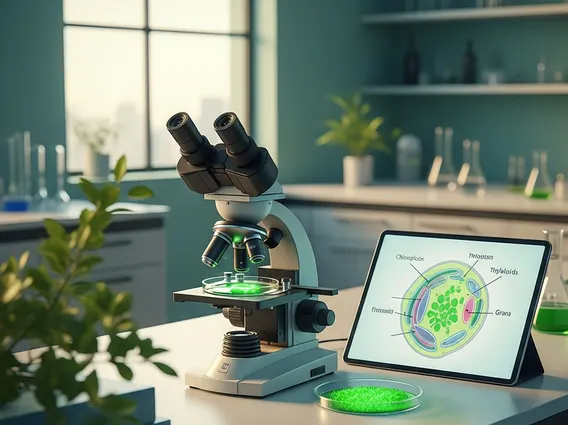
Photosynthesis is a complex biochemical process where light energy is captured and converted into chemical energy. This energy is stored in glucose, a sugar molecule, which serves as food for the organism. The process primarily takes place in the chloroplasts of plant cells, specifically within structures called thylakoids and the stroma. It is crucial for the existence of most ecosystems, as it initiates the flow of energy through food webs.
The overall equation for photosynthesis illustrates its inputs and outputs: 6CO₂ (carbon dioxide) + 6H₂O (water) + Light Energy → C₆H₁₂O₆ (glucose) + 6O₂ (oxygen). This equation highlights how carbon dioxide from the atmosphere and water absorbed from the soil are transformed using light energy to produce glucose and release oxygen as a byproduct. Understanding what is photosynthesis reveals its foundational role in both biological energy production and atmospheric gas regulation.
The Photosynthesis Process: Steps & Mechanism
The mechanism of how photosynthesis works involves two main stages: the light-dependent reactions and the light-independent reactions, often referred to as the Calvin cycle. These stages work in conjunction to convert light energy into usable chemical energy.
The photosynthesis process steps begin with the light-dependent reactions, which occur in the thylakoid membranes within chloroplasts. During this stage, chlorophyll and other pigments absorb light energy. This absorbed energy is used to split water molecules (photolysis), releasing electrons, protons (hydrogen ions), and oxygen gas. The electrons then move through an electron transport chain, generating ATP (adenosine triphosphate) and NADPH (nicotinamide adenine dinucleotide phosphate), which are energy-carrying molecules.
Following the light-dependent reactions, the light-independent reactions, or Calvin cycle, take place in the stroma of the chloroplasts. This stage does not directly require light but utilizes the ATP and NADPH produced during the light-dependent reactions. Carbon dioxide from the atmosphere is incorporated into organic molecules through a process called carbon fixation. These molecules are then converted into glucose using the energy from ATP and the reducing power of NADPH. This cycle regenerates the initial carbon acceptor molecule, allowing the process to continue.
Essential Role of Photosynthesis for Life
The importance of photosynthesis for life cannot be overstated, as it is the primary process that sustains nearly all ecosystems on Earth. One of its most critical contributions is the production of oxygen. As a byproduct of the light-dependent reactions, oxygen is released into the atmosphere, making aerobic respiration possible for most living organisms, including humans and animals. Without this continuous supply of oxygen, complex life as we know it would not exist.
Furthermore, photosynthesis forms the base of almost every food chain. The glucose produced by photosynthetic organisms serves as the initial source of energy for all heterotrophs, which are organisms that cannot produce their own food. Herbivores consume plants, and carnivores consume herbivores, thereby transferring the energy originally captured from sunlight throughout the ecosystem. This process also plays a vital role in the global carbon cycle, absorbing vast amounts of carbon dioxide from the atmosphere and converting it into organic matter, which helps regulate Earth’s climate and mitigate the greenhouse effect.