Parathyroid Gland
The parathyroid glands are small, vital endocrine glands located in the neck that play a crucial role in maintaining the body’s calcium balance. Understanding their function is essential for comprehending various metabolic processes.
Key Takeaways
- The Parathyroid Gland consists of four small glands located behind the thyroid, essential for calcium regulation.
- They produce parathyroid hormone (PTH), which controls calcium, phosphorus, and vitamin D levels in the blood.
- Proper parathyroid function is critical for bone health, nerve function, and muscle contraction.
- Dysfunction can lead to conditions like hyperparathyroidism (excess PTH) or hypoparathyroidism (insufficient PTH).
- Symptoms of parathyroid problems can range from fatigue and bone pain to muscle cramps and tingling.
What is the Parathyroid Gland?
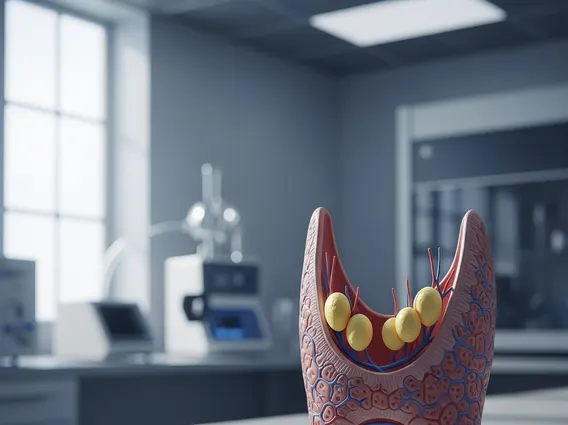
The Parathyroid Gland refers to four tiny glands, each about the size of a grain of rice, typically situated behind the thyroid gland in the neck. Despite their proximity, they are distinct endocrine glands with a separate and critical function. Their primary role is to produce and secrete parathyroid hormone (PTH), which is the chief regulator of calcium, phosphorus, and vitamin D levels in the blood and bones. Maintaining these levels within a narrow range is vital for the proper functioning of the nervous system, muscles, and bones, as well as for overall cellular health.
Parathyroid Gland Function and Location
The parathyroid gland function and location are central to calcium homeostasis. Anatomically, these four glands are usually found embedded in the posterior surface of the thyroid gland, though their exact position can vary. Two superior parathyroid glands are located near the upper poles of the thyroid, and two inferior parathyroid glands are near the lower poles. Their main function is to monitor blood calcium levels constantly.
When blood calcium levels drop, the parathyroid glands release parathyroid hormone (PTH). PTH acts on several organs to restore calcium balance:
- Bones: It stimulates the release of calcium from bone into the bloodstream.
- Kidneys: It increases the reabsorption of calcium from the urine back into the blood and promotes the excretion of phosphorus.
- Intestines: It activates vitamin D in the kidneys, which then enhances calcium absorption from food in the small intestine.
This intricate feedback system ensures that calcium levels remain stable, which is essential for numerous bodily processes, including nerve impulse transmission, muscle contraction, blood clotting, and maintaining strong bones.
Symptoms and Diseases of the Parathyroid Gland
Dysfunction of these small glands can lead to significant health issues, manifesting as various symptoms of parathyroid problems. The two primary conditions are hyperparathyroidism and hypoparathyroidism, representing an excess or deficiency of PTH, respectively. These parathyroid gland diseases explained below highlight the critical role of balanced calcium levels.
Hyperparathyroidism occurs when one or more parathyroid glands become overactive, producing too much PTH. This leads to elevated calcium levels in the blood (hypercalcemia). Conversely, Hypoparathyroidism is a rare condition characterized by insufficient PTH production, resulting in abnormally low calcium levels in the blood (hypocalcemia) and high phosphorus levels. This can occur after thyroid surgery if the parathyroid glands are accidentally damaged or removed, or due to autoimmune conditions.
The table below summarizes the key differences in symptoms for these two conditions:
| Condition | Key Characteristics | Common Symptoms |
|---|---|---|
| Hyperparathyroidism | Excess PTH, high blood calcium (hypercalcemia) | Fatigue, bone pain, increased thirst, frequent urination, kidney stones, depression, osteoporosis. |
| Hypoparathyroidism | Insufficient PTH, low blood calcium (hypocalcemia) | Muscle cramps/spasms, tingling/numbness (fingers, toes, mouth), fatigue, anxiety, seizures (severe). |
According to the National Institute of Diabetes and Digestive and Kidney Diseases (NIDDK), primary hyperparathyroidism affects about 100,000 people in the United States each year, with women over 50 being at higher risk. Both conditions require careful diagnosis and management to prevent long-term complications affecting bone density, kidney function, and neurological health. It is crucial to consult a healthcare professional if any of these symptoms are experienced for proper evaluation and treatment.