Mandible
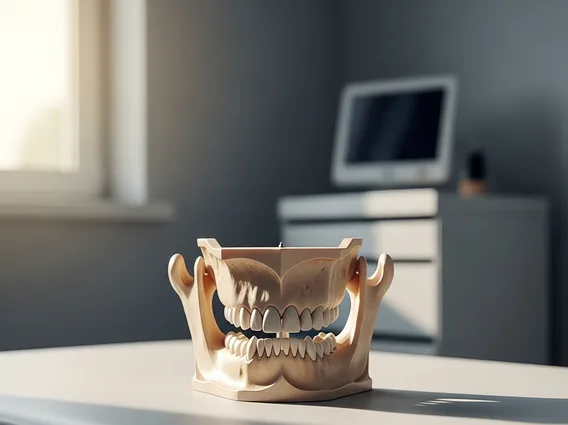
The mandible, commonly known as the lower jawbone, is a crucial component of the human skull, playing a vital role in essential oral functions. It is the largest and strongest bone of the face, uniquely characterized by its mobility.
Key Takeaways
- The mandible is the sole movable bone of the skull, forming the lower jaw.
- It is essential for chewing, speaking, and maintaining the structure of the lower face.
- Key anatomical features include the body, rami, condyles, and coronoid processes.
- The temporomandibular joints (TMJ) connect the mandible to the temporal bones, enabling its complex movements.
- Its robust structure protects nerves and blood vessels while supporting teeth.
What is the Mandible Bone?
The Mandible is the single, unpaired bone that forms the lower jaw and houses the lower teeth. It is the only movable bone of the skull, articulating with the temporal bones at the temporomandibular joints (TMJ). This unique mobility allows for a wide range of movements necessary for daily activities such as eating and speaking. Its robust nature makes it one of the strongest bones in the human body, capable of withstanding significant forces during mastication.
Understanding the lower jaw bone structure is fundamental to comprehending its functions. The mandible provides the framework for the lower part of the face, contributing significantly to facial aesthetics and symmetry. It also serves as an attachment point for numerous muscles involved in chewing and facial expression. Among the many facts about the human mandible, its development from several ossification centers during fetal development highlights its complex formation, eventually fusing into a single bone.
Mandible Anatomy and Functions
The mandible anatomy and function are intricately linked, allowing for its diverse roles. Anatomically, the mandible consists of several distinct parts, each contributing to its overall strength and utility. The main horizontal part is the body, which forms the chin and supports the lower teeth within its alveolar process. Extending upwards from the body are two vertical rami (plural of ramus), which connect to the skull.
Key anatomical features of the mandible include:
- Body: The curved, horizontal portion that forms the chin and contains the sockets for the lower teeth.
- Rami: Two vertical plates that extend upwards from the posterior ends of the body.
- Condylar Processes: Located at the superior posterior aspect of each ramus, these articulate with the temporal bone to form the temporomandibular joints (TMJ).
- Coronoid Processes: Sharp, triangular projections at the superior anterior aspect of each ramus, serving as attachment points for muscles.
- Alveolar Process: The ridge of bone on the superior border of the body that holds the roots of the lower teeth.
The primary functions of the mandible are critical for human survival and communication. Its most evident role is in mastication, or chewing, where it works in conjunction with the maxilla (upper jaw) to break down food. The powerful muscles attached to the mandible, such as the masseter and temporalis, facilitate these movements. Furthermore, the mandible is indispensable for articulate speech, as its movements allow for the precise shaping of the oral cavity and tongue positioning necessary for sound production. It also provides structural support for the lower facial muscles and protects vital nerves and blood vessels that supply the lower face and teeth.