Mammary Paget Disease
Mammary Paget Disease is a rare form of breast cancer that affects the nipple and areola. It is often mistaken for benign skin conditions, making early diagnosis crucial for effective treatment.

Key Takeaways
- Mammary Paget Disease is a rare breast cancer primarily affecting the nipple and areola.
- It often presents with skin changes such as redness, scaling, or itching, which can be confused with eczema.
- Diagnosis typically involves a biopsy of the affected skin and imaging of the underlying breast tissue.
- Treatment commonly includes surgery, such as mastectomy or nipple-sparing surgery, often followed by radiation therapy.
- Early detection is vital for improving prognosis and guiding appropriate therapeutic strategies.
What is Mammary Paget Disease?
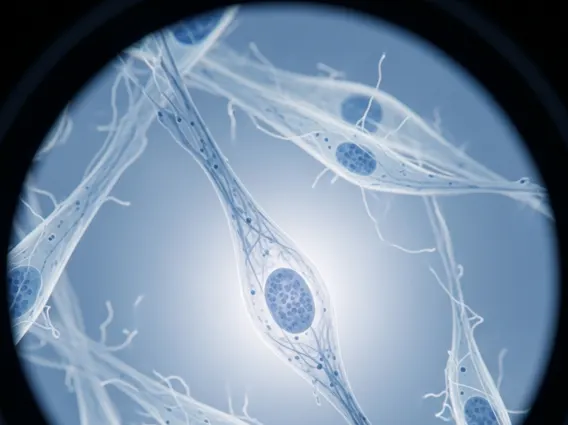
Mammary Paget Disease is a rare type of breast cancer characterized by the presence of cancerous cells, known as Paget cells, in the epidermis of the nipple and areola. These cells originate from an underlying breast cancer, which can be either ductal carcinoma in situ (DCIS) or invasive breast cancer, and then migrate to the skin surface. While it accounts for a small percentage of all breast cancers, estimated to be between 1% and 4% of cases, it is important to distinguish it from benign skin conditions due to its malignant nature (National Cancer Institute).
This condition predominantly affects women, typically post-menopausal, but can also occur in men. The average age of diagnosis is around 57 years. The exact mechanism by which Paget cells spread from the underlying breast tissue to the nipple epidermis is still being researched, but it is generally understood to be a migration along the milk ducts.
Symptoms and Diagnosis of Mammary Paget Disease
Recognizing mammary paget disease symptoms is critical for timely intervention, though they can often mimic common dermatological issues. Initial signs frequently include persistent redness, scaling, flaking, or crusting of the nipple and areola. Patients may also experience itching, burning, tingling, or pain in the affected area. In some cases, there might be a discharge from the nipple or a flattened or inverted nipple. These symptoms typically affect one breast and do not respond to standard topical treatments for eczema or dermatitis.
- Persistent redness, scaling, or flaking on the nipple or areola
- Itching, burning, or tingling sensation
- Crusting or oozing from the nipple
- Thickening of the skin on the nipple or areola
- Nipple flattening or inversion
The mammary paget disease diagnosis process usually begins with a thorough clinical examination and patient history. If Paget disease is suspected, a biopsy of the affected nipple skin is performed to identify the characteristic Paget cells. This can be a shave biopsy or punch biopsy. Additionally, imaging studies of the breast, such as mammography, ultrasound, and magnetic resonance imaging (MRI), are crucial to evaluate for any underlying breast cancer, as it is present in the majority of cases. Approximately 50% of patients with Mammary Paget Disease also have a palpable mass in the breast, indicating an invasive cancer (American Cancer Society).
Mammary Paget Disease Treatment Options
Effective mammary paget disease treatment options primarily involve surgery, often combined with other therapies, depending on the extent of the underlying breast cancer. Historically, a modified radical mastectomy (removal of the entire breast, nipple, areola, and some lymph nodes) was the standard approach. However, for cases without a palpable mass or extensive underlying disease, breast-conserving surgery (lumpectomy) with removal of the nipple-areola complex may be considered, followed by radiation therapy to the remaining breast tissue.
If an underlying invasive breast cancer is found, treatment will also address that specific cancer, potentially including chemotherapy, hormone therapy, or targeted therapy, based on its characteristics (e.g., hormone receptor status, HER2 status). Lymph node assessment, typically through sentinel lymph node biopsy, is also performed to determine if the cancer has spread to the lymph nodes, which influences further treatment decisions and prognosis. The choice of treatment is highly individualized, taking into account the stage of cancer, patient preferences, and overall health.