
Groin
The groin is a vital anatomical region located at the junction of the abdomen and the thigh. Understanding its structure and common issues is crucial for recognizing various health conditions that can manifest in this area.
Key Takeaways
- The groin is the anatomical region where the abdomen meets the thigh, containing muscles, ligaments, blood vessels, nerves, and lymph nodes.
- Its complex structure supports movement and houses critical pathways for circulation and lymphatic drainage.
- Common groin problems include hernias, muscle strains, lymphadenopathy, and nerve entrapment.
- Pain in the groin can stem from musculoskeletal injuries, inflammatory conditions, infections, or referred pain from other abdominal or pelvic organs.
- Prompt medical evaluation is important for persistent or severe groin pain to accurately diagnose the underlying cause.
What is Groin: Anatomy and Location
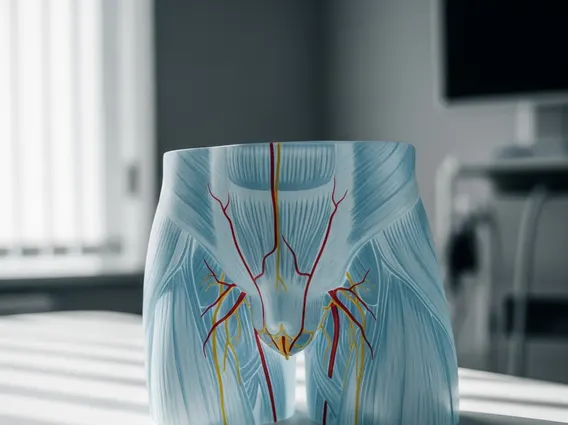
Groin refers to the anatomical region situated at the lower part of the abdomen, specifically where the trunk meets the inner thigh. This area is crucial for various bodily functions, including movement and the passage of important structures. Understanding groin anatomy and function involves appreciating the intricate network of muscles, ligaments, blood vessels, nerves, and lymph nodes that reside here.
The superficial boundaries of the groin area are typically defined by the inguinal ligament, which stretches from the anterior superior iliac spine (a bony prominence on the hip) to the pubic tubercle (a bony projection on the pelvis). Deep to this, several layers of muscles, including the abdominal wall muscles and the adductor muscles of the thigh, provide support and facilitate movement of the leg. Key structures passing through the groin include the femoral artery, vein, and nerve, which supply and drain the lower limb, as well as the spermatic cord in males and the round ligament in females. Lymph nodes in this region play a vital role in the immune system, filtering lymph from the lower extremities and external genitalia.
Common Groin Problems and Causes of Pain
The groin is susceptible to a variety of conditions that can lead to discomfort or significant pain, often due to its complex anatomy and the stresses placed upon it during daily activities and physical exertion. Common groin problems range from musculoskeletal injuries to more serious internal conditions.
One of the most frequent issues is an inguinal hernia, where a portion of the intestine or fatty tissue protrudes through a weak spot in the abdominal wall in the groin area. Muscle strains, particularly of the adductor muscles (inner thigh muscles) or hip flexors, are also very common, especially among athletes. These strains often result from sudden movements, overstretching, or inadequate warm-up.
The causes of groin pain are diverse and can include:
- Musculoskeletal injuries: Strains of adductor muscles, hip flexors, or abdominal muscles; hip joint problems such as osteoarthritis or labral tears; stress fractures of the pelvis or femur.
- Nerve entrapment: Compression of nerves like the ilioinguinal or genitofemoral nerve, leading to burning pain, numbness, or tingling.
- Lymphadenopathy: Swollen lymph nodes due to infection (e.g., sexually transmitted infections, skin infections in the leg) or, less commonly, malignancy.
- Urological issues: Kidney stones, urinary tract infections, or testicular conditions (e.g., epididymitis, testicular torsion) can refer pain to the groin.
- Gastrointestinal conditions: Appendicitis, diverticulitis, or inflammatory bowel disease can sometimes cause referred groin pain.
According to the American Academy of Orthopaedic Surgeons, groin pain is a common complaint, particularly in sports medicine, with adductor strains accounting for a significant percentage of groin injuries in athletes. For instance, a study published in the British Journal of Sports Medicine indicated that groin injuries account for 4-19% of all injuries in various sports. Persistent or severe groin pain warrants a medical evaluation to identify the underlying cause and ensure appropriate treatment.



















