Gastric Cancer Stages
Understanding the stages of gastric cancer, also known as stomach cancer, is crucial for determining the most effective treatment plan and predicting prognosis. This staging system provides a standardized way for medical professionals to describe how far the cancer has spread, from its initial development to more advanced forms.
Key Takeaways
- Gastric cancer stages describe the extent of the cancer’s spread, from localized to metastatic.
- Staging is primarily determined using the TNM system, which assesses tumor size (T), lymph node involvement (N), and distant metastasis (M).
- Early detection is critical, as the **gastric cancer prognosis by stage** significantly improves with earlier diagnosis.
- Treatment plans are highly individualized, varying based on the specific stage, patient health, and other factors.
- Regular follow-up and understanding **what are the stages of gastric cancer** are vital for managing the disease effectively.
Understanding Gastric Cancer Stages
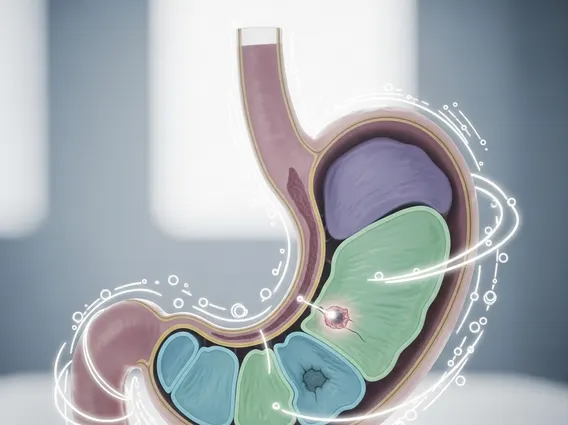
Understanding gastric cancer stages is fundamental for both patients and healthcare providers. Staging is a classification system that describes the extent of cancer in the body, indicating its size, how deeply it has invaded the stomach wall, whether it has spread to nearby lymph nodes, and if it has metastasized to distant organs. This comprehensive assessment helps define **what are the stages of gastric cancer**, guiding treatment decisions and providing insight into potential outcomes.
The progression of gastric cancer is typically categorized into several distinct stages, ranging from Stage 0 to Stage IV. Each stage represents a different level of disease advancement, with lower numbers indicating earlier, more localized cancer and higher numbers signifying more widespread disease. Knowing the specific stage helps medical teams to formulate a precise strategy, as the **different stages of stomach cancer** require varied approaches to care.
Early-stage gastric cancer often presents with subtle or no symptoms, making early detection challenging. As the cancer progresses, patients may begin to experience more noticeable **stages of stomach cancer symptoms**, such as persistent indigestion, abdominal pain, unexplained weight loss, or difficulty swallowing. These symptoms, while non-specific, often prompt further investigation, which can lead to a diagnosis and subsequent staging.
How Gastric Cancer is Staged
The process of **how is gastric cancer staged** involves a series of diagnostic tests and procedures designed to provide a comprehensive picture of the cancer’s extent. The most widely accepted method for **gastric cancer staging explained** is the TNM system, developed by the American Joint Committee on Cancer (AJCC). This system evaluates three key components: the primary tumor (T), regional lymph nodes (N), and distant metastasis (M).
Diagnostic tools used for staging can include endoscopy with biopsy, imaging tests such as CT scans, PET scans, and endoscopic ultrasound, and sometimes exploratory surgery (laparoscopy). These tests help determine the depth of tumor invasion, the number and location of affected lymph nodes, and whether the cancer has spread to other parts of the body. Accurate staging is paramount because it directly influences the choice of treatment, which can range from surgery to chemotherapy, radiation, or targeted therapies.
TNM Staging System Components
The TNM system provides a detailed framework for classifying gastric cancer. Each component is assigned a number or letter that corresponds to the severity of the cancer’s spread in that specific area. Understanding these components is key to grasping the overall stage.
- T (Tumor): This describes the size and extent of the primary tumor. It indicates how deeply the tumor has grown into the layers of the stomach wall and whether it has spread to nearby structures. For example, T1 means the tumor has invaded the lamina propria, muscularis mucosae, or submucosa, while T4 indicates invasion through the serosa or into adjacent structures.
- N (Nodes): This refers to the involvement of regional lymph nodes. It indicates whether cancer cells have spread to nearby lymph nodes and, if so, how many and where they are located. N0 means no regional lymph node metastasis, while N1, N2, and N3 indicate increasing numbers of affected lymph nodes.
- M (Metastasis): This signifies whether the cancer has spread to distant parts of the body, such as the liver, lungs, or peritoneum. M0 means no distant metastasis, and M1 indicates the presence of distant metastasis. The presence of M1 automatically classifies the cancer as Stage IV.
Once the T, N, and M values are determined, they are combined to assign an overall stage, from 0 to IV. This detailed classification allows for a highly personalized approach to treatment planning, as each stage carries different implications for prognosis and therapeutic options.
| Stage | Description | TNM Characteristics (Simplified) |
|---|---|---|
| Stage 0 (Carcinoma in situ) | Abnormal cells found only in the innermost layer of the stomach lining. | Tis, N0, M0 |
| Stage I | Cancer has grown deeper into the stomach wall but has not spread to distant sites. May involve a few nearby lymph nodes. | T1, N0-1, M0 |
| Stage II | Cancer has grown further into the stomach wall or spread to more regional lymph nodes, but not to distant sites. | T1-3, N0-2, M0 |
| Stage III | Cancer has deeply invaded the stomach wall, possibly involving nearby organs, or has spread to many regional lymph nodes. No distant spread. | T2-4, N1-3, M0 |
| Stage IV | Cancer has spread to distant organs or tissues beyond the stomach and regional lymph nodes. | Any T, Any N, M1 |
Prognosis and Treatment Outlook by Stage
The **gastric cancer prognosis by stage** varies significantly, with earlier stages generally associated with better outcomes. Prognosis refers to the likely course of a disease and the chances of recovery. For gastric cancer, the stage at diagnosis is the most important factor influencing survival rates and treatment efficacy. According to the American Cancer Society, the 5-year relative survival rate for localized stomach cancer (Stage I) is approximately 75%, while for distant (Stage IV) cancer, it drops to about 7%. These statistics underscore the critical importance of early detection and accurate staging.
Treatment strategies are meticulously tailored to each stage. For early-stage gastric cancer (Stage 0 and I), surgery to remove the tumor and a portion of the stomach is often the primary treatment, sometimes followed by chemotherapy or radiation therapy to eliminate any remaining cancer cells. The goal at these stages is curative, aiming for complete removal of the cancer. Patients in these early stages may experience fewer **stages of stomach cancer symptoms**, which can unfortunately delay diagnosis.
As the cancer progresses to Stage II and III, treatment often involves a combination of surgery, chemotherapy, and radiation therapy. Chemotherapy might be given before surgery (neoadjuvant) to shrink the tumor, or after surgery (adjuvant) to kill any residual cancer cells. Radiation therapy can also be used to target specific areas. For Stage IV gastric cancer, which has spread to distant sites, the focus shifts to palliative care, aiming to control symptoms, improve quality of life, and prolong survival. Treatment may include chemotherapy, targeted therapy, immunotherapy, or radiation to manage pain or other complications, as surgery is typically not curative at this advanced stage.
Frequently Asked Questions
What is the most common symptom of early gastric cancer?
Early gastric cancer often presents with very few or no specific symptoms, making it challenging to detect. When symptoms do occur, they are typically vague and can include persistent indigestion, mild abdominal discomfort, a feeling of fullness after eating small amounts, or heartburn. These non-specific signs are easily mistaken for common digestive issues, which can unfortunately delay diagnosis until the cancer has progressed to a more advanced stage. Regular check-ups and prompt investigation of persistent digestive problems are crucial for early detection.
Can gastric cancer be cured at any stage?
The potential for cure largely depends on the stage of gastric cancer at diagnosis. Early-stage gastric cancer (Stage 0, I, and some Stage II cases) has a higher chance of being cured, primarily through surgical removal of the tumor, often combined with adjuvant therapies like chemotherapy or radiation. For more advanced stages (Stage III and IV), a complete cure becomes less likely. Treatment at these stages focuses on controlling the disease, managing symptoms, improving quality of life, and extending survival, rather than achieving a definitive cure.
How long does it take for gastric cancer to progress from one stage to another?
The rate at which gastric cancer progresses from one stage to another varies significantly among individuals and depends on several factors, including the specific type of cancer, its aggressiveness, and the patient’s overall health. There is no fixed timeline, as some cancers can grow and spread rapidly, while others may progress more slowly over months or even years. Regular monitoring and follow-up after diagnosis are essential to track the disease’s progression and adjust treatment plans accordingly.