Ewing Sarcoma Family Of Tumors
Ewing Sarcoma Family Of Tumors (ESFT) represents a group of rare and aggressive cancers that primarily affect bones or soft tissues. Understanding these tumors is crucial for early detection and effective management, as they predominantly impact children and young adults.
Key Takeaways
- Ewing Sarcoma Family Of Tumors (ESFT) is a group of rare cancers primarily affecting bones and soft tissues, most commonly in children and young adults.
- These tumors are characterized by a specific chromosomal translocation, usually involving the EWSR1 gene.
- Common symptoms include localized pain, swelling, and sometimes a palpable mass, often mimicking less serious conditions.
- Diagnosis involves a combination of imaging, biopsy, and genetic testing to confirm the presence of ESFT.
- Treatment typically involves a multidisciplinary approach, including chemotherapy, surgery, and radiation therapy.
What is the Ewing Sarcoma Family Of Tumors (ESFT)?
The Ewing Sarcoma Family Of Tumors (ESFT) refers to a collection of highly malignant small round blue cell tumors that share common genetic features, primarily a specific chromosomal translocation. These tumors are considered a type of cancer, often referred to as Ewing Sarcoma cancer, and can originate in various parts of the body, though they most frequently arise in the long bones of the legs and arms, the pelvis, and the chest wall. While rare, ESFT is the second most common primary bone cancer in children and adolescents, with an incidence of approximately 1 case per million people per year in the United States, according to the National Cancer Institute.
The term Ewing Sarcoma Family of Tumors explained encompasses several closely related entities, including classic Ewing sarcoma of bone, extraosseous Ewing sarcoma (occurring in soft tissues), peripheral primitive neuroectodermal tumor (pPNET), and Askin tumor (a pPNET of the chest wall). These tumors are histologically similar and are all characterized by the presence of a fusion gene, most commonly EWSR1-FLI1, which drives their development and aggressive behavior. Understanding these specific Ewing Sarcoma tumor types information is vital for accurate classification and treatment planning, as their shared genetic signature makes them responsive to similar therapeutic strategies.
Symptoms, Causes, and Diagnosis of Ewing Sarcoma
Recognizing Ewing Sarcoma symptoms causes diagnosis is critical for improving patient outcomes. The symptoms of Ewing sarcoma can vary depending on the tumor’s location but commonly include localized pain and swelling. This pain may worsen over time, be persistent, and sometimes be accompanied by a palpable mass. Other non-specific symptoms can include fever, fatigue, and unexplained weight loss. Because these symptoms can mimic those of less serious conditions like sports injuries or infections, diagnosis can sometimes be delayed.
The primary cause of Ewing sarcoma is not fully understood, but it is strongly linked to specific genetic alterations. Unlike many cancers, it is not typically associated with inherited genetic mutations or environmental factors. Instead, it arises from a chromosomal translocation, where a piece of one chromosome breaks off and attaches to another. The most common of these translocations involves chromosomes 11 and 22, resulting in the EWSR1-FLI1 fusion gene. This genetic change is acquired during a person’s lifetime and is not passed down through families.
The diagnostic process for Ewing sarcoma is comprehensive and typically involves several steps:
- Imaging Studies: X-rays, MRI, CT scans, and PET scans are used to determine the tumor’s size, exact location, and whether it has spread to other parts of the body.
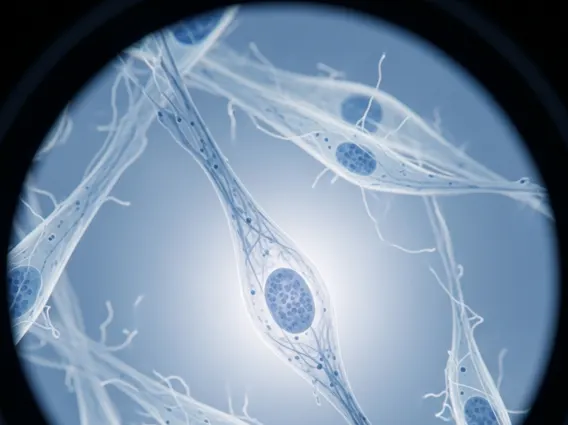
- Biopsy: A tissue sample from the tumor is taken and examined under a microscope by a pathologist. This is the definitive method for confirming the diagnosis.
- Molecular and Genetic Testing: Specialized tests are performed on the biopsy sample to identify the characteristic chromosomal translocations (e.g., EWSR1-FLI1 fusion gene), which confirm the diagnosis of ESFT.
- Bone Marrow Biopsy: Often performed to check for the presence of cancer cells in the bone marrow, as ESFT can sometimes metastasize there.
Early and accurate diagnosis is essential for initiating timely and effective treatment, which often includes a combination of chemotherapy, surgery, and radiation therapy.