Electrodermal Response
Electrodermal Response is a physiological phenomenon reflecting changes in the electrical properties of the skin. It serves as a valuable indicator of sympathetic nervous system activity, often linked to emotional and cognitive states.
Key Takeaways
- Electrodermal Response (EDR) reflects changes in skin electrical conductivity due to sweat gland activity.
- It is a direct indicator of sympathetic nervous system arousal, often associated with emotional and cognitive processes.
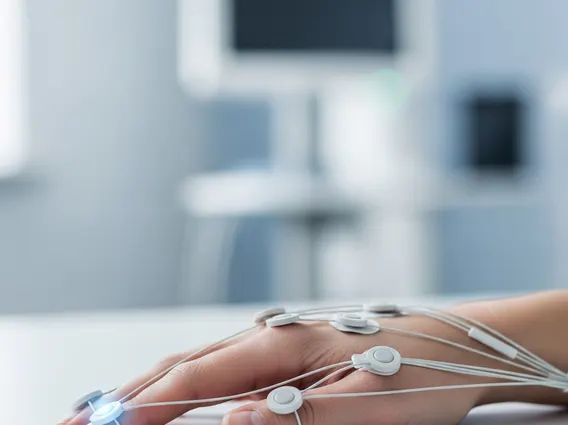
- EDR measurement involves non-invasive sensors placed on the skin, typically on the fingers or palms.
- The response is highly sensitive to psychological states, making it a key tool in stress research and biofeedback.
- Understanding EDR provides insights into human emotional regulation and physiological responses to various stimuli.
What is Electrodermal Response?
Electrodermal Response (EDR) refers to changes in the electrical conductivity of the skin, a physiological phenomenon reflecting the activity of the sympathetic nervous system. These changes are primarily mediated by the eccrine sweat glands, which are abundantly distributed across the skin, particularly on the palms of the hands and soles of the feet. When an individual experiences emotional arousal, stress, or cognitive effort, the sympathetic nervous system activates these glands, leading to an increase in sweat production. Even imperceptible changes in sweat gland activity can significantly alter the skin’s electrical properties, making EDR a highly sensitive and objective measure of physiological arousal. This response is largely involuntary and reflects the body’s automatic “fight or flight” mechanism, providing a direct, non-verbal window into an individual’s internal emotional and cognitive states without conscious control. The phenomenon is also widely recognized by other terms such as galvanic skin response (GSR), skin conductance response (SCR), or electrodermal activity (EDA).
How Electrodermal Activity Works
Electrodermal activity works by detecting subtle, dynamic changes in the skin’s ability to conduct electricity. The mechanism hinges on the eccrine sweat glands, which are unique because they are primarily innervated by the sympathetic nervous system and produce a fluid rich in electrolytes. When psychological stimuli, such as stress, fear, excitement, or even focused attention, trigger sympathetic activation, these glands are stimulated to secrete more sweat onto the skin surface. The presence of this electrolyte-rich fluid significantly increases the skin’s electrical conductivity.
The measurement process involves applying a small, imperceptible electrical current between two electrodes placed on the skin. As the amount of sweat on the skin changes, the resistance to this current varies. A decrease in skin resistance, or conversely, an increase in skin conductance, directly indicates heightened sympathetic arousal. This physiological response is remarkably rapid, typically manifesting within one to three seconds following a stimulus, and then gradually returning to a baseline level. The ability to track these real-time fluctuations makes EDR a powerful tool for understanding dynamic changes in arousal levels.
Measuring Electrodermal Response and Its Link to Stress
Electrodermal response measurement is a non-invasive procedure that typically involves placing small, surface electrodes on areas of the skin with a high density of eccrine sweat glands, most commonly the fingers or palms. These electrodes are connected to a device that applies a very low, constant voltage and measures the resulting current, thereby calculating skin conductance. The data collected provides insights into two main components of electrodermal activity: tonic skin conductance, which represents the slow-changing baseline level of arousal, and phasic skin conductance responses, which are rapid, transient increases in conductance in response to specific stimuli.
The link between electrodermal response and stress is one of its most significant applications in psychophysiology. When an individual experiences psychological stress, the sympathetic nervous system is activated, leading to an immediate increase in eccrine sweat gland activity and, consequently, a measurable EDR. This makes EDR a robust and objective physiological marker for stress, anxiety, and general emotional arousal. For example, numerous research studies have consistently demonstrated that individuals exposed to acute stressors, such as public speaking or difficult cognitive tasks, exhibit significantly elevated EDRs compared to those in relaxed or neutral states. This physiological response provides valuable data for understanding how individuals react to and cope with various stressors.
EDR measurements are utilized in various fields for different purposes:
- Psychological Research: Studying emotional processing, attention, and cognitive load.
- Clinical Settings: Assessing anxiety disorders, phobias, and post-traumatic stress disorder (PTSD).
- Biofeedback Training: Helping individuals learn to regulate their physiological responses to stress.
- Neuroscience: Investigating brain-body interactions and autonomic nervous system regulation.