Causes of Fertility Issues in Males in Cancer Patients
Cancer diagnoses and their subsequent treatments can profoundly impact various aspects of a patient’s life, including their reproductive health. For males, understanding the potential for fertility issues is crucial, as both the disease itself and the aggressive therapies employed can significantly compromise the ability to conceive.
Key Takeaways
- Cancer treatments like chemotherapy and radiation are primary contributors to male fertility problems, often by damaging sperm-producing cells.
- The cancer itself can directly impair reproductive health through systemic effects, hormonal disruptions, or direct organ involvement.
- Biological mechanisms involve damage to germ cells, Leydig cells, and the hypothalamic-pituitary-gonadal axis, leading to reduced sperm production and quality.
- The risk of fertility issues varies significantly based on the type of cancer, treatment regimen, dosage, and individual patient factors.
- Fertility preservation for male cancer patients, such as sperm banking, is a critical consideration before starting treatment.
Treatment-Related Causes of Male Fertility Issues
The most significant contributors to fertility problems in male cancer patients often stem directly from the therapies designed to eradicate the disease. These treatments, while life-saving, can have collateral damage on rapidly dividing cells, including those responsible for sperm production. Understanding these impacts is vital for patients considering their future reproductive options.
Male infertility causes cancer treatment are diverse, ranging from systemic drug effects to localized radiation. The extent of damage is influenced by the specific agents used, their dosage, duration of treatment, and the patient’s age and baseline fertility. For instance, younger patients may have a greater capacity for recovery, though this is not guaranteed.
Impact of Chemotherapy Regimens
Chemotherapy impact on male fertility is a well-documented concern. These potent drugs work by targeting and destroying fast-growing cells, a characteristic shared by cancer cells and spermatogonia (the precursor cells to sperm). Alkylating agents, such as cyclophosphamide, ifosfamide, and procarbazine, are particularly gonadotoxic, meaning they are highly damaging to the gonads. Platinum-based drugs like cisplatin also pose a significant risk.
The damage caused by chemotherapy can lead to a temporary reduction in sperm count (oligospermia) or a complete absence of sperm (azoospermia). While some men may experience a return of sperm production months or years after treatment, for many, the damage can be permanent. The risk of permanent infertility increases with higher cumulative doses and specific drug combinations. According to the American Society of Clinical Oncology (ASCO), up to 80% of males treated with certain high-risk chemotherapy regimens may experience long-term fertility impairment.
The following categories of chemotherapy drugs are commonly associated with high gonadotoxicity:
- Alkylating Agents: Cyclophosphamide, Ifosfamide, Procarbazine, Busulfan, Melphalan, Chlorambucil.
- Platinum-Based Agents: Cisplatin, Carboplatin.
- Antimetabolites: Methotrexate (less common but possible at high doses).
- Anthracyclines: Doxorubicin (less common but can contribute).
Radiation’s Effect on Testicular Function
Radiation therapy male infertility risks are substantial, especially when the testes are within the treatment field. Ionizing radiation directly damages the germinal epithelium, which is responsible for producing sperm. The sensitivity of spermatogonia to radiation is very high, meaning even low doses can cause significant and often irreversible damage. Doses as low as 0.15 Gy can cause temporary azoospermia, while doses exceeding 2 Gy can lead to permanent infertility.
Radiation to the pelvic area for cancers like prostate or bladder cancer, or total body irradiation (TBI) used in preparation for bone marrow transplantation, carries a high risk of testicular damage. Even when the testes are shielded, scattered radiation can still reach them and cause harm. Beyond direct damage to germ cells, radiation can also affect Leydig cells, which produce testosterone. Damage to Leydig cells can lead to hypogonadism, further impairing sperm production and overall reproductive function.
How Cancer Itself Affects Male Reproductive Health
Beyond the direct effects of treatment, the cancer itself can significantly compromise a male’s fertility. This aspect of how cancer affects male fertility is often overlooked but plays a crucial role in the overall reproductive outlook for patients. The disease can exert systemic effects that disrupt the delicate hormonal balance necessary for healthy sperm production, or it can directly involve reproductive organs.
Cancer and male reproductive health are intertwined through various mechanisms. Chronic illness, inflammation, and metabolic disturbances associated with advanced cancer can lead to a general decline in health, which in turn impacts spermatogenesis. Malnutrition, weight loss, and fatigue, common in cancer patients, can also contribute to reduced fertility by affecting hormonal regulation and overall physiological function.
Why cancer causes male fertility problems can also be attributed to specific tumor types. Testicular cancer, for example, directly affects the primary reproductive organ, often necessitating orchiectomy (removal of a testicle) and potentially impacting the function of the remaining testicle. Tumors in or near the pituitary gland or hypothalamus can disrupt the hypothalamic-pituitary-gonadal (HPG) axis, leading to hormonal imbalances that impair testosterone production and spermatogenesis. Similarly, adrenal tumors can alter hormone levels, indirectly affecting testicular function.
Biological Mechanisms of Fertility Impairment
To fully grasp male infertility causes cancer treatment and the disease itself, it is essential to understand the underlying biological mechanisms at play. Fertility impairment in male cancer patients is primarily due to damage at the cellular and molecular levels within the reproductive system, particularly affecting sperm production and hormonal regulation.
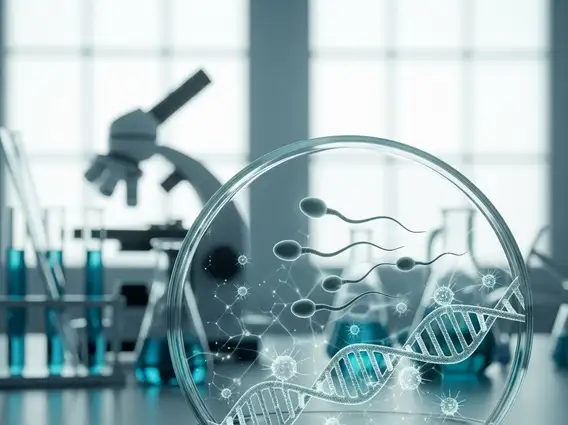
One of the primary mechanisms involves direct damage to the germ cells within the testes. Spermatogonia, the stem cells that continuously divide and differentiate into mature sperm, are highly sensitive to cytotoxic agents and radiation. When these cells are destroyed or their ability to divide is compromised, the production of new sperm ceases or is severely reduced, leading to oligospermia or azoospermia. Even if some sperm production recovers, the quality of the sperm may be compromised, with increased rates of DNA fragmentation or chromosomal abnormalities, which can affect fertilization and embryo development.
Another critical mechanism is the disruption of the hormonal axis that controls male reproduction. The hypothalamic-pituitary-gonadal (HPG) axis involves the hypothalamus releasing gonadotropin-releasing hormone (GnRH), which stimulates the pituitary gland to release luteinizing hormone (LH) and follicle-stimulating hormone (FSH). LH stimulates Leydig cells in the testes to produce testosterone, while FSH stimulates Sertoli cells to support sperm maturation. Cancer treatments, particularly radiation to the brain or high-dose chemotherapy, can damage the hypothalamus or pituitary gland, impairing the release of GnRH, LH, and FSH. This leads to secondary hypogonadism, characterized by low testosterone levels and impaired spermatogenesis. Additionally, direct damage to Leydig cells by chemotherapy or radiation can result in primary hypogonadism, where the testes fail to produce adequate testosterone despite normal or elevated LH levels, further contributing to fertility issues.
Given these significant risks, discussions about fertility preservation for male cancer patients should ideally occur before the initiation of any cancer treatment. Options such as sperm cryopreservation (sperm banking) allow men to store viable sperm for future use, offering hope for biological parenthood after overcoming cancer.
Frequently Asked Questions
Can fertility issues from cancer treatment be permanent?
Yes, fertility issues resulting from cancer treatment can be permanent. The permanence largely depends on the type and dose of treatment, the patient’s age, and individual biological factors. Highly gonadotoxic chemotherapy agents and significant radiation doses to the testes often cause irreversible damage to germ cells and Leydig cells, leading to long-term or permanent azoospermia and hypogonadism. While some men may experience a partial recovery of sperm production years after treatment, for many, the damage is enduring, underscoring the importance of pre-treatment counseling and fertility preservation options.
What options are available for fertility preservation?
The primary and most established option for fertility preservation for male cancer patients is sperm cryopreservation, commonly known as sperm banking. This involves collecting and freezing sperm samples before cancer treatment begins, which can then be stored indefinitely for future use in assisted reproductive technologies. For pre-pubertal boys who cannot produce sperm, experimental options like testicular tissue cryopreservation are being explored, though these are not yet standard clinical practice. Discussing these options with an oncologist and a fertility specialist is crucial before starting treatment.
Does the type of cancer influence fertility risk?
Absolutely, the type of cancer significantly influences the risk of fertility issues. Cancers that directly involve the reproductive organs, such as testicular cancer, inherently pose a higher risk due to the need for surgery (e.g., orchiectomy) or direct radiation to the area. Cancers requiring highly aggressive chemotherapy regimens, such as lymphomas or leukemias, also carry a substantial risk due to the systemic nature of the treatment. Conversely, some localized cancers treated with surgery alone, without chemotherapy or radiation to the pelvic area, may have a lower impact on fertility. Each cancer type and its specific treatment protocol must be individually assessed.