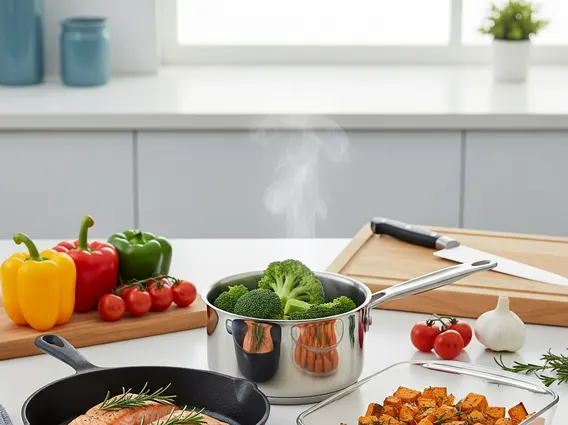
Key Takeaways
Key Takeaways
- Different cooking methods preserve or destroy nutrients to varying degrees, affecting overall dietary quality.
- High-temperature cooking techniques such as grilling and frying can produce carcinogenic compounds linked to increased cancer risk.
- Gentler methods like steaming, poaching, and slow cooking help retain nutrients while minimizing harmful byproducts.
- Cancer patients benefit from food safety practices that reduce infection risk, as their immune systems are often compromised.
- Choosing the right preparation technique supports both nutritional needs and overall treatment outcomes.
Cooking Methods and Their Effect on Nutrient Retention
The nutritional content of food is not fixed from farm to table. Heat, water, and cooking duration all influence whether vitamins, minerals, and antioxidants remain intact or are diminished by the time a meal is consumed. Water-soluble vitamins such as vitamin C and B vitamins are particularly vulnerable, as they leach into cooking water or degrade rapidly under high temperatures.
Steaming is widely regarded as one of the most nutrient-preserving techniques available. Because food does not come into direct contact with water, fewer water-soluble nutrients are lost compared to boiling. Research published in nutritional science literature consistently shows that steamed vegetables retain significantly higher concentrations of vitamin C and folate than their boiled counterparts. Roasting and baking, while effective for flavor development, can reduce heat-sensitive vitamins by 10–25% depending on temperature and duration.
Microwaving, often overlooked as a legitimate cooking technique, actually preserves nutrients effectively due to its short cooking times and minimal water requirements. The American Cancer Society notes that cooking time is one of the most critical factors in nutrient retention, making quick methods preferable when nutrient preservation is a priority. Conversely, prolonged boiling or deep frying at high temperatures leads to the most significant nutrient losses and can introduce additional health concerns.
| Cooking Technique | Nutrient Retention | Key Consideration |
|---|---|---|
| Steaming | High | Best for vegetables; preserves water-soluble vitamins |
| Microwaving | High | Short cook time limits nutrient degradation |
| Baking / Roasting | Moderate | Heat-sensitive vitamins reduced; fat-soluble vitamins stable |
| Boiling | Low to Moderate | Nutrients leach into water; use cooking liquid when possible |
| Deep Frying | Low | High temperatures destroy nutrients and add unhealthy fats |
| Grilling / Charbroiling | Moderate | Risk of carcinogen formation at high heat |
How Different Cooking Methods Impact Cancer Risk
The relationship between food preparation and cancer risk is an area of active scientific investigation. High-temperature cooking of protein-rich foods — particularly red and processed meats — can generate harmful chemical compounds that have been associated with increased cancer risk. Two of the most studied groups are heterocyclic amines (HCAs) and polycyclic aromatic hydrocarbons (PAHs), both of which form when muscle meat is cooked at temperatures above 150°C (300°F) through grilling, pan-frying, or charbroiling.
According to the National Cancer Institute (NCI), HCAs and PAHs have been shown to be mutagenic in laboratory settings, meaning they can cause changes in DNA that may lead to cancer. Epidemiological studies have linked frequent consumption of well-done or charred meats with elevated risks of colorectal, pancreatic, and prostate cancers. Acrylamide, another compound that forms when starchy foods are fried or baked at high temperatures, has also been classified as a probable human carcinogen by the International Agency for Research on Cancer (IARC).
It is important to note that the level of risk depends on frequency of exposure, portion size, and overall dietary patterns rather than occasional consumption of grilled food alone. The World Health Organization (WHO) emphasizes a balanced dietary approach and recommends limiting processed and red meat consumption to reduce overall cancer risk. Simple adjustments — such as marinating meats before grilling, removing charred portions, and avoiding dripping fat that causes flare-ups — can meaningfully reduce HCA and PAH formation without eliminating grilling entirely.
Recommended Cooking Techniques for Cancer Patients
Cancer patients face unique nutritional challenges, including changes in taste, reduced appetite, nausea, and difficulty swallowing. At the same time, their bodies require adequate protein, calories, and micronutrients to support immune function, tissue repair, and tolerance of treatments such as chemotherapy and radiation. Selecting appropriate food preparation approaches becomes a clinically relevant consideration throughout the course of treatment.
Gentle cooking methods — including poaching, slow cooking, and steaming — are generally recommended for cancer patients because they produce soft, easily digestible textures without generating potentially harmful compounds. Poached proteins such as eggs, fish, and chicken are well tolerated by patients experiencing gastrointestinal side effects. Slow cooking at low temperatures for extended periods allows tougher cuts of meat to become tender while preserving moisture and flavor, which can benefit patients struggling with appetite loss or dry mouth.
Blending and pureeing cooked foods is another valuable technique for individuals who have difficulty chewing or swallowing, a common side effect among head and neck cancer patients. Soups and smoothies made with cooked vegetables, legumes, and lean proteins can provide concentrated nutrition in an accessible form. Healthcare providers and registered oncology dietitians often work together to individualize dietary recommendations based on the patient’s specific cancer type, treatment protocol, and symptom profile.
Managing Texture and Palatability During Treatment
Palatability is a significant barrier to adequate nutrition during cancer treatment. Many patients experience heightened sensitivity to bitter tastes or metallic flavors, particularly during chemotherapy. Cooking techniques that enhance natural sweetness — such as roasting root vegetables at moderate temperatures or caramelizing onions slowly — can make food more appealing without relying on high-risk methods. Using aromatic herbs, citrus zest, and mild seasonings during cooking also improves flavor without adding sodium or processed ingredients.
Protein Preparation for Immune Support
Adequate protein intake is critical for immune system maintenance and tissue recovery in cancer patients. Cooking lean proteins thoroughly using low-moisture methods such as poaching or gentle baking ensures both safety and digestibility. Fish, eggs, and well-cooked legumes are particularly beneficial, as they provide high-quality protein alongside anti-inflammatory nutrients. Patients should avoid raw or undercooked proteins entirely during treatment, as the risk of foodborne illness is substantially elevated in immunocompromised individuals.
Choosing Safe Food Preparation Practices During Treatment
Food safety takes on heightened importance for cancer patients, particularly those undergoing chemotherapy or stem cell transplantation, which can severely suppress the immune system. The Centers for Disease Control and Prevention (CDC) reports that immunocompromised individuals are significantly more susceptible to foodborne illnesses caused by pathogens such as Listeria monocytogenes, Salmonella, and E. coli. These infections, which healthy individuals might recover from quickly, can become life-threatening during cancer treatment.
Safe food handling begins before cooking. Washing hands thoroughly with soap and water for at least 20 seconds before and after handling food is a foundational step. Surfaces, cutting boards, and utensils should be sanitized regularly, especially after contact with raw meat, poultry, or seafood. Cross-contamination — when harmful bacteria transfer from raw to ready-to-eat foods — is a leading cause of foodborne illness and can be prevented by using separate cutting boards and storing raw proteins below other foods in the refrigerator.
Cooking foods to their recommended internal temperatures is non-negotiable for patients with compromised immunity. A food thermometer should be used rather than relying on visual cues such as color or texture. Patients are generally advised to avoid raw or undercooked meats, raw shellfish, unpasteurized dairy products, raw sprouts, and unwashed produce. Foods from salad bars, buffets, or street vendors carry elevated contamination risks and should be avoided during active treatment.
- Cook poultry to an internal temperature of at least 74°C (165°F).
- Cook ground meats to at least 71°C (160°F).
- Cook fish until it flakes easily and reaches 63°C (145°F) internally.
- Refrigerate leftovers within two hours and consume within 24–48 hours.
- Avoid raw eggs in any form, including homemade mayonnaise or runny yolks.
Patients should discuss specific dietary restrictions with their oncology team, as recommendations may vary depending on treatment type and current blood counts. A registered dietitian specializing in oncology can provide personalized guidance that balances food safety with nutritional adequacy throughout the entire treatment journey.
Cooking Methods FAQs
Steaming is generally considered the most effective method for preserving nutrients in vegetables, particularly water-soluble vitamins like vitamin C and folate. Because vegetables are not submerged in water, fewer nutrients leach out during the process. Microwaving with minimal water also achieves excellent retention due to short cooking times. Boiling is the least effective, though using the cooking water in soups or sauces can recover some of the lost nutrients.
Grilled foods are generally not recommended for cancer patients during active treatment due to both food safety concerns and the potential presence of harmful compounds formed at high temperatures. Immunocompromised patients are at greater risk from undercooked proteins, which are more common with grilling. If grilled food is consumed, it should be thoroughly cooked to safe internal temperatures, and charred or blackened portions should be removed before eating.
Certain preparation adjustments can lower the formation of harmful compounds like HCAs and PAHs when cooking red meat. Marinating meat before cooking, using lower temperatures, reducing cooking time, and flipping meat frequently during grilling have all been shown to reduce carcinogen formation. Avoiding charring and removing burnt portions also helps. However, the WHO and NCI still recommend limiting red and processed meat consumption as part of a broader cancer-risk reduction strategy.