Key Takeaways
- Kidney cancer often presents with subtle symptoms, making early diagnosis of kidney cancer challenging but vital.
- Risk factors include genetics and lifestyle choices like smoking and obesity, influencing the causes of kidney cancer.
- Kidney cancer treatment options range from surgery to targeted therapies and immunotherapy, tailored to the individual and stages of kidney cancer.
- Regular check-ups and awareness of symptoms of kidney cancer are key for improved outcomes.
- Living with kidney cancer involves comprehensive care, including medical treatment, support, and lifestyle adjustments.
What is Kidney Cancer?
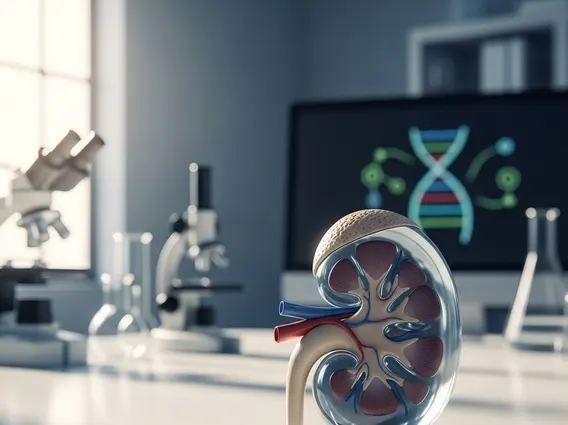
What is kidney cancer? It is a type of cancer that originates in the kidneys, two bean-shaped organs located on either side of the spine, just above the waist. Their primary function is to filter waste products from the blood and produce urine. When cells in the kidney grow out of control, they can form a tumor, leading to kidney cancer. This disease is relatively common; according to the American Cancer Society, kidney and renal pelvis cancers are among the top 10 most common cancers in both men and women in the United States. In 2024, an estimated 82,290 new cases of kidney and renal pelvis cancer are expected to be diagnosed. (Source: American Cancer Society, Cancer Facts & Figures 2024).
Types of Renal Cell Carcinoma
The most common form of kidney cancer is renal cell carcinoma (RCC), accounting for about 9 out of 10 kidney cancers. Several subtypes of RCC exist, each with distinct characteristics:
- Clear Cell Renal Cell Carcinoma (ccRCC): This is the most prevalent type, making up about 70-80% of all RCC cases. It is characterized by cancer cells that appear clear or pale under a microscope.
- Papillary Renal Cell Carcinoma (pRCC): This type accounts for 10-15% of RCCs and forms small, finger-like projections (papillae) within the tumor. It can be further divided into Type 1 and Type 2.
- Chromophobe Renal Cell Carcinoma: Representing about 5% of RCCs, cells of this type are typically larger and have distinct cell borders.
- Collecting Duct Carcinoma: A rare and aggressive type, originating in the collecting ducts of the kidney.
- Medullary Carcinoma: Another rare and aggressive form, primarily affecting individuals with sickle cell trait.
How it Develops
Kidney cancer develops when genetic mutations occur in kidney cells, causing them to grow and divide uncontrollably. These abnormal cells accumulate, forming a tumor. Over time, these cancer cells can invade nearby tissues or spread to distant parts of the body through the bloodstream or lymphatic system, a process known as metastasis. The exact triggers for these mutations are not always clear, but a combination of genetic and environmental factors is believed to play a role in its development.
Recognizing Kidney Cancer Symptoms
Early detection of kidney cancer is often challenging because symptoms of kidney cancer typically do not appear until the disease has advanced. When they do occur, they can be vague and easily mistaken for other conditions. Awareness of these signs is crucial for timely medical evaluation.
Common Warning Signs
The most common warning signs associated with kidney cancer include:
- Blood in the urine (hematuria): This is often the first noticeable symptom and can appear as pink, red, or cola-colored urine. It may be intermittent.
- Pain in the back or side: Persistent pain below the ribs that does not go away, often on one side.
- A lump or mass in the abdomen or side: This may be felt during a physical exam, though it’s often deep within the body.
- Unexplained weight loss: Significant weight loss without changes in diet or exercise.
- Fatigue: Persistent tiredness that is not relieved by rest.
- Fever: A fever that comes and goes and is not due to a cold or other infection.
- Swelling in the ankles or legs: Can be a sign of fluid retention.
- High blood pressure (hypertension): Can be caused by the tumor affecting kidney function or hormone production.
When to See a Doctor
It is important to consult a doctor if you experience any of these symptoms of kidney cancer, especially if they are persistent or worsening. While these symptoms can be indicative of many less serious conditions, prompt medical evaluation is essential to rule out kidney cancer or other significant health issues. Early diagnosis significantly improves the range of available kidney cancer treatment options and overall prognosis.
Causes and Risk Factors
While the exact causes of kidney cancer are not fully understood, several factors have been identified that can increase an individual’s risk of developing the disease. These include both genetic predispositions and various lifestyle influences.
Genetic Predisposition
A small percentage of kidney cancer cases are linked to inherited genetic conditions. These syndromes increase the likelihood of developing kidney tumors, often at a younger age or with multiple tumors:
- Von Hippel-Lindau (VHL) disease: Individuals with VHL have a higher risk of developing clear cell RCC.
- Birt-Hogg-Dubé (BHD) syndrome: This condition is associated with chromophobe RCC and oncocytomas.
- Hereditary Papillary Renal Cell Carcinoma (HPRCC): Linked to Type 1 papillary RCC.
- Hereditary Leiomyomatosis and Renal Cell Carcinoma (HLRCC): Associated with an aggressive form of Type 2 papillary RCC.
Family history of kidney cancer, even without a known syndrome, can also slightly increase an individual’s risk.
Lifestyle Influences
Several lifestyle and environmental factors are strongly associated with an increased risk of kidney cancer:
- Smoking: Tobacco use is a significant risk factor, roughly doubling the risk of developing kidney cancer. The risk decreases after quitting but never returns to that of someone who has never smoked.
- Obesity: Being overweight or obese increases the risk, possibly due to hormonal changes associated with excess weight.
- High Blood Pressure (Hypertension): Both hypertension itself and certain medications used to treat it have been linked to an increased risk.
- Advanced Kidney Disease and Dialysis: People with long-term kidney failure, especially those on dialysis, have a higher risk of developing cystic kidney disease, which can sometimes lead to cancer.
- Exposure to certain substances: Occupational exposure to substances like cadmium, asbestos, and some herbicides has been linked to an increased risk.
Managing these modifiable risk factors can play a role in reducing the overall incidence of kidney cancer.
Diagnosing and Staging Kidney Cancer
The process of diagnosis of kidney cancer involves a series of tests to confirm the presence of cancer and determine its characteristics. Once diagnosed, the cancer is staged to assess its extent, which is crucial for planning appropriate kidney cancer treatment options.
Diagnostic Procedures
When kidney cancer is suspected, a doctor will typically recommend several diagnostic tests:
- Physical Exam and Medical History: The doctor will ask about symptoms, risk factors, and family history.
- Urine Tests: To check for blood or other abnormal substances in the urine.
- Blood Tests: To assess kidney function, blood counts, and general health.
- Imaging Tests: These are critical for visualizing the kidneys and identifying tumors. Common tests include:
- Ultrasound: Often the first test, it uses sound waves to create images of the kidneys.
- Computed Tomography (CT) scan: Provides detailed cross-sectional images, helping to determine tumor size, location, and spread.
- Magnetic Resonance Imaging (MRI): Offers detailed images, especially useful if a CT scan is inconclusive or if there are concerns about spread to blood vessels or brain.
- Biopsy: In some cases, a small tissue sample is taken from the tumor using a needle and examined under a microscope. While imaging can strongly suggest cancer, a biopsy provides a definitive diagnosis.
Understanding Cancer Stages
Stages of kidney cancer describe the extent of the cancer’s spread. Staging helps doctors determine the prognosis and the most effective kidney cancer treatment options. The most common system used is the TNM (Tumor, Node, Metastasis) system, which considers:
- T (Tumor): Describes the size and extent of the primary tumor.
- N (Nodes): Indicates whether the cancer has spread to nearby lymph nodes.
- M (Metastasis): Shows whether the cancer has spread to distant parts of the body (e.g., lungs, bones, liver).
Based on these factors, kidney cancer is typically assigned a stage from I to IV:
| Stage | Description |
|---|---|
| Stage I | Tumor is small (up to 7 cm) and confined to the kidney. |
| Stage II | Tumor is larger than 7 cm but still confined to the kidney. |
| Stage III | Tumor has spread to major veins or fatty tissue around the kidney, or to nearby lymph nodes, but not to distant organs. |
| Stage IV | Cancer has spread to distant lymph nodes, distant organs (like lungs, bones, brain), or beyond the tissue surrounding the kidney and adrenal gland. |
The 5-year relative survival rate for localized kidney cancer (Stage I) is approximately 93%, while for distant (Stage IV) disease, it drops to about 18%. (Source: National Cancer Institute SEER Program, 2013-2019).
Kidney Cancer Treatment Options
The choice of kidney cancer treatment options depends on several factors, including the stage of the cancer, the patient’s overall health, and personal preferences. Treatment strategies often combine different approaches to achieve the best possible outcome.
Surgical Approaches
Surgery is the primary treatment for most localized kidney cancer cases and offers the best chance for a cure. Surgical options include:
- Radical Nephrectomy: This involves the removal of the entire kidney, along with the adrenal gland and surrounding fatty tissue and lymph nodes. It can be performed through an open incision or minimally invasively (laparoscopically or robotically).
- Partial Nephrectomy (Nephron-Sparing Surgery): This procedure removes only the tumor and a small margin of healthy kidney tissue, preserving the rest of the kidney. It is often preferred for smaller tumors, especially if the patient has only one kidney or impaired kidney function, to maintain kidney health. This can also be done open or minimally invasively.
- Ablation Techniques: For very small tumors, especially in patients who are not good candidates for surgery, techniques like radiofrequency ablation (RFA) or cryoablation may be used. These procedures destroy the tumor using heat or extreme cold, respectively, with minimal invasion.
Non-Surgical Therapies
For advanced kidney cancer or when surgery is not feasible, non-surgical therapies play a crucial role:
- Targeted Therapy: These drugs focus on specific molecules involved in cancer growth and spread. Examples include tyrosine kinase inhibitors (TKIs) that block signals promoting tumor growth and angiogenesis inhibitors that prevent new blood vessel formation to feed the tumor.
- Immunotherapy: This treatment harnesses the body’s own immune system to fight cancer. Immune checkpoint inhibitors are a common type, blocking proteins that prevent immune cells from attacking cancer. Immunotherapy has significantly improved outcomes for advanced kidney cancer.
- Radiation Therapy: While kidney cancer is often resistant to conventional radiation, it can be used to manage symptoms like pain from bone metastases or to treat cancer that has spread to the brain. Stereotactic body radiation therapy (SBRT) is a more precise form that delivers high doses to tumors with minimal damage to surrounding healthy tissue.
- Chemotherapy: Traditional chemotherapy is generally not very effective for renal cell carcinoma compared to other cancer types, but it may be considered in very specific situations or for rare subtypes.
Living with kidney cancer often involves a multidisciplinary approach, combining medical treatments with supportive care, nutritional guidance, and psychological support. Survivorship care plans are essential to monitor for recurrence, manage long-term side effects, and maintain overall quality of life after treatment. Regular follow-up appointments, including imaging and blood tests, are crucial to monitor health and detect any changes early.
Kidney Cancer FAQs
Early signs of kidney cancer are often subtle or absent, making it challenging to detect in its initial stages. When symptoms do appear, they commonly include blood in the urine (hematuria), which may be visible or microscopic. Other early indicators can be persistent pain in the back or side, a palpable lump in the abdomen, unexplained fatigue, or unintentional weight loss. It’s important to consult a healthcare professional if any of these symptoms arise, as early detection significantly improves treatment outcomes.
Yes, kidney cancer can often be cured, especially when diagnosed at an early stage. For localized tumors (Stage I or II), surgical removal of the tumor or the entire kidney (nephrectomy) is highly effective and offers the best chance for a cure. Even in some cases of advanced kidney cancer, modern kidney cancer treatment options like targeted therapies and immunotherapy have significantly improved survival rates and can lead to long-term remission for many patients. The specific prognosis depends on the stage, type, and individual response to treatment.
Recovery after kidney cancer surgery varies depending on the type of procedure (partial vs. radical nephrectomy, open vs. minimally invasive) and the individual’s overall health. Minimally invasive surgeries (laparoscopic or robotic) typically involve shorter hospital stays (2-4 days) and quicker recovery times (2-4 weeks) compared to open surgery (5-7 days in hospital, 6-8 weeks for full recovery). Patients may experience pain at the incision site, fatigue, and temporary dietary restrictions. Gradual return to normal activities is advised, with specific instructions provided by the surgical team.