
Lead Shield
A Lead Shield is a critical component in medical imaging and radiation therapy, designed to protect both patients and healthcare professionals from the harmful effects of ionizing radiation. Its application is fundamental to maintaining safety standards in clinical environments where radiation is utilized for diagnostic or therapeutic purposes.
Key Takeaways
- A Lead Shield is a protective barrier made primarily of lead, used in medical settings to block ionizing radiation.
- It works by attenuating radiation through absorption and scattering, leveraging lead’s high density and atomic number.
- Lead shields are essential for reducing radiation exposure during diagnostic procedures like X-rays and CT scans, and during radiation therapy.
- Common types include aprons, thyroid collars, and mobile barriers, all aimed at minimizing radiation dose to sensitive organs.
- The primary benefit of lead shielding is to safeguard against radiation-induced health risks, aligning with the ALARA (As Low As Reasonably Achievable) principle.
What is a Lead Shield?
A Lead Shield refers to a protective barrier or device primarily composed of lead, specifically engineered to attenuate or block ionizing radiation. In medical and clinical settings, these shields are indispensable for radiation safety, safeguarding individuals from exposure to X-rays, gamma rays, and other forms of high-energy radiation. The effectiveness of lead stems from its high atomic number (Z=82) and high density (11.34 g/cm³), properties that make it highly efficient at absorbing and scattering photons. This material is crucial in environments such as radiology departments, nuclear medicine facilities, and radiation oncology units, where controlled radiation exposure is necessary for diagnosis and treatment.
The design of a Lead Shield varies widely depending on its specific application, ranging from personal protective equipment worn by medical staff to fixed structural components within treatment rooms. Its fundamental purpose remains consistent: to minimize the radiation dose received by patients and personnel, thereby reducing the risk of radiation-induced health effects such as cellular damage, genetic mutations, and cancer. Adherence to strict safety protocols, including the appropriate use of lead shielding, is paramount in all medical procedures involving radiation.
How Does Lead Shielding Work?
Lead shielding works primarily through the process of radiation attenuation, which involves the absorption and scattering of photons (such as X-rays and gamma rays) as they pass through the lead material. When high-energy photons interact with the lead atoms, several mechanisms occur. The most significant interactions are the photoelectric effect and Compton scattering. In the photoelectric effect, an incoming photon transfers all its energy to an electron in the lead atom, causing the electron to be ejected and the photon to be completely absorbed. This effect is more pronounced with lower-energy photons and high atomic number materials like lead.
For higher-energy photons, Compton scattering becomes more dominant. In this process, the incoming photon collides with an outer electron of the lead atom, transferring some of its energy to the electron and deflecting the photon in a new direction with reduced energy. While the photon is not completely absorbed, its energy is reduced, and its path is altered, significantly decreasing the radiation dose reaching the protected area. The high density of lead ensures a greater number of atomic nuclei and electrons per unit volume, increasing the probability of these interactions and making it an exceptionally effective material for blocking various types of ionizing radiation.
Applications, Types, and Benefits of Lead Shields
The applications of lead shields are extensive across various medical disciplines where ionizing radiation is employed. They are routinely used in diagnostic imaging procedures such as X-rays, computed tomography (CT) scans, and fluoroscopy to protect sensitive organs that are not part of the imaging target. In radiation therapy, lead shields are vital for shaping radiation beams and protecting healthy tissues surrounding the tumor. Furthermore, they are integral to nuclear medicine, where radioactive isotopes are used for diagnosis and treatment, requiring stringent containment and shielding measures.
There are several common types of lead shields, each designed for specific protective needs:
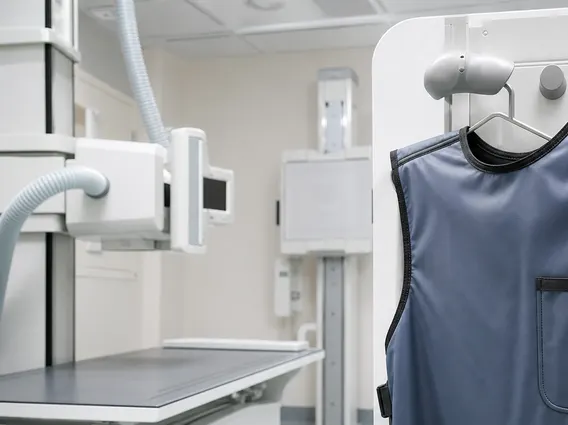
- Lead Aprons: Worn by medical personnel and patients during X-ray procedures to protect the torso and vital organs.
- Thyroid Collars: Designed to shield the thyroid gland, which is particularly sensitive to radiation.
- Gonad Shields: Used to protect reproductive organs, especially in pediatric patients, to minimize genetic risks.
- Mobile Barriers: Freestanding lead-lined screens that can be positioned to protect personnel during procedures.
- Lead-lined Walls and Doors: Permanent structural shielding in radiology rooms, CT suites, and radiation therapy bunkers to prevent radiation leakage.
The primary benefits of lead shielding are centered on radiation safety and patient well-being. By significantly reducing the radiation dose, lead shields help minimize the risk of stochastic effects, such as cancer and genetic mutations, which increase with cumulative exposure. They also protect against deterministic effects, like skin burns or cataracts, which occur above certain dose thresholds. The use of lead shielding is a cornerstone of the ALARA (As Low As Reasonably Achievable) principle, ensuring that radiation exposure is kept to the absolute minimum necessary for diagnostic or therapeutic efficacy. This commitment to safety not only protects individuals but also upholds ethical standards in healthcare, contributing to better long-term health outcomes for patients and a safer working environment for medical professionals.



















