T Cell Receptor
The T Cell Receptor (TCR) is a crucial molecule found on the surface of T lymphocytes, playing a central role in the adaptive immune system. It is responsible for recognizing specific antigens presented by other cells, initiating a targeted immune response against pathogens or abnormal cells.
Key Takeaways
- The T Cell Receptor (TCR) is a protein complex on T cells that recognizes specific antigens.
- TCRs are essential for the adaptive immune system’s ability to identify and respond to threats like viruses and cancer cells.
- Each TCR is unique, allowing T cells to detect a vast array of different antigens.
- The structure of a TCR, typically composed of alpha and beta chains, is critical for its antigen-binding specificity.
- TCR engagement with an antigen-MHC complex triggers a signaling cascade, leading to T cell activation and immune effector functions.
What is a T Cell Receptor (TCR)?
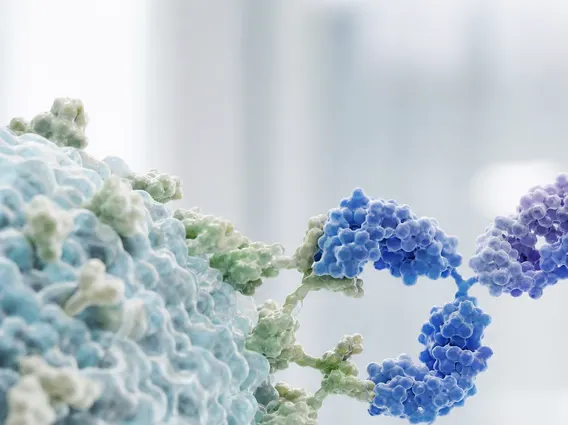
A T Cell Receptor (TCR) is a transmembrane protein complex located on the surface of T lymphocytes, which are a type of white blood cell vital to the immune system. Its primary role is to recognize and bind to specific fragments of antigens, which are typically peptides derived from pathogens or abnormal cells. Unlike antibodies, TCRs do not recognize free-floating antigens; instead, they bind to antigens presented on the surface of other cells by major histocompatibility complex (MHC) molecules. This recognition event is fundamental for initiating a targeted immune response, ensuring the body can distinguish between healthy self-cells and infected or cancerous cells.
The specificity of each TCR allows the immune system to mount highly precise responses. Billions of different T cells exist in the body, each expressing a unique TCR capable of recognizing a distinct antigen. This diversity is generated through a process called V(D)J recombination during T cell development, enabling the immune system to respond to an almost infinite variety of potential threats.
Structure and Components of T Cell Receptors
The t cell receptor structure is a complex arrangement of several protein chains. Most TCRs are heterodimers, meaning they consist of two distinct polypeptide chains. In the majority of T cells (alpha-beta T cells), these chains are an alpha (α) chain and a beta (β) chain, linked together by a disulfide bond. A smaller subset of T cells (gamma-delta T cells) express TCRs composed of gamma (γ) and delta (δ) chains.
Each α and β chain has a variable (V) region and a constant (C) region. The variable regions form the antigen-binding site, which is highly diverse and responsible for recognizing specific antigen-MHC complexes. The constant regions anchor the TCR to the cell membrane and interact with associated signaling molecules. For the TCR to function correctly, it must be associated with a complex of invariant proteins known as the CD3 complex. This complex consists of several chains:
- CD3γ (gamma)
- CD3δ (delta)
- CD3ε (epsilon) – typically two copies
- Zeta (ζ) chains – typically two copies, often referred to as CD247
These CD3 and zeta chains do not bind antigens themselves but are crucial for transmitting the signal from the antigen-bound TCR into the T cell’s interior, initiating the downstream signaling pathways necessary for T cell activation.
How T Cell Receptors Function in Immune Response
Understanding how T Cell Receptors work is key to comprehending adaptive immunity. The primary t cell receptor function is to detect and respond to specific antigens presented on antigen-presenting cells (APCs) or target cells. When a TCR on a T cell encounters its specific antigen presented within an MHC molecule, it initiates a series of events that culminate in T cell activation.
This recognition event is often described as a “two-signal” model. The first signal comes from the TCR binding to the antigen-MHC complex. This binding alone is usually insufficient for full T cell activation. A second, co-stimulatory signal, typically provided by interactions between other surface molecules on the T cell (like CD28) and the APC, is also required. This dual requirement helps prevent inappropriate immune responses against self-antigens.
Upon successful engagement and co-stimulation, the CD3 and zeta chains associated with the TCR transmit intracellular signals. These signals lead to a cascade of biochemical events, including protein phosphorylation, changes in gene expression, and ultimately, the proliferation and differentiation of the T cell. Depending on the type of T cell (e.g., helper T cells, cytotoxic T lymphocytes), this activation can lead to various immune effector functions, such as:
- Secretion of cytokines to coordinate other immune cells.
- Direct killing of infected or cancerous cells.
- Development of immunological memory for faster future responses.
This intricate process ensures that the immune system can precisely target and eliminate threats while maintaining tolerance to the body’s own tissues.