
Clavicle
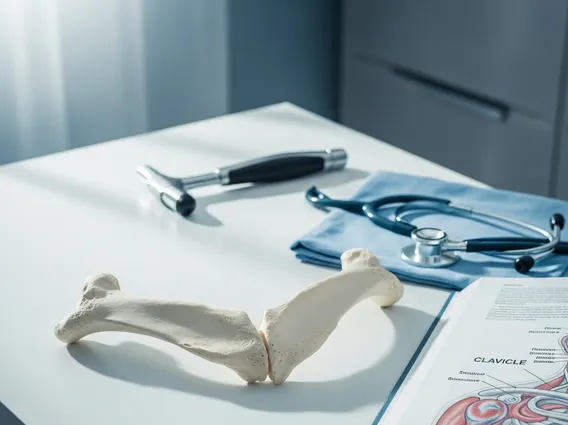
The clavicle, commonly known as the collarbone, is a vital long bone that plays a crucial role in the human shoulder girdle. It connects the upper limb to the trunk, providing structural support and facilitating a wide range of arm movements.
Key Takeaways
- The Clavicle is an S-shaped bone, often called the collarbone, connecting the sternum to the shoulder blade.
- It is located horizontally at the base of the neck, forming part of the shoulder girdle.
- Its primary functions include supporting the shoulder, enabling arm mobility, and protecting underlying nerves and blood vessels.
- Common injuries to the clavicle primarily involve fractures, often resulting from falls, sports, or direct trauma.
- Understanding its anatomy and function is essential for diagnosing and treating clavicle-related conditions.
What is the Clavicle?
The Clavicle, also known as the collarbone, is a slender, S-shaped long bone that extends horizontally across the top of the chest. It is the only direct bony connection between the axial skeleton (skull, vertebral column, rib cage) and the upper limb. This unique positioning makes it a critical component of the shoulder girdle, providing stability and mobility to the arm.
Functionally, the clavicle acts as a strut, holding the shoulder away from the trunk to allow the arm to swing freely. It also serves as a protective shield for several important nerves and blood vessels that pass from the neck into the arm. Its distinctive shape and superficial location make it easily palpable and visible beneath the skin.
Clavicle Anatomy, Location, and Function
The clavicle anatomy and function are intricately linked, allowing for the complex movements of the shoulder. This bone has a distinct S-shape, with two primary ends: the sternal end, which articulates with the manubrium of the sternum (breastbone), and the acromial end, which articulates with the acromion process of the scapula (shoulder blade).
The clavicle is located horizontally at the base of the neck, positioned superior to the first rib. Specifically, where is the clavicle located? It stretches from the sternum medially to the acromion of the scapula laterally, forming the anterior part of the shoulder girdle. This strategic placement allows it to transmit forces from the upper limb to the axial skeleton.
The functions of the clavicle are multifaceted and essential for upper limb mobility and protection:
- Shoulder Support: It acts as a rigid support, keeping the scapula and upper limb away from the thorax, which maximizes the range of motion of the arm.
- Force Transmission: It transmits physical impacts and forces from the upper limb to the axial skeleton, helping to dissipate stress.
- Muscle Attachment: Numerous muscles, including the deltoid, pectoralis major, sternocleidomastoid, and trapezius, attach to the clavicle, facilitating various movements of the shoulder and neck.
- Neurovascular Protection: It forms a protective arch over the neurovascular bundle (nerves and blood vessels) that passes from the neck into the armpit.
Common Clavicle Bone Injuries
The clavicle’s exposed position and its role in force transmission make it susceptible to injury. Clavicle bone common injuries primarily involve fractures, which are among the most frequent types of bone breaks, especially in children and young adults. These injuries often occur due to direct trauma or falls onto the shoulder or an outstretched arm.
Common causes of clavicle fractures include:
- Falls: Falling directly onto the shoulder or landing on an outstretched arm.
- Sports Injuries: High-impact sports like cycling, football, rugby, and snowboarding often lead to clavicle fractures.
- Motor Vehicle Accidents: Direct impact to the shoulder during collisions.
- Birth Trauma: In infants, a clavicle fracture can occur during a difficult delivery.
Symptoms of a clavicle fracture typically include severe pain, swelling, bruising, and difficulty moving the arm or shoulder. A visible deformity or a grinding sensation may also be present. Treatment usually involves immobilization with a sling, pain management, and physical therapy. In some cases, surgical intervention may be necessary to realign the bone fragments and ensure proper healing.



















