C Erbb 2
C Erbb 2, also known as ERBB2 or HER2, is a crucial protein involved in cell growth and division. Understanding its function is vital, particularly in the context of various diseases, most notably certain types of cancer.
Key Takeaways
- C Erbb 2 (ERBB2 or HER2) is a protein that acts as a receptor on cell surfaces, playing a key role in cell growth and survival.
- The C Erbb 2 gene function involves producing this receptor, which, when activated, triggers intracellular signaling pathways.
- The C Erbb 2 signaling pathway is essential for normal cellular processes but can become overactive due to gene amplification or overexpression.
- The role of C Erbb 2 in disease is primarily associated with cancer, where its overexpression can drive uncontrolled cell proliferation, making it a significant therapeutic target.
What is C Erbb 2 (ERBB2) Protein?
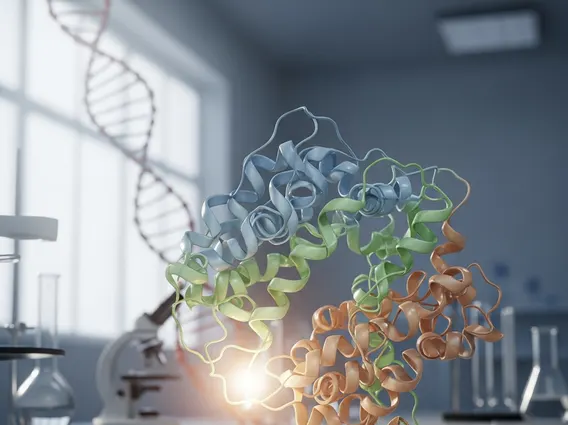
C Erbb 2, formally known as ERBB2 (Erb-B2 Receptor Tyrosine Kinase 2) and commonly referred to as HER2 (Human Epidermal growth factor Receptor 2), is a protein found on the surface of certain cells. It belongs to the epidermal growth factor receptor (EGFR) family, a group of four closely related receptor tyrosine kinases. These receptors are critical components of cellular communication, acting like antennae that receive signals from outside the cell and transmit them inward, influencing cellular activities such as growth, division, and survival.
Unlike other members of the EGFR family, C Erbb 2 does not have a known direct ligand (a molecule that binds specifically to a receptor). Instead, it forms heterodimers (pairs) with other activated EGFR family members, enhancing their signaling capabilities. This unique characteristic makes C Erbb 2 a potent co-receptor that can significantly amplify growth signals, even at low levels of ligand binding to its dimerization partners.
C Erbb 2 Gene Function and Signaling Pathway
The C Erbb 2 gene function involves encoding the ERBB2 protein. This gene is located on chromosome 17 in humans. When the C Erbb 2 gene is expressed, it produces the ERBB2 protein, which is then transported to the cell membrane to act as a receptor. The primary function of this protein is to participate in cell signaling pathways that regulate cell proliferation, differentiation, and survival. Its role as a co-receptor means it can stabilize and enhance the activity of other HER receptors, leading to a more robust and sustained intracellular signal.
The C Erbb 2 signaling pathway begins when ERBB2 forms a dimer with another activated receptor from the EGFR family. This dimerization leads to the activation of the intracellular tyrosine kinase domain of the receptor complex. Once activated, the tyrosine kinase phosphorylates specific amino acid residues on the receptor, creating docking sites for various signaling proteins. These proteins then initiate a cascade of downstream signaling events, primarily involving pathways such as the PI3K/Akt pathway and the MAPK/ERK pathway. These pathways ultimately lead to changes in gene expression that promote cell growth, inhibit apoptosis (programmed cell death), and enhance cell motility.
Key components of the C Erbb 2 signaling pathway include:
- Dimerization: ERBB2 pairs with other HER family members (EGFR/HER1, HER3, HER4).
- Autophosphorylation: The receptor complex phosphorylates itself on tyrosine residues.
- Recruitment of Adaptor Proteins: Signaling molecules like Grb2, Shc, and PI3K are recruited to the phosphorylated sites.
- Activation of Downstream Pathways: This leads to the activation of the PI3K/Akt/mTOR pathway (promoting cell survival and growth) and the Ras/Raf/MEK/ERK pathway (promoting cell proliferation).
Role of C Erbb 2 in Disease
The role of C Erbb 2 in disease is most prominently observed in various cancers, where its overexpression or amplification can lead to uncontrolled cell growth and tumor progression. In healthy cells, the C Erbb 2 protein levels are tightly regulated. However, in certain pathological conditions, particularly malignancies, the gene encoding C Erbb 2 can be amplified, leading to an excessive production of the ERBB2 protein on the cell surface. This abundance of receptors results in hyperactive signaling, even in the absence of high ligand concentrations, driving rapid and unchecked cell division.
ERBB2 overexpression is a well-established prognostic and predictive biomarker in several cancers. For instance, approximately 15-20% of breast cancers are classified as HER2-positive, meaning they have an amplification of the C Erbb 2 gene or overexpression of the ERBB2 protein. (Source: National Cancer Institute). This subtype of breast cancer tends to be more aggressive but is also highly responsive to targeted therapies that specifically block ERBB2 signaling. Beyond breast cancer, C Erbb 2 overexpression is also implicated in gastric cancer, esophageal cancer, and certain types of lung cancer, among others, highlighting its broad impact on oncogenesis.
The understanding of C Erbb 2’s role in disease has revolutionized cancer treatment, leading to the development of targeted therapies such as trastuzumab (Herceptin), pertuzumab, and lapatinib. These drugs specifically target the ERBB2 protein, either by blocking its ability to dimerize, inhibiting its kinase activity, or marking ERBB2-positive cells for destruction by the immune system. This precision medicine approach has significantly improved outcomes for patients with ERBB2-positive cancers.