Breast
The breast is a complex and vital organ, primarily known for its role in lactation and its significance in human health. Understanding its structure, function, and common health concerns is crucial for overall well-being.
Key Takeaways
- Breasts are glandular organs composed of fat, connective tissue, and mammary glands, undergoing significant changes throughout life.
- Their primary function is milk production (lactation) after childbirth, supported by a complex interplay of hormones.
- Breast development progresses through distinct stages, from embryonic formation to maturity and changes during pregnancy and aging.
- Common breast health concerns range from benign conditions like fibrocystic changes to more serious issues such as breast cancer.
- Regular self-exams, clinical screenings, and awareness of symptoms are essential for early detection and management of breast health issues.
What is Breast: Anatomy, Composition, and Development
Breast refers to a pair of glandular organs located on the chest wall, primarily composed of adipose (fat) tissue, connective tissue, and mammary glands. These organs are crucial for lactation in females and undergo significant changes throughout a person’s life.
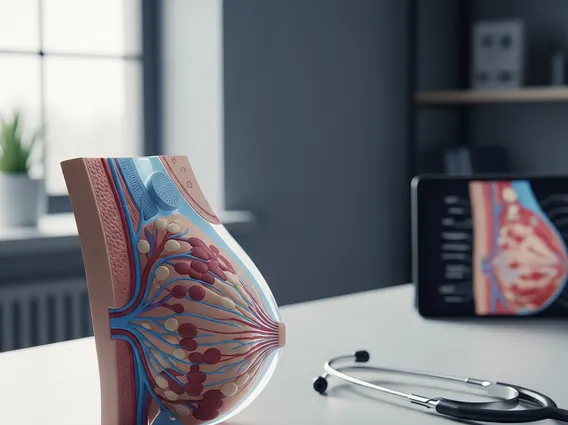
Regarding what are breasts made of, the internal structure includes 15 to 20 lobes, which are further divided into smaller lobules. These lobules contain alveoli, tiny sacs responsible for producing milk. A network of ducts carries the milk from the alveoli through the lobes to the nipple. Surrounding these glandular structures is a supportive framework of fibrous connective tissue and a substantial amount of adipose tissue, which determines the size and shape of the breast. Blood vessels, nerves, and lymphatic vessels are also integral components, supporting the breast’s metabolic needs and immune function.
In terms of breast anatomy and physiology, breasts are endocrine-responsive organs, meaning their development and function are heavily influenced by hormones such as estrogen, progesterone, and prolactin. During puberty, estrogen stimulates the growth of ducts and fat deposition, leading to breast enlargement. Progesterone contributes to the development of the lobules and alveoli. The primary physiological role of the female breast is lactation, the production and secretion of milk to nourish an infant, a process initiated and maintained by prolactin and oxytocin after childbirth.
Stages of breast development represent a dynamic process that begins in utero and continues through puberty, pregnancy, and aging:
- Embryonic Development: Mammary ridges form, leading to the development of the nipple and milk ducts.
- Puberty (Thelarche): Typically occurring between ages 8 and 13, this stage is marked by the first visible signs of breast growth, driven by estrogen. The breast bud forms, and ducts begin to branch.
- Adulthood: Full development is achieved, with mature glandular tissue and fat distribution.
- Pregnancy and Lactation: Hormonal changes cause significant growth and maturation of the glandular tissue, preparing the breasts for milk production.
- Menopause: Decreased hormone levels lead to glandular tissue atrophy and replacement by fat, often resulting in changes in breast size and density.
Common Breast Health Concerns
Common breast health concerns encompass a wide range of conditions, from benign (non-cancerous) issues to malignant (cancerous) diseases. Understanding these concerns is vital for early detection and effective management.
Many women experience benign breast conditions, which are not life-threatening but can cause discomfort or anxiety. These include:
- Fibrocystic changes: Characterized by lumpy, tender breasts, often fluctuating with the menstrual cycle. These are very common and generally not associated with an increased cancer risk.
- Cysts: Fluid-filled sacs that can be tender and palpable. They are typically benign and may be drained if symptomatic.
- Fibroadenomas: Benign, solid tumors that are usually firm, smooth, and movable. They are common in younger women and often require monitoring or removal.
- Mastitis: An infection of the breast tissue, most commonly seen in breastfeeding women, causing pain, swelling, and redness.
Breast cancer is a significant public health concern globally. According to the World Health Organization (WHO), breast cancer is the most common cancer among women worldwide, accounting for 1 in 8 cancer diagnoses and being the leading cause of cancer-related deaths among women (Source: WHO, “Breast cancer,” latest available data). Early detection through regular screenings, such as mammograms, and self-awareness of changes in breast tissue are critical for improving outcomes. Symptoms to watch for include new lumps, changes in breast size or shape, skin dimpling, nipple discharge, or inverted nipples.