
Intrahepatic Bile Duct
The Intrahepatic Bile Duct system plays a crucial role within the liver, facilitating the transport of bile, a vital digestive fluid. Understanding its structure and function is essential for comprehending liver health and various related conditions.
Key Takeaways
- The Intrahepatic Bile Duct system is a network of small ducts within the liver that collects and transports bile.
- These ducts are integral to the liver’s digestive and waste elimination processes, moving bile from hepatocytes to larger ducts.
- Their anatomy involves a hierarchical branching structure, starting from bile canaliculi and merging into larger ducts.
- Dysfunction or disease of these ducts can lead to significant health issues, including cholestasis and inflammation.
- Conditions like primary sclerosing cholangitis and cholangiocarcinoma specifically target or originate within these ducts.
What is an Intrahepatic Bile Duct?
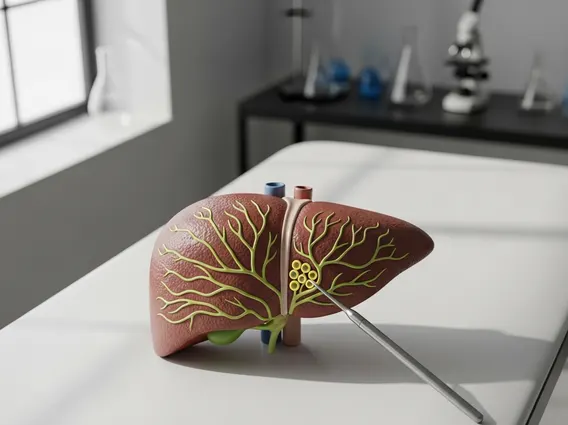
An Intrahepatic Bile Duct refers to any of the small ducts located within the liver that are responsible for collecting and transporting bile. These ducts form an intricate tree-like network, originating from microscopic channels between liver cells (hepatocytes) and progressively merging into larger ducts. Their primary role is to ensure the efficient flow of bile, which is produced by the liver, out of the organ and towards the gallbladder and small intestine. This continuous flow is critical for digestion, particularly the breakdown of fats, and for the elimination of waste products and toxins from the body.
Anatomy and Function of Intrahepatic Bile Ducts
The intrahepatic bile duct anatomy is a complex, branching system that begins at the cellular level. Bile is initially secreted by hepatocytes into tiny channels called bile canaliculi. These canaliculi then drain into progressively larger ducts, starting with ductules, which are lined by specialized epithelial cells called cholangiocytes. These ductules coalesce to form interlobular bile ducts, which further merge into segmental ducts, and finally into the right and left hepatic ducts. These two main ducts eventually exit the liver and join to form the common hepatic duct.
The primary intrahepatic bile duct function is the transport of bile. Bile is a complex fluid containing water, bile salts, cholesterol, bilirubin, and electrolytes. Its main functions include:
- Fat Digestion and Absorption: Bile salts emulsify dietary fats in the small intestine, making them easier for enzymes to break down and absorb.
- Waste Elimination: Bile serves as a pathway for the excretion of waste products, such as bilirubin (a byproduct of red blood cell breakdown), excess cholesterol, and certain drugs and toxins, from the body.
- Neutralization: It helps neutralize stomach acid before chyme enters the small intestine, providing an optimal environment for pancreatic enzymes.
The cholangiocytes lining the ducts also play an active role in modifying bile composition by secreting or absorbing water and electrolytes, thus regulating bile flow and concentration.
Diseases Affecting Intrahepatic Bile Ducts
A range of conditions can impact the Intrahepatic Bile Ducts, leading to significant health complications. Diseases of intrahepatic bile ducts often result in cholestasis, a condition where bile flow is impaired, causing bile components to accumulate in the liver and bloodstream. This can lead to jaundice, itching, and malabsorption of fat-soluble vitamins.
Some notable diseases include:
- Primary Sclerosing Cholangitis (PSC): A chronic, progressive disease characterized by inflammation and scarring of the bile ducts, both inside and outside the liver. This scarring narrows the ducts, obstructing bile flow and potentially leading to liver damage and cirrhosis. PSC is often associated with inflammatory bowel disease.
- Cholangiocarcinoma: A rare but aggressive cancer that originates in the bile ducts. Intrahepatic cholangiocarcinoma specifically arises within the bile ducts inside the liver and can be challenging to diagnose and treat due to its often asymptomatic early stages.
- Biliary Atresia: A rare condition primarily affecting infants, where the bile ducts outside and sometimes inside the liver are blocked or absent. This prevents bile from flowing from the liver to the intestine, leading to severe liver damage if not treated promptly.
- Intrahepatic Cholestasis of Pregnancy (ICP): A liver condition that can occur during pregnancy, causing a buildup of bile acids in the liver. While typically resolving after delivery, it requires careful monitoring due to potential risks to the fetus.
Early diagnosis and appropriate management are crucial for mitigating the impact of these diseases on liver function and overall patient health. Treatment approaches vary widely depending on the specific condition, ranging from medications to surgical interventions or liver transplantation in severe cases.



















