Intensity Modulated Radiation Therapy
Intensity Modulated Radiation Therapy (IMRT) is a highly advanced form of radiation treatment used to precisely target cancerous tumors. This sophisticated technique allows for the delivery of high doses of radiation to malignant cells while minimizing exposure to surrounding healthy tissues and organs.
Key Takeaways
- Intensity Modulated Radiation Therapy (IMRT) is an advanced radiation technique that precisely shapes radiation beams.
- It uses computer-controlled linear accelerators to deliver varying intensities of radiation from multiple angles.
- IMRT aims to maximize the radiation dose to the tumor while significantly reducing exposure to adjacent healthy tissues.
- This precision helps lower the risk of side effects and improve patient quality of life during and after treatment.
- It is widely used for various cancers, particularly those located near critical organs.
What Is Intensity Modulated Radiation Therapy (IMRT)?
Intensity Modulated Radiation Therapy (IMRT) is an advanced type of external beam radiation therapy that uses sophisticated computer technology to deliver precise radiation doses to a tumor. Unlike conventional radiation therapy, which delivers a uniform dose across the treatment field, IMRT allows for the intensity of the radiation beam to be adjusted or “modulated” across different parts of the tumor and surrounding areas. This capability enables oncologists to sculpt the radiation dose to conform very closely to the three-dimensional shape of the tumor, even if it is irregularly shaped or located near sensitive organs.
The primary goal of IMRT cancer treatment explained through this method is to maximize the radiation dose delivered to the cancerous cells, thereby increasing the likelihood of tumor control, while simultaneously minimizing the dose to nearby healthy tissues. This selective targeting helps reduce the potential for treatment-related side effects, which can significantly improve a patient’s quality of life during and after therapy. IMRT is commonly used for treating cancers of the prostate, head and neck, brain, breast, lung, and gastrointestinal tract, among others.
How IMRT Delivers Precise Radiation
IMRT utilizes a highly complex planning and delivery process to achieve its remarkable precision. Before treatment begins, patients undergo detailed imaging scans, such as CT, MRI, and PET, to create a precise 3D map of the tumor and surrounding anatomy. This data is then fed into specialized treatment planning software, which calculates the optimal radiation dose distribution and determines the exact angles and intensities of the radiation beams needed to achieve the prescribed dose to the tumor while sparing healthy tissues.
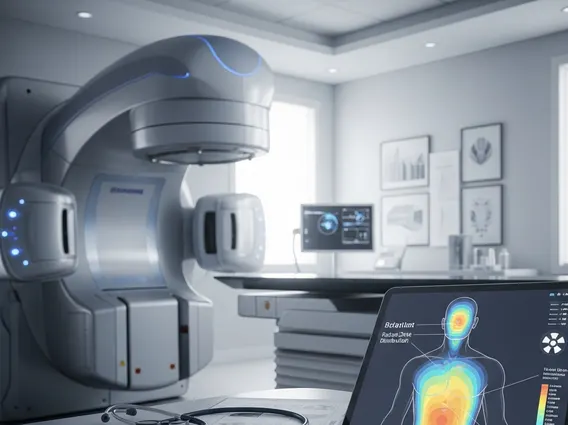
During the actual treatment, a linear accelerator (LINAC) rotates around the patient, delivering radiation from multiple angles. The LINAC’s multileaf collimator (MLC), a device with numerous small, independently moving “leaves,” dynamically shapes the radiation beam. As the LINAC moves, these leaves adjust in real-time to block or allow radiation, creating a highly customized dose distribution. This dynamic modulation allows for:
- Delivery of varying radiation intensities across the tumor volume.
- Conforming the radiation dose tightly to the tumor’s complex shape.
- Protecting critical organs and structures located very close to the tumor.
- Adjustments for patient movement or changes in tumor size over the course of treatment.
This intricate process ensures that the radiation dose is concentrated where it is most needed, leading to more effective treatment with fewer complications.
Benefits of Intensity Modulated Radiation Therapy (IMRT)
The benefits of intensity modulated radiation therapy are significant, primarily stemming from its ability to deliver highly conformal and precise radiation doses. One of the most crucial advantages is the reduced risk of side effects. By minimizing the radiation exposure to healthy tissues, patients often experience fewer acute and long-term complications compared to conventional radiation techniques. For instance, in head and neck cancers, IMRT can significantly reduce damage to salivary glands, preserving taste and reducing dry mouth, a common and debilitating side effect.
Furthermore, IMRT’s precision allows for the delivery of higher, more effective radiation doses to the tumor itself. This dose escalation can lead to improved tumor control rates and better treatment outcomes, particularly for tumors that are resistant to lower doses. According to the American Society for Radiation Oncology (ASTRO), the advanced targeting capabilities of IMRT have been instrumental in improving treatment efficacy and patient tolerance across various cancer types. The enhanced ability to spare critical structures also means that IMRT can be a viable treatment option for tumors located in challenging areas, such as near the spinal cord, optic nerves, or other vital organs, where conventional radiation might pose unacceptable risks.