Myelin
Myelin is a crucial component of the nervous system, essential for the efficient transmission of nerve impulses. Understanding its structure and role is vital for comprehending neurological health and disease.
Key Takeaways
- Myelin is a fatty, insulating layer that surrounds nerve fibers.
- Its primary role is to enable rapid and efficient transmission of electrical signals throughout the nervous system.
- Myelin is found in both the central nervous system (brain and spinal cord) and the peripheral nervous system.
- Damage to myelin can severely disrupt nerve communication, leading to various neurological conditions.
- Diseases like multiple sclerosis specifically target and destroy the myelin sheath.
What is Myelin?
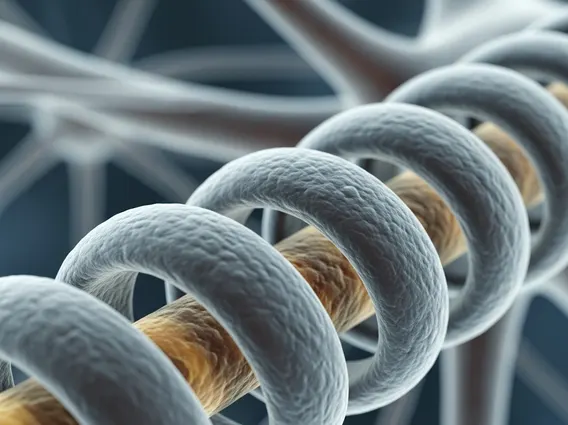
Myelin is a protective, insulating layer that forms around nerves, including those in the brain and spinal cord. Composed primarily of lipids and proteins, its main role is to facilitate the rapid and efficient transmission of electrical impulses along nerve fibers, known as axons. This sheath is produced by specialized glial cells: oligodendrocytes in the central nervous system (CNS) and Schwann cells in the peripheral nervous system (PNS). Without myelin, nerve signals would travel much slower and dissipate, impairing communication between different parts of the body and the brain.
Myelin Sheath Function and Location
The primary myelin sheath function is to increase the speed at which electrical impulses (action potentials) propagate along the axon. It does this by acting as an electrical insulator, preventing the leakage of current and forcing the signal to “jump” between unmyelinated gaps called Nodes of Ranvier. This process, known as saltatory conduction, significantly boosts signal transmission speed, allowing for quick reflexes, coordinated movements, and complex cognitive functions.
Myelin is extensively distributed throughout the nervous system. In the brain and spinal cord, it forms the white matter, giving these regions their characteristic appearance. The presence of myelin in the brain is critical for cognitive processing, learning, and memory. Beyond the CNS, myelin also ensheathes nerve fibers extending to muscles, organs, and sensory receptors, ensuring that commands from the brain reach their targets swiftly and sensory information returns just as fast.
Diseases Affecting Myelin
A range of diseases affecting myelin, often referred to as demyelinating diseases, can severely impair neurological function. These conditions involve damage to or loss of the myelin sheath, disrupting the normal flow of electrical signals along nerve fibers. The consequences can be profound, leading to a wide array of symptoms depending on which nerves are affected.
One of the most well-known demyelinating diseases is Multiple Sclerosis (MS). MS is an autoimmune condition where the body’s immune system mistakenly attacks and damages myelin in the central nervous system. This damage leads to lesions, or plaques, which impede nerve signal transmission. According to the National Multiple Sclerosis Society, nearly 1 million people in the United States are living with MS. Symptoms can include:
- Fatigue and weakness
- Numbness or tingling sensations
- Vision problems, such as blurred or double vision
- Balance and coordination difficulties
- Cognitive impairment, affecting memory and processing speed
Other conditions that involve myelin damage include Guillain-Barré syndrome, an acute autoimmune disorder primarily affecting the peripheral nervous system, and Charcot-Marie-Tooth disease, a group of inherited disorders that affect the peripheral nerves, often involving abnormalities in myelin. Leukodystrophies are another category of rare, inherited disorders that affect the growth or maintenance of the myelin sheath in the central nervous system. Understanding these conditions is crucial for developing targeted treatments and improving patient outcomes.