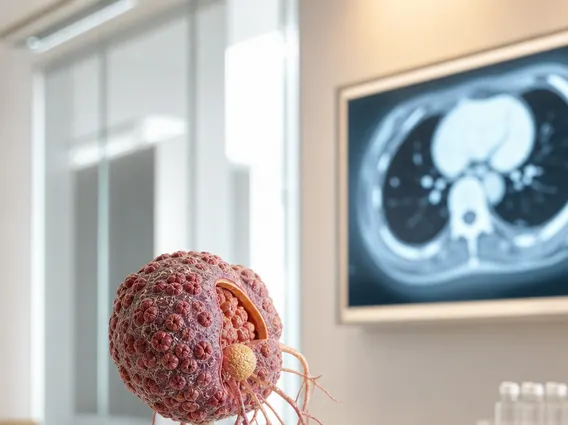
Molecularly Targeted Therapy
Molecularly Targeted Therapy represents a groundbreaking approach in medicine, particularly in oncology, focusing on the precise identification and treatment of diseases at a molecular level. This innovative strategy aims to disrupt specific pathways that drive disease progression, offering a more tailored and often less toxic alternative to traditional treatments.

Key Takeaways
- Molecularly Targeted Therapy precisely attacks specific molecules crucial for disease growth, primarily in cancer.
- It differs from traditional chemotherapy by being more selective, aiming to spare healthy cells and reduce side effects.
- These therapies work by blocking growth signals, inducing cell death, delivering toxic substances, or enhancing the immune response.
- Its application in cancer treatment often requires molecular diagnostic testing to identify specific genetic alterations in tumors.
- This approach signifies a major advancement in personalized medicine, leading to improved outcomes and quality of life for many patients.
What is Molecularly Targeted Therapy?
Molecularly Targeted Therapy refers to a sophisticated type of cancer treatment that precisely identifies and attacks specific molecules (targets) within cancer cells or their surrounding environment. These molecules are crucial for cancer growth, progression, and spread. Unlike traditional chemotherapy, which broadly kills rapidly dividing cells, targeted therapies are designed to interfere with specific pathways involved in cancer development, leading to more selective destruction of cancer cells while sparing healthy ones. This approach leverages a deeper understanding of the genetic and molecular changes that drive cancer, allowing for a more personalized and often less toxic treatment strategy. It represents a significant advancement in oncology, moving towards treatments tailored to the unique molecular characteristics of an individual’s tumor.
Mechanisms of Molecularly Targeted Therapy
This section explains how molecularly targeted therapy works. Molecularly targeted therapies operate through various sophisticated mechanisms to disrupt cancer cell functions. These therapies are designed to interact with specific molecular targets, such as mutated proteins, overexpressed enzymes, or dysfunctional receptors, that are critical for the uncontrolled proliferation and survival of cancer cells. By precisely binding to these targets, the therapies can block critical signaling pathways that promote cell growth, division, and survival, or even directly induce cell death.
Common mechanisms employed by these therapies include:
- Blocking cell growth signals: Many targeted drugs inhibit receptors on the cell surface that receive signals telling the cell to grow and divide, effectively putting a “brake” on cancer cell proliferation.
- Inducing cancer cell death: Other therapies activate pathways within cancer cells that lead to programmed cell death (apoptosis), eliminating the malignant cells.
- Delivering toxic substances: Certain targeted therapies can be linked to chemotherapy drugs or radioactive particles, delivering these potent toxic agents directly to cancer cells while minimizing damage to healthy tissues.
- Starving tumors of blood supply: Anti-angiogenic drugs, a type of targeted therapy, prevent the formation of new blood vessels that tumors need to grow and spread, thereby cutting off their nutrient supply.
- Enhancing the immune system: Immunotherapies, often considered a form of targeted therapy, help the body’s own immune system recognize and attack cancer cells more effectively by modulating immune checkpoints.
Applications and Benefits in Cancer Treatment
Molecularly targeted therapy cancer treatment has revolutionized the management of various malignancies, offering new hope for patients with previously hard-to-treat cancers. Its application often depends on identifying specific genetic mutations, gene fusions, or protein expressions within a patient’s tumor through advanced molecular diagnostic tests, such as next-generation sequencing. This personalized approach allows oncologists to select therapies most likely to be effective for an individual’s unique cancer profile, moving away from a “one-size-fits-all” treatment paradigm.
The benefits of molecularly targeted therapy are substantial, including improved efficacy and often reduced side effects compared to conventional treatments like chemotherapy and radiation. For instance, targeted therapies have shown remarkable success in treating specific types of lung cancer (e.g., those with EGFR mutations or ALK rearrangements), melanoma (e.g., BRAF-mutated), and certain breast cancers (e.g., HER2-positive). According to the National Cancer Institute, targeted therapies are now a standard treatment option for many cancers, often leading to longer progression-free survival and improved quality of life for patients. These therapies can also overcome resistance to traditional treatments and, in some cases, prevent cancer recurrence. While not without their own side effects, these are generally more manageable and less severe than those associated with broad-spectrum chemotherapy, as the treatments are more selective for cancer cells. This precision medicine approach continues to evolve, expanding its reach and refining its effectiveness across a growing spectrum of cancers.