Microliter
The Microliter (µL) is a fundamental unit of volume in the metric system, playing a critical role across various scientific and medical disciplines. Its precision is indispensable for accurately measuring minute quantities of liquids, particularly in clinical diagnostics and research.
Key Takeaways
- A Microliter (µL) is a metric unit of volume, representing one-millionth of a liter or one-thousandth of a milliliter.
- It is essential for measuring extremely small liquid volumes with high accuracy in medical and laboratory settings.
- Key conversions include 1 mL = 1,000 µL and 1 L = 1,000,000 µL.
- Microliters are extensively used in medical contexts for blood tests, drug dosing, and molecular diagnostic procedures.
- Accurate microliter measurements are vital for patient safety, diagnostic reliability, and research integrity.
What is a Microliter?
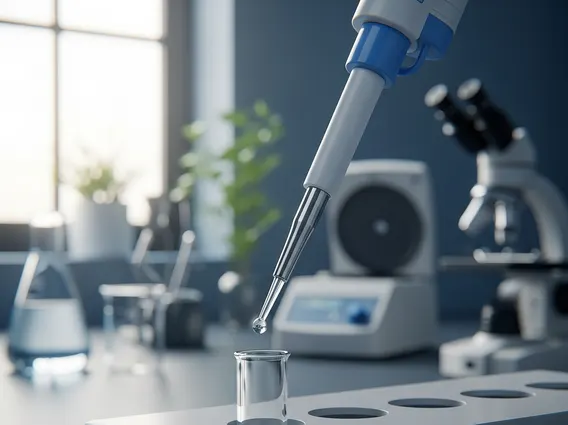
A Microliter (µL) is a unit of volume in the metric system, precisely defined as one-millionth (1/1,000,000) of a liter or one-thousandth (1/1,000) of a milliliter. This extremely small unit allows for the measurement of minute liquid quantities with exceptional accuracy, which is paramount in scientific and clinical environments. The microliter definition and uses highlight its importance in situations where even tiny variations in volume can significantly impact results or patient outcomes. Its application ensures precision in handling biological samples, reagents, and medications, making it an indispensable tool in modern medicine.
Microliter Conversions: Milliliters and Liters
Understanding the relationship between microliters, milliliters, and liters is crucial for accurate calculations and measurements in medical and laboratory settings. The microliter to milliliter conversion is straightforward: one milliliter (mL) is equivalent to 1,000 Microliters (µL). Conversely, one Microliter is 0.001 milliliters. These conversions are fundamental for preparing solutions, diluting samples, and administering precise doses.
How Many Microliters in a Liter?
One liter (L) contains 1,000 milliliters, which translates to 1,000,000 Microliters (µL). This conversion is essential when working with larger volumes that need to be broken down into microliter measurements for specific applications or when scaling up experiments.
To illustrate these relationships clearly, the following table summarizes the common volume conversions:
| Unit | Equivalent in Liters (L) | Equivalent in Milliliters (mL) | Equivalent in Microliters (µL) |
|---|---|---|---|
| 1 Liter (L) | 1 L | 1,000 mL | 1,000,000 µL |
| 1 Milliliter (mL) | 0.001 L | 1 mL | 1,000 µL |
| 1 Microliter (µL) | 0.000001 L | 0.001 mL | 1 µL |
These precise conversions are vital for maintaining consistency and accuracy in all procedures involving liquid volumes, from routine laboratory tests to complex research protocols.
Practical Uses of Microliters in Medical Contexts
The ability to accurately measure and dispense volumes in the microliter range is indispensable across numerous medical and clinical applications. This precision directly impacts diagnostic accuracy, treatment efficacy, and patient safety.
Key practical uses of Microliters in medical contexts include:
- Blood Sample Analysis: In hematology, Microliters are used to measure specific components within blood samples, such as complete blood counts (CBCs), which quantify red blood cells, white blood cells, and platelets. Similarly, biochemical tests measure the concentration of hormones, enzymes, glucose, and electrolytes in microliter volumes of plasma or serum.
- Drug Administration and Pharmacy: For highly potent medications, especially in fields like oncology, pediatrics, or critical care, drug dosages are often calculated and administered in microliter volumes. This ensures that patients receive the exact therapeutic amount, minimizing the risk of under-dosing or toxicity.
- Molecular Diagnostics and Research: Advanced laboratory techniques, including Polymerase Chain Reaction (PCR), Enzyme-Linked Immunosorbent Assay (ELISA), and DNA sequencing, rely heavily on the precise handling of microliter quantities of DNA, RNA, proteins, and reagents. This accuracy is fundamental for detecting pathogens, identifying genetic mutations, and developing new therapies.
- Vaccine Dosing: Many vaccines are administered in very small, precise volumes, often in the range of 0.3 to 0.5 mL, which translates to 300 to 500 µL. Accurate measurement ensures effective immunization while conserving valuable vaccine supplies.
- Cell Culture and Microscopy: In cell biology, researchers often work with cell suspensions and media in microliter volumes for culturing, counting, and preparing samples for microscopic examination.
The meticulous application of microliter measurements underpins the reliability of medical diagnostics and the safety of therapeutic interventions, making it a cornerstone of modern healthcare.