Scutellaria Barbata
Scutellaria Barbata is a flowering plant native to East Asia, particularly China, where it has been utilized for centuries in traditional medicine practices. This article explores its identity, traditional uses, and the ongoing scientific research into its potential health benefits.
Key Takeaways
- Scutellaria Barbata is an herbaceous plant historically used in Traditional Chinese Medicine (TCM).
- It is commonly known in TCM as Ban Zhi Lian and is traditionally associated with clearing heat and detoxifying the body.
- Scutellaria Barbata plant identification involves recognizing its small, purple-blue flowers and serrated leaves.
- Modern scientific investigations are exploring the compounds within the plant for various potential health benefits.
- Research into scutellaria barbata health benefits research is ongoing, focusing on its bioactive components.
What is Scutellaria Barbata and What is it Used For?
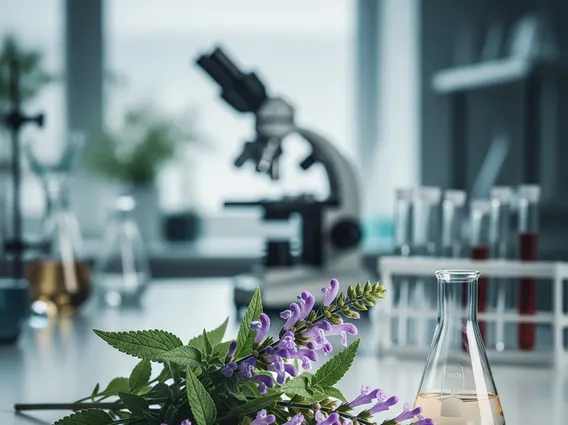
Scutellaria Barbata is a perennial herbaceous plant belonging to the mint family (Lamiaceae). It is characterized by its slender stems, serrated leaves, and small, distinctive purple-blue flowers. Native to various regions of East Asia, it thrives in damp, shaded environments, often found along stream banks and in moist woodlands. The plant has a long history of use, primarily within the framework of Traditional Chinese Medicine (TCM), where it is highly valued for its purported therapeutic properties.
Historically, scutellaria barbata is used for a range of applications in traditional practices. In TCM, it is known as Ban Zhi Lian and is often employed to “clear heat” and “detoxify” the body, according to traditional diagnostic principles. Its traditional uses include addressing conditions related to inflammation and supporting overall well-being. The plant is typically prepared as a decoction, where the dried aerial parts are boiled in water to extract its active compounds. These traditional applications have spurred modern scientific interest in understanding the plant’s pharmacological basis.
Scutellaria Barbata: Identification, Traditional Chinese Medicine (TCM), and Health Research
Accurate scutellaria barbata plant identification is crucial for its proper use. The plant typically grows to about 30-50 centimeters in height, featuring square stems characteristic of the mint family. Its leaves are ovate to lanceolate with serrated margins, arranged oppositely along the stem. The most distinguishing feature is its small, bilabiate (two-lipped) flowers, which are usually purple-blue and appear in terminal racemes from late spring to early autumn. These characteristics help differentiate it from other species within the Scutellaria genus and other plants used in herbal medicine.
In scutellaria barbata traditional chinese medicine, the plant is considered to have a bitter taste and a cold nature, acting on the liver, lung, and stomach meridians. It is frequently included in herbal formulas designed to address various imbalances. Its traditional functions often involve promoting blood circulation and reducing swelling. Practitioners of TCM believe that its cold nature helps to counteract excess heat in the body, which is thought to manifest in various symptoms. The historical efficacy observed in these traditional contexts has been a driving force behind contemporary research efforts.
Modern scutellaria barbata health benefits research is actively investigating the plant’s chemical constituents and their potential pharmacological activities. Scientists have identified numerous bioactive compounds, including flavonoids, diterpenoids, and polysaccharides, which are believed to contribute to its therapeutic effects. Studies are exploring its potential in areas such as:
- Antioxidant properties
- Anti-inflammatory effects
- Immunomodulatory activities
- Cellular health support
While preliminary research shows promise, most studies are conducted in laboratory settings or on animal models. Further rigorous clinical trials are needed to fully understand and validate the health benefits of Scutellaria Barbata in humans and to establish safe and effective dosages.
Disclaimer: The information provided in this article is for educational purposes only and is not intended as a substitute for professional medical advice, diagnosis, or treatment. Always seek the advice of your physician or other qualified health provider with any questions you may have regarding a medical condition. Do not disregard professional medical advice or delay in seeking it because of something you have read in this article.