Paranasal Sinus And Nasal Cavity Cancer
Paranasal Sinus And Nasal Cavity Cancer refers to a group of rare malignancies that originate in the tissues lining the paranasal sinuses or the nasal cavity. These cancers can present unique challenges due to their location near vital structures, often requiring specialized diagnostic and treatment approaches.
Key Takeaways
- Paranasal Sinus And Nasal Cavity Cancer is a rare type of head and neck cancer affecting the air-filled spaces around the nose and the nasal passage.
- Symptoms often mimic common conditions like sinusitis or allergies, making early diagnosis challenging.
- Risk factors include exposure to certain industrial chemicals, wood dust, and tobacco use.
- Diagnosis typically involves imaging studies, endoscopy, and a biopsy to confirm the presence and type of cancer.
- Treatment usually involves a multidisciplinary approach, combining surgery, radiation therapy, and sometimes chemotherapy or targeted therapies.
What is Paranasal Sinus And Nasal Cavity Cancer?
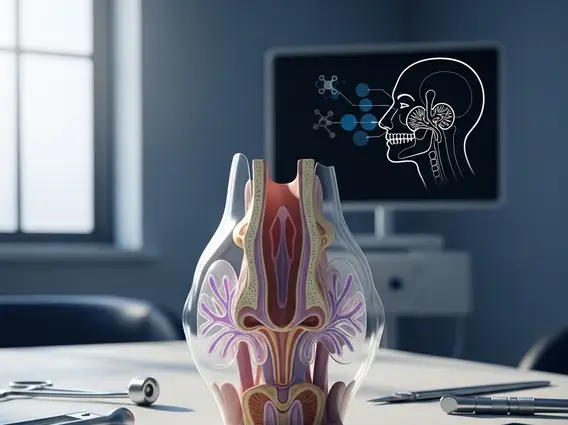
Paranasal Sinus And Nasal Cavity Cancer is a rare form of cancer that develops in the tissues lining the paranasal sinuses or the nasal cavity. The paranasal sinuses are air-filled spaces located within the bones of the head surrounding the nose, including the maxillary, ethmoid, frontal, and sphenoid sinuses. The nasal cavity is the passage behind the nose that extends to the throat. These cancers can originate from various cell types, with squamous cell carcinoma being the most common, though other types like adenocarcinomas, esthesioneuroblastomas, and melanomas can also occur. Due to their deep location and the non-specific nature of early symptoms, these cancers are often diagnosed at advanced stages.
According to the American Cancer Society, cancers of the nasal cavity and paranasal sinuses are uncommon, accounting for less than 1% of all cancers. Approximately 2,000 new cases are diagnosed in the United States each year. The specific type of cancer and its exact location within these complex anatomical structures significantly influence its behavior, potential for spread, and the most effective treatment strategies.
Symptoms and Causes of Paranasal Sinus and Nasal Cavity Cancer
The early detection of these cancers can be challenging because their initial signs often resemble those of common, benign conditions. However, persistent or worsening symptoms should prompt medical evaluation. The Symptoms of nasal cavity cancer and paranasal sinus cancer can vary depending on the tumor’s size and location, but commonly include:
- Persistent nasal obstruction or stuffiness, often in only one nostril.
- Nasal discharge, which may be bloody, or frequent nosebleeds.
- Pain or pressure in the face, particularly under the eyes, around the nose, or in the forehead.
- Decreased or loss of sense of smell.
- Loose teeth, pain in the upper teeth, or ill-fitting dentures.
- Numbness or tingling in parts of the face.
- Swelling or other problems with the eyes, such as double vision, bulging, or excessive tearing.
- A lump or sore inside the nose that does not heal.
The exact Causes of sinus and nasal cancer are not fully understood, but several risk factors have been identified. These factors increase an individual’s likelihood of developing the disease, though not everyone with risk factors will develop cancer, and some people without known risk factors may still be diagnosed. Key risk factors include:
- **Occupational Exposure:** Prolonged exposure to certain industrial chemicals, such as wood dust (especially hardwood dust), leather dust, textile dust, nickel dust, and formaldehyde, is a significant risk factor.
- **Tobacco and Alcohol Use:** Smoking cigarettes and heavy alcohol consumption are linked to an increased risk, particularly when used together.
- **Human Papillomavirus (HPV) Infection:** Certain types of HPV, particularly HPV-16, have been associated with an increased risk of some nasal cavity and paranasal sinus cancers.
- **Chronic Sinusitis:** While not a direct cause, long-standing, severe inflammation of the sinuses might be a contributing factor in some cases.
- **Radiation Exposure:** Previous radiation therapy to the head and neck area for other cancers can increase the risk of developing secondary cancers in these regions.
Understanding these symptoms and risk factors is crucial for early diagnosis and intervention, which significantly improves treatment outcomes.
Treatment Options for Paranasal Sinus And Nasal Cavity Cancer
The selection of Treatment options for paranasal sinus cancer and nasal cavity cancer depends on several factors, including the cancer’s stage, type, location, and the patient’s overall health. A multidisciplinary team of specialists, including head and neck surgeons, radiation oncologists, medical oncologists, and reconstructive surgeons, typically collaborates to develop a personalized treatment plan.
Common treatment modalities include:
- **Surgery:** This is often the primary treatment, especially for early-stage cancers. The goal is to remove the tumor and a margin of healthy tissue. Depending on the tumor’s location and size, surgery can range from endoscopic procedures to more extensive open surgeries, sometimes requiring reconstructive techniques to restore function and appearance.
- **Radiation Therapy:** High-energy X-rays or other particles are used to kill cancer cells or inhibit their growth. It can be used as a primary treatment, after surgery to eliminate any remaining cancer cells (adjuvant therapy), or to alleviate symptoms in advanced cases (palliative therapy).
- **Chemotherapy:** This involves using drugs to kill cancer cells throughout the body. It may be used in combination with radiation therapy (chemoradiation) for more advanced cancers, before surgery to shrink tumors (neoadjuvant therapy), or for metastatic disease.
- **Targeted Therapy:** These drugs specifically target certain molecules involved in cancer growth and progression, often with fewer side effects than traditional chemotherapy. They are typically used for specific types of paranasal sinus and nasal cavity cancers that have particular genetic mutations.
- **Immunotherapy:** This treatment harnesses the body’s own immune system to fight cancer. It may be an option for certain advanced or recurrent cancers that have not responded to other treatments.
Patients are encouraged to discuss all available options with their medical team to make informed decisions about their care. While alternative or complementary therapies may offer supportive care, they should never replace conventional medical treatment and should always be discussed with a healthcare provider to ensure they do not interfere with prescribed treatments.