Intracellular
The term Intracellular refers to the space or environment located inside a cell. It is a fundamental concept in biology and medicine, distinguishing the internal cellular machinery and components from the external surroundings.
Key Takeaways
- Intracellular refers to everything within the cell membrane, including the cytoplasm and organelles.
- Key intracellular processes include metabolism, protein synthesis, and signal transduction, vital for cell survival.
- The intracellular environment is distinct from the extracellular space, differing in composition, ion concentrations, and functions.
- Maintaining the integrity and specific conditions of the intracellular environment is crucial for cellular health and overall organismal function.
What is Intracellular?
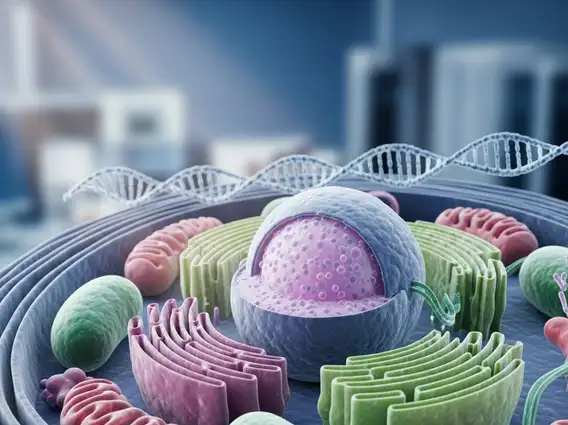
Intracellular refers to the region or activities occurring within the boundaries of a cell’s plasma membrane. This internal environment encompasses the cytoplasm, which includes the cytosol (the jelly-like substance) and various organelles such as the nucleus, mitochondria, endoplasmic reticulum, and Golgi apparatus. Understanding the intracellular definition biology is crucial for comprehending how cells function as the basic units of life. This internal space is where all vital cellular activities, from energy production to genetic information processing, take place.
The precise regulation of the intracellular environment is paramount for cellular homeostasis. Cells actively control the movement of substances across their membranes to maintain specific ion concentrations, pH levels, and molecular compositions within. This strict regulation ensures that enzymes can function optimally and that complex biochemical reactions proceed efficiently, allowing the cell to respond to its environment and carry out its specialized roles.
Key Intracellular Processes Explained
Numerous critical functions are continuously performed within the intracellular space, collectively driving cellular life. These intracellular processes explained encompass a wide array of biochemical pathways and molecular interactions essential for survival, growth, and reproduction. These processes are highly coordinated and often compartmentalized within specific organelles.
Some of the most vital intracellular processes include:
- Metabolism: The sum of all chemical reactions that occur within a cell to maintain life. This includes catabolism (breaking down molecules for energy) and anabolism (building complex molecules).
- Protein Synthesis: The process by which cells generate new proteins, essential for structural components, enzymes, and signaling molecules, primarily occurring on ribosomes.
- Signal Transduction: The mechanism by which cells receive and respond to external signals, converting them into intracellular responses, often involving a cascade of molecular events.
- Genetic Information Processing: Involving DNA replication, transcription (DNA to RNA), and translation (RNA to protein), all crucial for heredity and gene expression.
- Energy Production: Primarily carried out by mitochondria through cellular respiration, generating ATP to power cellular activities.
These processes are interconnected, forming a complex network that allows cells to adapt, repair, and maintain their functions, contributing to the overall health and stability of tissues and organs.
Intracellular vs. Extracellular: Understanding the Differences
The distinction between the intracellular and extracellular environments is fundamental to biology and medicine. While the intracellular vs extracellular differences are clear, both environments are in constant communication and interaction. The intracellular space is the internal milieu of the cell, enclosed by the plasma membrane, whereas the extracellular space is everything outside the cell, including interstitial fluid, blood plasma, and lymph.
These two compartments differ significantly in their composition, particularly regarding ion concentrations, protein content, and metabolic activity. The plasma membrane acts as a selective barrier, actively regulating what enters and exits the cell, thereby maintaining the unique conditions required for intracellular processes. For instance, the intracellular fluid typically has high concentrations of potassium ions and proteins, while the extracellular fluid is rich in sodium and chloride ions.
Here is a comparison highlighting key differences:
| Feature | Intracellular Environment | Extracellular Environment |
|---|---|---|
| Location | Inside the cell membrane | Outside the cell membrane |
| Main Components | Cytosol, organelles (nucleus, mitochondria, ER) | Interstitial fluid, blood plasma, lymph |
| Key Cations | High K+, low Na+ | High Na+, low K+ |
| Protein Concentration | High | Relatively low |
| Primary Function | Metabolism, protein synthesis, genetic processing, energy production | Nutrient delivery, waste removal, cell communication, transport |
The dynamic interplay between these two compartments is vital for maintaining physiological balance throughout the body. Disruptions in the balance of substances between the intracellular and extracellular spaces can lead to various pathological conditions, underscoring the importance of understanding these fundamental biological divisions.