FGFR1 Gene
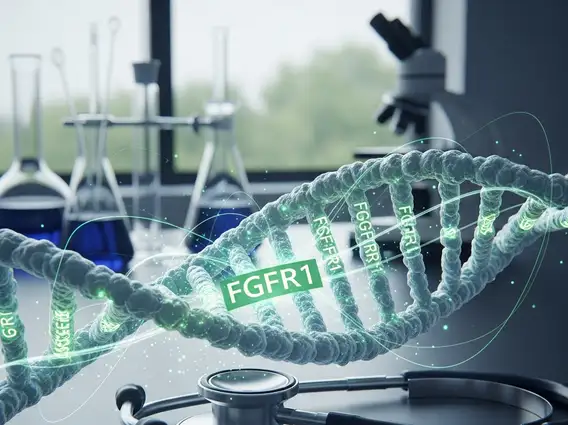
The FGFR1 gene plays a pivotal role in human development and cellular processes. Understanding its function and the implications of its mutations is crucial for comprehending various genetic disorders and disease mechanisms.
Key Takeaways
- The FGFR1 gene encodes a receptor protein essential for cell growth, differentiation, and survival.
- It is involved in critical cellular signaling pathways influencing embryonic development, bone formation, and tissue repair.
- Mutations in the FGFR1 gene can lead to a spectrum of developmental disorders, including craniosynostosis syndromes.
- Dysregulation of FGFR1 gene function is also implicated in the development and progression of certain cancers.
What is the FGFR1 Gene?
The FGFR1 gene (Fibroblast Growth Factor Receptor 1) is a gene located on chromosome 8 in humans that provides instructions for making a protein called fibroblast growth factor receptor 1. This protein is a receptor tyrosine kinase, meaning it sits on the surface of cells and acts as a receiver for signals from outside the cell. When specific fibroblast growth factors (FGFs) bind to the FGFR1 protein, it triggers a cascade of signaling events inside the cell. These signals are fundamental for regulating a wide array of cellular activities, including cell growth, division, differentiation, and migration.
FGFR1 Gene Function and Cellular Pathways
The primary FGFR1 gene function involves mediating critical cellular communication pathways. The protein encoded by the FGFR1 gene is a key component in signal transduction, relaying messages from the cell’s exterior to its interior. This intricate signaling network is vital for numerous biological processes throughout life. For instance, FGFR1 plays a significant role in:
- Embryonic development, particularly in limb and brain formation.
- Bone development and maintenance, influencing skeletal growth and repair.
- Angiogenesis, the formation of new blood vessels.
- Wound healing and tissue regeneration.
- Regulation of hormone production and metabolic processes.
Disruptions in these pathways due to altered FGFR1 activity can have profound effects on development and physiological balance, highlighting its indispensable role in maintaining normal bodily functions.
FGFR1 Gene Mutations and Related Disorders
Mutations in the FGFR1 gene can lead to a diverse range of health conditions, collectively known as FGFR1 gene disorders. These mutations can alter the structure or function of the FGFR1 protein, leading to either an overactive (gain-of-function) or underactive (loss-of-function) receptor. Gain-of-function mutations often result in conditions characterized by premature fusion of bones, such as craniosynostosis syndromes where skull bones fuse too early. For example, Pfeiffer syndrome, a rare genetic disorder affecting about 1 in 100,000 births, is frequently associated with FGFR1 mutations, leading to distinctive facial features and limb abnormalities (Source: National Organization for Rare Disorders). Conversely, loss-of-function mutations can impair critical developmental processes. Beyond developmental disorders, aberrant FGFR1 signaling due to mutations or amplification is also implicated in various cancers, including certain types of lung cancer, breast cancer, and glioblastoma, where it can promote uncontrolled cell proliferation and survival. Understanding these mutations is crucial for developing targeted therapies and improving diagnostic approaches for affected individuals.