Ureter
The ureter is a critical component of the human urinary system, playing an essential role in the transport of urine from the kidneys to the bladder. Understanding its structure and function is key to comprehending overall urinary health.
Key Takeaways
- The ureter is a muscular tube responsible for transporting urine from the kidneys to the bladder.
- Its function relies on peristaltic contractions to propel urine, preventing backflow.
- Each person typically has two ureters, one connecting to each kidney.
- They are located in the retroperitoneal space, extending from the renal pelvis to the bladder.
- Common conditions include kidney stones, strictures, and infections, which can impair urine flow.
What is the Ureter and Its Function?
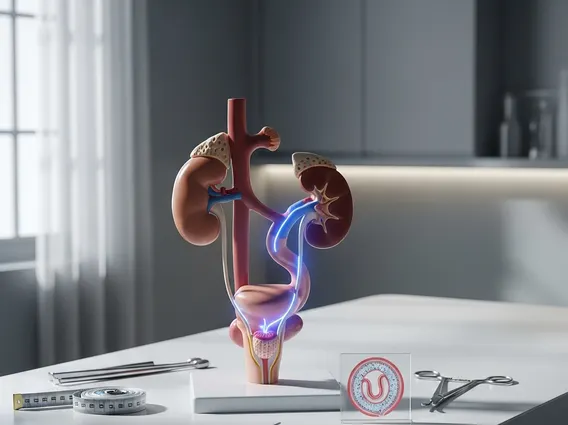
The Ureter is a muscular tube that forms a vital part of the urinary system, responsible for carrying urine from the kidneys to the urinary bladder. Each kidney is connected to the bladder by one ureter, meaning most individuals have two ureters. These tubes are approximately 25 to 30 centimeters (10 to 12 inches) long in adults, with a diameter of about 3 to 4 millimeters.
Ureters work in the body by employing a rhythmic wave-like contraction of their muscular walls, known as peristalsis. This action actively propels urine downwards, preventing it from flowing back into the kidneys, even against gravity. This continuous, unidirectional flow is crucial for maintaining kidney health and preventing urinary tract infections. On average, the ureters transport about 1 to 2 liters of urine daily, depending on fluid intake and kidney function.
Ureter Location and Anatomy
The ureter location and anatomy are highly specialized to facilitate its function. Each ureter originates from the renal pelvis, a funnel-shaped structure within the kidney that collects urine. From there, it descends retroperitoneally, meaning it lies behind the peritoneum (the membrane lining the abdominal cavity), along the posterior abdominal wall.
As the ureter descends, it crosses over the common iliac artery and then turns medially to enter the posterior wall of the urinary bladder. The ureter passes obliquely through the bladder wall for about 1.5 to 2 centimeters, forming a physiological valve that prevents the backflow of urine into the ureter and kidneys during bladder contraction. This arrangement is crucial for preventing vesicoureteral reflux, a condition where urine flows backward towards the kidneys. The ureter wall itself consists of three layers: an inner mucous membrane, a middle muscular layer, and an outer fibrous layer.
Common Conditions Affecting the Ureter
There are several common conditions affecting the ureter that can impair its function and lead to significant health issues. One of the most prevalent is ureterolithiasis, commonly known as kidney stones. These stones form in the kidney and can travel down the ureter, causing severe pain (renal colic), blood in the urine (hematuria), and potential obstruction of urine flow. Obstruction can lead to hydronephrosis, a swelling of the kidney due to urine backup, which can damage kidney tissue.
Other conditions include ureteral strictures, which are narrowings of the ureter that can be congenital, caused by injury, inflammation, or previous surgery. These strictures impede urine flow and can also lead to hydronephrosis and recurrent infections. Urinary tract infections (UTIs) can also affect the ureters, particularly if there is an underlying obstruction or vesicoureteral reflux. Symptoms indicating potential ureteral issues often include:
- Severe, sharp pain in the back or side (flank pain)
- Pain that radiates to the lower abdomen and groin
- Painful urination (dysuria)
- Frequent urge to urinate
- Nausea and vomiting
- Fever and chills (indicating infection)
- Blood in the urine (hematuria)
According to the National Institute of Diabetes and Digestive and Kidney Diseases (NIDDK), kidney stones affect about 1 in 10 people in the U.S. at some point in their lives, highlighting the importance of understanding ureteral health.