
Enveloped Virus
Enveloped viruses represent a significant category of viruses characterized by an outer lipid layer derived from the host cell membrane. This protective envelope plays a crucial role in their survival, transmission, and interaction with host cells, making them important subjects in virology and medicine.
Key Takeaways
- Enveloped viruses possess an outer lipid membrane derived from the host cell.
- This envelope, studded with viral glycoproteins, is essential for cell entry and immune evasion.
- They typically infect cells by fusing their envelope with the host cell membrane.
- Many well-known human pathogens, such as influenza and HIV, are enveloped viruses.
- The envelope makes these viruses susceptible to disinfectants and environmental factors.
What is an Enveloped Virus?
An Enveloped Virus is a type of virus that has an outer lipid bilayer, known as an envelope, surrounding its protein capsid. This envelope is typically acquired from the host cell membrane during the budding process when new virions exit the cell. Unlike non-enveloped viruses, which only have a protein capsid protecting their genetic material, enveloped viruses utilize this additional layer for various critical functions. The presence of an envelope significantly influences the virus’s stability, its mode of transmission, and its ability to infect new host cells. Many medically important viruses that cause diseases in humans, animals, and plants are enveloped.
Enveloped Virus Structure, Function, and Infection Mechanism
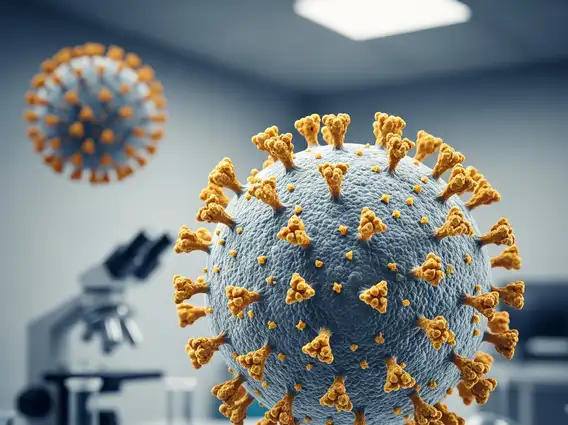
The structure of an enveloped virus is complex, featuring several key components that work in concert to facilitate infection and replication. At its core, the virus contains genetic material (DNA or RNA) encased within a protein shell called the capsid. Surrounding the capsid is the viral envelope, a lipid membrane derived from the host cell. Embedded within this envelope are viral glycoproteins, which are crucial for the virus’s function.
These glycoproteins serve several vital roles, primarily in mediating the attachment of the virus to specific receptors on the surface of host cells. They act like keys, recognizing and binding to specific locks on the cell membrane, initiating the infection process. The envelope itself also plays a critical role in how enveloped viruses infect cells. Upon binding, the viral envelope typically fuses with the host cell membrane, allowing the viral capsid and genetic material to enter the cytoplasm. This fusion mechanism is a hallmark of enveloped virus infection and distinguishes it from non-enveloped viruses, which often enter via endocytosis and subsequent lysis of the endosomal membrane.
The enveloped virus structure and function also dictate its vulnerability. The lipid envelope is relatively fragile and can be easily disrupted by detergents, alcohol, heat, and desiccation. This fragility means that enveloped viruses are generally less stable in the environment than non-enveloped viruses and are more readily inactivated by common disinfectants.
Key structural components of an enveloped virus include:
- Genetic Material: DNA or RNA, carrying the viral genes.
- Capsid: A protein shell protecting the genetic material.
- Matrix Proteins: Often found between the capsid and the envelope, providing structural support.
- Lipid Envelope: The outer membrane derived from the host cell.
- Glycoproteins: Spikes embedded in the envelope, essential for host cell recognition and entry.
Common Enveloped Virus Examples
Numerous viruses that cause significant human diseases are enveloped. Their prevalence in the human population highlights their medical importance and the continuous need for research into their mechanisms of infection and potential treatments. Understanding enveloped virus examples helps in developing targeted antiviral therapies and vaccines.
Here are some common examples of enveloped viruses and the diseases they cause:
| Virus Family/Name | Associated Disease(s) |
|---|---|
| Influenza Virus | Seasonal Flu, Avian Flu |
| Human Immunodeficiency Virus (HIV) | Acquired Immunodeficiency Syndrome (AIDS) |
| Herpes Simplex Virus (HSV) | Oral and Genital Herpes |
| Varicella-Zoster Virus (VZV) | Chickenpox, Shingles |
| Measles Virus | Measles |
| Rubella Virus | Rubella (German Measles) |
| Ebola Virus | Ebola Hemorrhagic Fever |
| SARS-CoV-2 | COVID-19 |
These examples illustrate the diverse range of pathologies caused by enveloped viruses, from common respiratory illnesses to severe hemorrhagic fevers and chronic infections. The shared characteristic of an outer lipid envelope, while making them vulnerable to certain environmental factors, also provides them with sophisticated mechanisms for host cell entry and immune evasion.



















