Infrared Thermometers
Infrared thermometers offer a revolutionary approach to temperature measurement, providing quick and non-contact readings. These devices have become indispensable across various sectors, from industrial applications to everyday home use, thanks to their efficiency and safety. This article explores the fundamental principles behind these innovative tools, their diverse applications, and crucial factors influencing their accuracy.
Key Takeaways
- Infrared thermometers measure temperature by detecting thermal radiation emitted by an object, without physical contact.
- They are widely used for their speed, safety, and hygienic benefits across industrial, medical, and domestic settings.
- Factors like emissivity, distance-to-spot ratio, and proper calibration are critical for ensuring accurate readings.
- Various types exist, from simple handheld models for home use to advanced industrial systems.
- Understanding their operation and limitations is key to leveraging their full potential for precise temperature monitoring.
How Infrared Thermometers Work
The fundamental principle behind how do infrared thermometers work lies in their ability to detect infrared (IR) radiation. Every object with a temperature above absolute zero emits thermal radiation, and the intensity of this radiation is directly related to its temperature. Infrared thermometers are equipped with a lens that focuses the infrared energy emitted from an object onto a detector. This detector, often called a thermopile, converts the infrared energy into an electrical signal.
The strength of this electrical signal is then processed and translated into a temperature reading, which is displayed on the device. This entire process happens almost instantaneously, allowing for rapid temperature assessments without the need for physical contact. The non-contact nature is a significant advantage, especially when measuring temperatures of hazardous, inaccessible, or moving objects, or when hygiene is paramount. Understanding this mechanism is crucial for appreciating the versatility and safety benefits these devices offer in various environments.
A critical factor in this process is emissivity, which describes an object’s efficiency in emitting thermal energy. Different materials have different emissivities, ranging from 0.0 (a perfect reflector) to 1.0 (a perfect emitter, or black body). Most infrared thermometers allow users to adjust the emissivity setting to match the material being measured, ensuring more accurate readings. Without proper emissivity adjustment, the displayed temperature might deviate significantly from the actual surface temperature, highlighting the importance of understanding the target material’s properties.
Uses and Benefits of IR Thermometers
The versatility of infrared thermometers means they are employed in a vast array of applications, making it clear what are infrared thermometers used for across different industries and in daily life. In industrial settings, they are crucial for monitoring machinery temperatures to prevent overheating and ensure operational efficiency, as well as for inspecting electrical panels for hot spots indicating potential failures. Automotive technicians use them to diagnose engine problems, check brake temperatures, and assess HVAC systems.
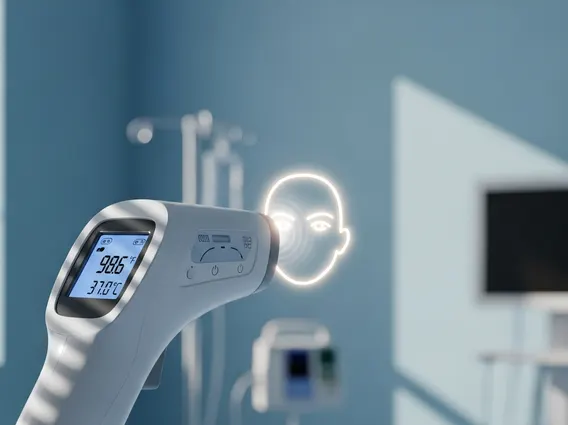
In the food service industry, these devices are invaluable for ensuring food safety by quickly checking the surface temperature of food items during cooking, storage, and serving, helping to prevent foodborne illnesses. For medical and public health purposes, non-contact forehead infrared thermometers gained prominence for screening individuals for fever, especially in high-traffic areas, offering a hygienic and rapid method for initial assessment. According to the World Health Organization (WHO), non-contact infrared thermometers are an effective tool for initial temperature screening in public health emergencies, though confirmation with a clinical thermometer is often recommended for diagnosis.
The benefits of using infrared thermometers are numerous and significant. Their primary advantage is the ability to measure temperature from a distance, which enhances safety when dealing with extremely hot, cold, or electrically live objects. This non-contact measurement also ensures hygiene, as there is no risk of cross-contamination, which is particularly vital in food preparation and medical screening. Furthermore, they provide instant readings, saving considerable time compared to traditional contact thermometers, which often require a waiting period for stabilization. This speed and convenience make them an indispensable tool for quick diagnostics and routine checks.
- Safety: Measure hazardous temperatures from a safe distance.
- Hygiene: Prevent cross-contamination in food and medical applications.
- Speed: Obtain instant temperature readings.
- Versatility: Suitable for a wide range of materials and environments.
- Non-Invasive: Ideal for delicate surfaces or moving parts.
Types and Accuracy Explained
Understanding the different designs and operational nuances is key to selecting the right device, especially when considering factors like infrared thermometer accuracy explained. The market offers a diverse range of types of infrared thermometers, each designed with specific applications in mind. These range from simple, pistol-grip handheld models to more sophisticated fixed-mount systems used for continuous monitoring in industrial processes.
Handheld models are perhaps the most common, offering portability and ease of use. These are often the choice for general-purpose applications, including the best infrared thermometer for home use, where they can be used for checking oven temperatures, HVAC vents, or even pet temperatures. Specialized medical-grade infrared thermometers are designed for human body temperature measurement, typically for forehead or ear readings, adhering to strict accuracy standards set by regulatory bodies like the FDA. Industrial models often feature higher temperature ranges, rugged designs, and advanced optics for precise measurements over longer distances or in harsh environments.
Different Types of Infrared Thermometers
The variety in design caters to specific user needs and measurement environments. Beyond the general handheld and fixed-mount categories, there are also compact pen-style thermometers for quick spot checks and thermal cameras that provide a visual heat map, offering a more comprehensive temperature analysis over a larger area. Each type is optimized for certain conditions, whether it’s the need for extreme precision, durability, or a broad field of view.
For instance, a household might opt for a simple point-and-shoot model that is easy to operate and provides sufficient accuracy for everyday tasks. Conversely, a manufacturing plant might invest in a fixed-mount system integrated into their production line to continuously monitor critical components, ensuring consistent product quality and preventing equipment failure. The choice depends heavily on the required temperature range, measurement distance, and the level of precision needed for the application.
Understanding Infrared Thermometer Accuracy
The accuracy of an infrared thermometer is influenced by several factors, and understanding these is crucial for obtaining reliable readings. One of the most significant factors is the object’s emissivity, as mentioned earlier. If the emissivity setting on the thermometer does not match the target material, the reading will be inaccurate. Another critical factor is the distance-to-spot ratio (D:S), which indicates the size of the area being measured at a given distance. A higher D:S ratio means the thermometer can measure a smaller spot from a greater distance, improving precision for specific targets.
Ambient conditions also play a role; extreme temperatures, dust, or steam between the thermometer and the target can interfere with infrared radiation detection. Regular calibration against known temperature sources is essential to maintain the accuracy of the device over time. Furthermore, the quality of the optics and the detector within the thermometer significantly impact its performance. High-quality components lead to more consistent and precise measurements, which is why professional-grade devices often come with a higher price tag but offer superior reliability.
To summarize the key factors affecting accuracy:
| Factor | Impact on Accuracy | Mitigation Strategy |
|---|---|---|
| Emissivity | Incorrect setting leads to erroneous readings. | Adjust setting to match target material; use emissivity tape for reflective surfaces. |
| Distance-to-Spot Ratio (D:S) | Measuring too far or too close can include unwanted background temperatures. | Maintain appropriate distance to ensure only the target area is measured. |
| Ambient Conditions | Dust, smoke, or steam can absorb or scatter IR radiation. | Ensure a clear line of sight; measure in stable environmental conditions. |
| Calibration | Drift over time can lead to consistent errors. | Regularly calibrate against a black body or certified reference. |
| Target Size | Target must be larger than the measured spot size. | Ensure the target completely fills the thermometer’s field of view. |
By carefully considering these factors and adhering to proper usage guidelines, users can maximize the reliability and precision of their infrared thermometers, ensuring that the temperature data collected is as accurate as possible for the intended application.
Frequently Asked Questions
How reliable are infrared thermometers for general use?
Infrared thermometers are generally very reliable for non-contact temperature measurement when used correctly. Their accuracy depends on factors like emissivity settings, distance-to-spot ratio, and environmental conditions. For most general and home uses, they provide sufficiently accurate readings for quick assessments. However, for critical applications, especially medical diagnosis, they are often used for initial screening, with confirmation by a clinical-grade contact thermometer. Always follow the manufacturer’s instructions for optimal performance and accuracy.
Can infrared thermometers be used to measure human body temperature?
Yes, specialized medical-grade infrared thermometers are designed and calibrated specifically for measuring human body temperature, typically from the forehead or ear. These devices meet stringent regulatory standards, such as those from the FDA, to ensure accuracy and safety for clinical use. Standard industrial or general-purpose infrared thermometers are not suitable for human body temperature measurement due to different calibration and emissivity settings, which can lead to inaccurate readings for medical purposes.
What should I look for when buying the best infrared thermometer for home use?
When selecting the best infrared thermometer for home use, consider ease of use, a clear display, and a comfortable grip. Look for models with an adjustable emissivity setting if you plan to measure various surfaces, though many home-use models have a fixed emissivity suitable for common materials. A good distance-to-spot ratio (e.g., 10:1 or 12:1) offers flexibility. For measuring body temperature, ensure it’s a medical-grade device approved for human use. Prioritize reputable brands known for reliability and customer support.