Non-small cell lung cancer (NSCLC) is the most common form of lung cancer, accounting for approximately 80–85% of all lung cancer diagnoses worldwide, according to the American Cancer Society. It is a broad category that includes several distinct cancer subtypes, each originating from different cell types within the lung tissue.
Key Takeaways
- NSCLC accounts for roughly 80–85% of all lung cancer cases globally.
- The three primary subtypes are adenocarcinoma, squamous cell carcinoma, and large cell carcinoma.
- Tobacco smoking remains the leading risk factor, though non-smokers can also develop NSCLC.
- Diagnosis typically involves imaging scans, biopsies, and molecular testing to guide treatment decisions.
- Treatment options range from surgery and radiation to targeted therapies and immunotherapy, depending on the stage and tumor profile.
Types and Stages of Non-Small Cell Lung Cancer (NSCLC)
NSCLC encompasses three major histological subtypes. Adenocarcinoma is the most frequently diagnosed, typically arising in the outer regions of the lung and more common among non-smokers and women. Squamous cell carcinoma originates in the flat cells lining the airways and is strongly associated with smoking. Large cell carcinoma is a less common subtype that can appear in any part of the lung and tends to grow and spread rapidly.
Understanding the staging of NSCLC is essential for determining prognosis and selecting the most appropriate treatment plan. Staging follows the TNM system, which evaluates tumor size (T), lymph node involvement (N), and distant metastasis (M). This system produces stages ranging from Stage I through Stage IV, where Stage I indicates a localized tumor and Stage IV indicates cancer that has spread to distant organs such as the brain, bones, or liver.
The difference between NSCLC and small cell lung cancer (SCLC) is clinically significant. SCLC tends to grow and spread more aggressively than NSCLC and is almost exclusively linked to smoking. NSCLC, by contrast, generally grows more slowly and is more often amenable to surgical resection, particularly when detected at an early stage. The two types also respond differently to treatment, with SCLC being more sensitive to chemotherapy but carrying a worse overall prognosis.
| Feature | NSCLC | Small Cell Lung Cancer (SCLC) |
|---|---|---|
| Frequency | ~80–85% of lung cancers | ~15–20% of lung cancers |
| Growth rate | Relatively slower | Rapid |
| Smoking association | Strong, but varies by subtype | Almost exclusively in smokers |
| Surgical resection | Often possible at early stages | Rarely surgical |
| Primary treatment approach | Surgery, targeted therapy, immunotherapy | Chemotherapy, radiation |
NSCLC Symptoms, Causes, and Risk Factors
NSCLC symptoms and causes are closely intertwined with the biology and location of the tumor. In early stages, the disease is frequently asymptomatic, which is why it often goes undetected until it has advanced. As the tumor grows, patients may begin to notice respiratory and systemic changes that warrant medical evaluation.
Common symptoms of NSCLC include a persistent or worsening cough, coughing up blood (hemoptysis), shortness of breath, chest pain, hoarseness, unexplained weight loss, and fatigue. When the cancer spreads beyond the lungs, symptoms can also include bone pain, headaches, or neurological changes, depending on the metastatic site.
Tobacco smoking is by far the most significant risk factor, responsible for an estimated 85% of lung cancer cases, according to the World Health Organization (WHO). However, NSCLC can also develop in individuals who have never smoked, particularly in cases of adenocarcinoma. Additional risk factors include:
- Exposure to radon gas, a naturally occurring radioactive element found in soil and buildings
- Occupational exposure to asbestos, arsenic, chromium, or diesel exhaust
- A personal or family history of lung cancer
- Prior radiation therapy to the chest
- Exposure to secondhand smoke over a prolonged period
- Air pollution, classified as a Group 1 carcinogen by the International Agency for Research on Cancer (IARC)
Certain genetic mutations also play a role in NSCLC development, particularly in non-smokers. Mutations in genes such as EGFR (epidermal growth factor receptor), ALK, ROS1, and KRAS have been identified in subsets of NSCLC patients and have become important targets for precision medicine. Identifying these mutations is now a standard part of comprehensive cancer workup in eligible patients.
How Is Non-Small Cell Lung Cancer Diagnosed?
A definitive diagnosis of NSCLC requires a combination of clinical evaluation, advanced imaging, and tissue analysis. Physicians begin the diagnostic process with a thorough medical history and physical examination, followed by imaging studies to assess the extent of disease.
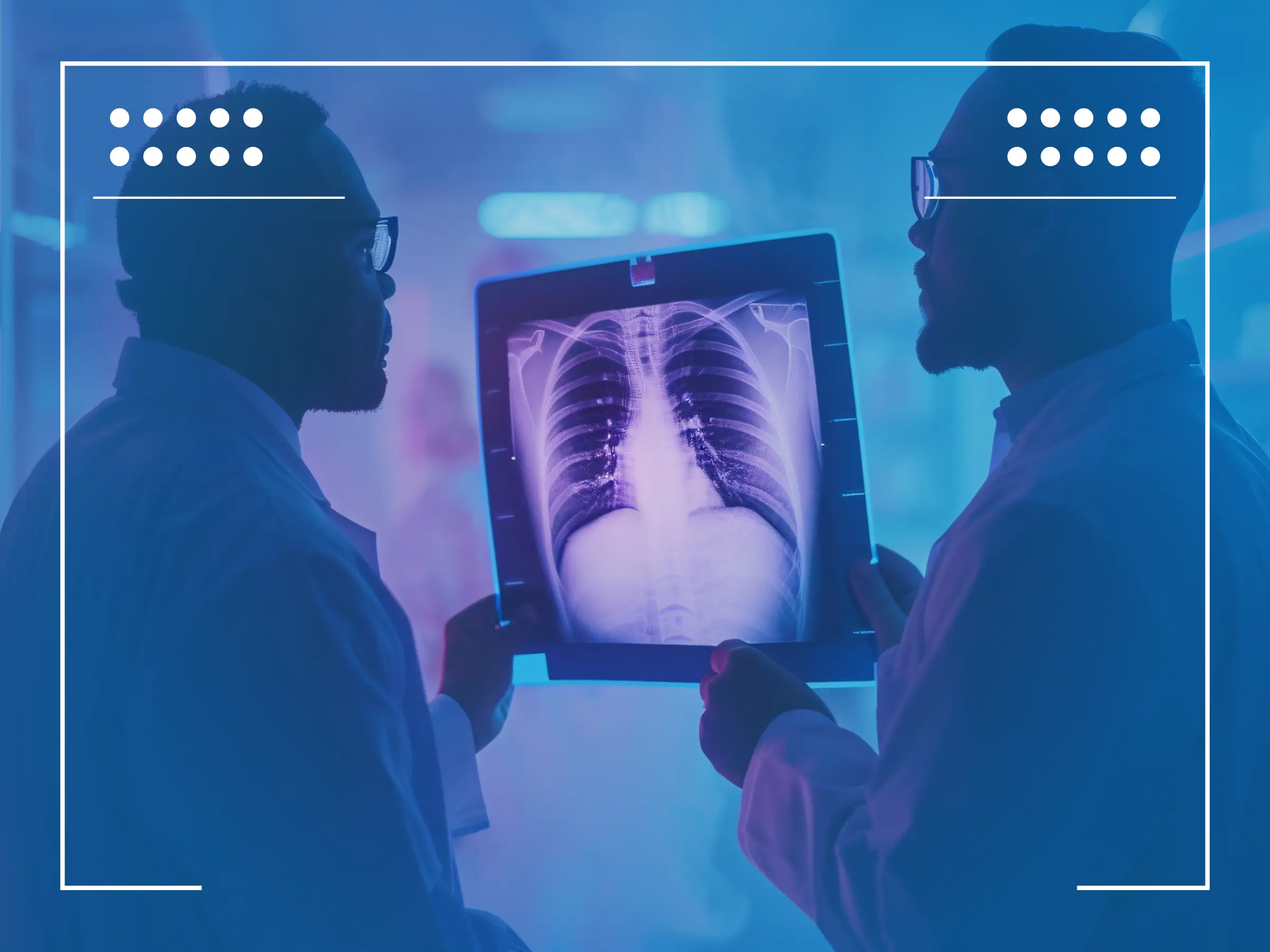
Chest X-rays may reveal an abnormal mass or shadow, but computed tomography (CT) scans provide far greater detail about tumor size, location, and involvement of nearby structures. Positron emission tomography (PET) scans are often used in conjunction with CT to detect metabolically active cancer cells and identify potential metastatic sites throughout the body.
A biopsy remains the definitive step in confirming NSCLC. Tissue samples may be obtained through bronchoscopy, CT-guided needle biopsy, or surgical procedures such as mediastinoscopy or video-assisted thoracoscopic surgery (VATS). Once tissue is secured, pathologists perform histological examination to identify the cancer subtype. Molecular testing and biomarker analysis — including next-generation sequencing (NGS) — are then conducted to detect actionable mutations, guide targeted therapy selection, and assess immunotherapy eligibility through PD-L1 expression testing.
Pulmonary function tests and blood panels may also be ordered to evaluate the patient’s overall health and determine their suitability for specific treatment approaches such as surgery or aggressive chemotherapy regimens.
Non-Small Cell Lung Cancer Treatment Options
Non-small cell lung cancer treatment options are determined by multiple factors, including disease stage, tumor histology, molecular profile, and the patient’s overall performance status. Treatment may involve a single modality or a combination of approaches delivered by a multidisciplinary oncology team.
Surgery is the preferred treatment for patients with early-stage (Stage I–II) NSCLC who are medically fit to undergo the procedure. The most common surgical approach is lobectomy, which involves removing the affected lobe of the lung. Minimally invasive techniques such as VATS have improved recovery times and reduced postoperative complications compared to open thoracotomy.
Radiation therapy, including stereotactic body radiation therapy (SBRT), is an effective option for patients who are not surgical candidates due to tumor location or health status. It can be used as a primary treatment or combined with chemotherapy (chemoradiation) for locally advanced disease.
Targeted therapy has transformed NSCLC management for patients whose tumors harbor specific driver mutations. Drugs such as osimertinib (for EGFR mutations) and alectinib (for ALK rearrangements) offer more precise cancer cell destruction with a generally more favorable side-effect profile compared to conventional chemotherapy. These agents work by blocking the molecular signals that drive tumor growth.
Immunotherapy, particularly immune checkpoint inhibitors such as pembrolizumab, has become a cornerstone of NSCLC treatment in eligible patients. These agents work by releasing the natural brakes on the immune system, allowing T-cells to recognize and attack cancer cells more effectively. They are used as monotherapy or in combination with chemotherapy depending on PD-L1 expression levels and other clinical factors.
Chemotherapy, while no longer the first-line option for many patients with targetable mutations, remains a standard of care for patients who are not eligible for targeted or immunotherapy approaches. It is also used as adjuvant therapy following surgery in certain higher-risk early-stage cases to reduce the risk of recurrence.
Frequently Asked Questions
Can non-small cell lung cancer occur in people who have never smoked?
Yes. While smoking is the leading risk factor, NSCLC — particularly adenocarcinoma — can develop in lifelong non-smokers. Risk factors in this population include radon exposure, secondhand smoke, air pollution, and inherited genetic mutations such as EGFR alterations. The WHO estimates that approximately 15% of lung cancer cases in men and 53% in women worldwide occur in non-smokers, underscoring that lung cancer is not exclusively a smoker’s disease.
Is NSCLC curable?
NSCLC can be cured when detected at an early stage, most commonly through surgical resection. The five-year survival rate for localized Stage I NSCLC can exceed 70–90%, depending on the subtype and treatment received. However, the majority of cases are diagnosed at advanced stages, where treatment is focused on disease control, symptom management, and prolonging survival rather than achieving a cure. Early detection through low-dose CT screening is recommended for high-risk individuals.
What is the role of genetic testing in NSCLC management?
Genetic or molecular testing identifies specific mutations — such as EGFR, ALK, ROS1, KRAS, and others — in the tumor tissue. This information is critical because it directly influences treatment selection. Patients with EGFR-mutated NSCLC, for example, respond well to EGFR inhibitors rather than standard chemotherapy. Comprehensive molecular profiling via next-generation sequencing is now recommended for most patients with advanced or metastatic NSCLC to ensure access to the most effective and personalized treatment strategies.