Transfusion
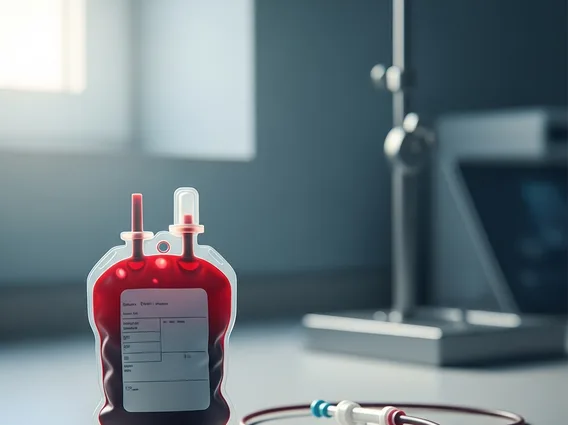
Transfusion is a vital medical procedure involving the transfer of blood or blood components from a donor to a recipient. This intervention is often life-saving, addressing various conditions that lead to blood loss or insufficient blood production.
Key Takeaways
- Transfusion is a medical procedure to transfer blood or its components, commonly known as a blood transfusion.
- It is essential for treating significant blood loss, anemia, and various blood disorders.
- The process involves careful donor screening, blood typing, cross-matching, and intravenous administration.
- There are several types of blood transfusions, including whole blood, red blood cell, platelet, and plasma transfusions.
- While generally safe, there are potential risks of blood transfusion, such as allergic reactions, fever, and, rarely, serious complications like acute hemolytic reactions.
What is Transfusion?
Transfusion refers to the medical procedure of transferring blood or blood products into a person’s circulation intravenously. While the term can apply to other fluids, in common clinical practice, it almost exclusively refers to a blood transfusion. This procedure is critical for patients who have lost a significant amount of blood due to trauma, surgery, or internal bleeding, as well as those with conditions that impair the body’s ability to produce healthy blood components. These conditions include severe anemia, certain cancers like leukemia, sickle cell disease, and various bleeding disorders.
The primary goal of a blood transfusion is to restore the blood’s capacity to carry oxygen, clot effectively, or maintain adequate blood volume. According to the World Health Organization (WHO), millions of blood transfusions are performed globally each year, highlighting their indispensable role in modern healthcare for both emergency and chronic care settings.
How Transfusions Work: Process and Types
The process of a blood transfusion is meticulously regulated to ensure patient safety. It begins with rigorous screening of blood donors for infectious diseases and other health risks. Once collected, the blood is tested and separated into its various components, if not used as whole blood. Before administration, the recipient’s blood is carefully typed and cross-matched with the donor blood to prevent adverse reactions. The transfusion itself involves administering the blood product through an intravenous (IV) line, typically over a period of one to four hours, depending on the volume and type of component.
There are several types of blood transfusions, each designed to address specific patient needs:
- Red Blood Cell Transfusion: The most common type, used to increase oxygen-carrying capacity in patients with anemia or significant blood loss.
- Platelet Transfusion: Administered to patients with low platelet counts or dysfunctional platelets, often due to chemotherapy, bone marrow disorders, or severe bleeding, to help with blood clotting.
- Plasma Transfusion: Plasma, the liquid portion of blood, contains proteins and clotting factors. Transfusions are given to replace clotting factors in patients with severe bleeding, liver disease, or certain immune deficiencies.
- Cryoprecipitate Transfusion: A component derived from plasma, rich in specific clotting factors like Factor VIII, fibrinogen, and von Willebrand factor, used for particular bleeding disorders.
Potential Risks and Complications of Transfusion
While generally safe and life-saving, there are potential risks of blood transfusion that medical professionals carefully monitor. Most reactions are mild and manageable, but some can be severe. Patient safety is paramount, with extensive testing and cross-matching procedures in place to minimize these risks.
Potential complications can include:
- Allergic Reactions: Ranging from mild (hives, itching) to severe (anaphylaxis), these occur when the recipient’s immune system reacts to proteins in the donor blood.
- Febrile Non-Hemolytic Transfusion Reaction (FNHTR): Characterized by fever and chills, often caused by the recipient’s antibodies reacting to white blood cells in the donor blood.
- Acute Hemolytic Reaction: A rare but serious complication where the recipient’s immune system attacks the donor red blood cells, usually due to ABO incompatibility. This can lead to kidney failure and other severe symptoms.
- Transfusion-Associated Circulatory Overload (TACO): Occurs when blood is transfused too quickly or in too large a volume, overwhelming the patient’s circulatory system, especially in those with heart conditions.
- Transfusion-Related Acute Lung Injury (TRALI): A rare but severe lung injury that can lead to acute respiratory distress, often caused by antibodies in the donor plasma reacting with the recipient’s lung cells.
- Delayed Reactions: Some reactions, such as delayed hemolytic reactions or transfusion-associated graft-versus-host disease, can occur days or weeks after the transfusion.
- Infectious Disease Transmission: Although extremely rare due to stringent screening, there is a minimal risk of transmitting infections like HIV, hepatitis B, or hepatitis C.
Medical staff closely monitor patients during and after a blood transfusion to promptly identify and manage any adverse reactions, ensuring the best possible outcomes.