Technetium Tc 99m Sulfur Colloid
Technetium Tc 99m Sulfur Colloid is a vital radiopharmaceutical agent utilized in nuclear medicine for various diagnostic imaging procedures. It plays a crucial role in visualizing organ function and detecting abnormalities within the body.
Key Takeaways
- Technetium Tc 99m Sulfur Colloid is a radiopharmaceutical used in diagnostic medical imaging.
- It works by being taken up by phagocytic cells, primarily in the liver, spleen, and bone marrow.
- The agent emits gamma rays, which are detected by a gamma camera to create images.
- Primary uses include liver/spleen imaging, lymphoscintigraphy, and gastric emptying studies.
- Its short half-life ensures minimal radiation exposure to the patient.
What is Technetium Tc 99m Sulfur Colloid?
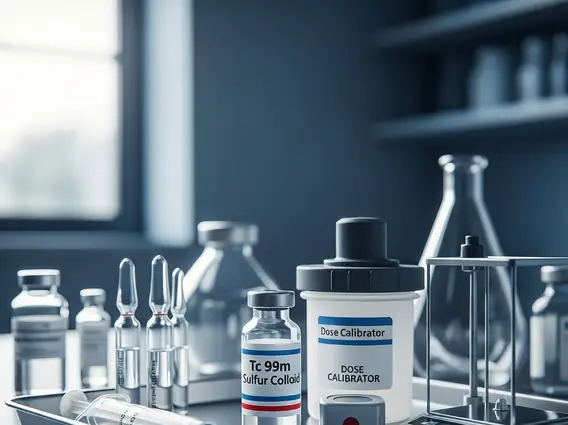
Technetium Tc 99m Sulfur Colloid is a radiopharmaceutical agent specifically designed for diagnostic imaging in nuclear medicine. It consists of small sulfur colloid particles labeled with Technetium-99m (Tc-99m), a radioactive isotope that emits gamma rays. This compound is administered intravenously and is used to visualize the reticuloendothelial system, which includes specialized phagocytic cells found predominantly in the liver, spleen, and bone marrow.
The preparation of Technetium Tc 99m Sulfur Colloid involves a chemical reaction that binds the radioactive Technetium-99m to the sulfur colloid particles. These particles are microscopic, allowing them to be recognized and engulfed by macrophages and other phagocytic cells in the body. The short half-life of Technetium-99m (approximately six hours) is ideal for diagnostic procedures, as it provides sufficient time for imaging while minimizing the patient’s radiation exposure after the study is complete.
How Does Technetium Tc 99m Sulfur Colloid Work?
The mechanism of action for Technetium Tc 99m Sulfur Colloid relies on the body’s natural physiological processes. Once injected intravenously, the sulfur colloid particles, labeled with Technetium-99m, are recognized as foreign by the reticuloendothelial system. This system, a part of the immune system, is responsible for clearing particles and cellular debris from the bloodstream. Macrophages, particularly Kupffer cells in the liver and similar cells in the spleen and bone marrow, actively phagocytize (engulf) these particles.
As the Technetium Tc 99m Sulfur Colloid accumulates in these organs, the Technetium-99m isotope emits gamma photons. These gamma rays penetrate the body and are detected by an external device called a gamma camera. The camera then processes these signals to create detailed images that reflect the distribution and concentration of the radiopharmaceutical within the targeted organs. The resulting images provide valuable information about the size, shape, and functional status of the liver, spleen, and other areas of interest, aiding in the diagnosis of various medical conditions.
Uses of Technetium Tc 99m Sulfur Colloid in Imaging
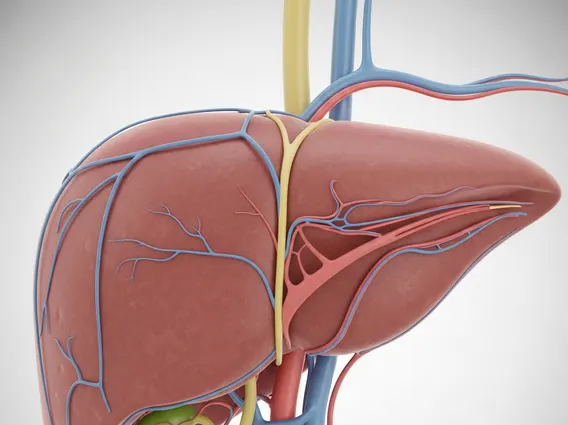
Technetium Tc 99m Sulfur Colloid imaging is a versatile tool in nuclear medicine, offering insights into the function and morphology of several organ systems. Its primary applications leverage its uptake by the reticuloendothelial system, making it particularly useful for assessing the liver and spleen. For instance, it can help in diagnosing liver cirrhosis, hepatitis, and detecting space-occupying lesions such as tumors or cysts. Similarly, it is used to evaluate splenic function, detect accessory spleens, or assess trauma.
Beyond liver and spleen studies, Technetium Tc 99m Sulfur Colloid uses extend to other significant diagnostic areas:
- Lymphoscintigraphy: This procedure is crucial for sentinel lymph node mapping, particularly in patients with breast cancer or melanoma. The colloid is injected near the tumor, and it drains into the first lymph nodes (sentinel nodes) that would receive lymphatic drainage from the tumor. Identifying and biopsying these nodes helps determine if cancer has spread, influencing treatment decisions. According to the American Cancer Society, sentinel lymph node biopsy is a standard procedure for many early-stage breast cancers and melanomas, significantly reducing the need for more extensive lymph node dissection.
- Gastric Emptying Studies: When mixed with a meal, Technetium Tc 99m Sulfur Colloid can track the rate at which food leaves the stomach. This helps diagnose conditions like gastroparesis, where stomach emptying is delayed.
- Bone Marrow Imaging: While less common now due to advances in other imaging modalities, it can be used to assess bone marrow distribution and function.
The ability of Technetium Tc 99m Sulfur Colloid to highlight specific physiological processes makes it an invaluable diagnostic agent, providing functional information that complements anatomical imaging techniques.