Subserosa
The subserosa is a vital anatomical layer found in various organs throughout the body, particularly those within the abdominal and pelvic cavities. It serves as a connective tissue bridge, providing structural support and facilitating the passage of essential vascular and neural networks.
Key Takeaways
- Subserosa is a layer of loose connective tissue located beneath the serosa (outermost membrane) of many visceral organs.
- It provides a flexible interface, allowing organs to move smoothly within body cavities.
- This layer is rich in blood vessels, nerves, and lymphatic vessels, which supply the organ walls.
- Adipose tissue is often abundant within the subserosa, offering insulation and cushioning.
- Its integrity is crucial for organ function and can be involved in the spread of certain diseases, such as cancer.
What is Subserosa?
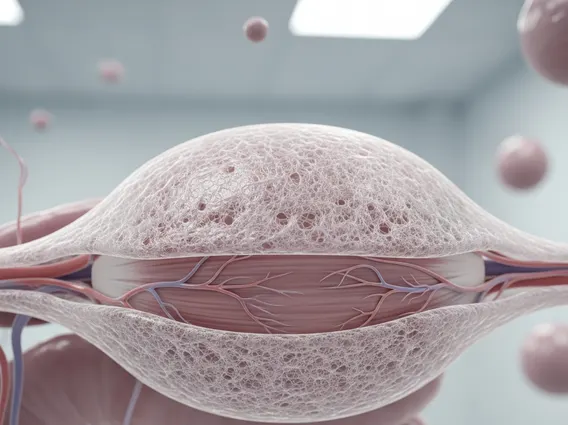
The medical definition of subserosa refers to a layer of loose connective tissue situated immediately deep to the serosa, which is the outermost membrane of several organs. This layer acts as an interface between the muscular wall of an organ and its protective outer covering. In organs like those of the gastrointestinal tract, the serosa is also known as the visceral peritoneum. The Subserosa is characterized by its pliable nature, which allows for a degree of movement between the organ’s muscular layers and its external surface, crucial for functions such as digestion and organ mobility within body cavities.
This anatomical arrangement is essential for maintaining organ integrity and function. The subserosa provides a supportive bed for the larger blood vessels, lymphatic vessels, and nerves that supply the organ wall before they penetrate deeper into the muscular and mucosal layers. Its composition allows for flexibility and resilience, protecting organs from mechanical stress and facilitating their dynamic roles within the body.
Anatomy, Histology, and Function of the Subserosa Layer
The anatomy and histology of subserosa reveal it as a layer primarily composed of loose areolar connective tissue. This tissue type is characterized by a sparse arrangement of collagen and elastic fibers, abundant ground substance, and various cell types, including fibroblasts, macrophages, and mast cells. A significant feature of the subserosa in many locations is the presence of adipose tissue (fat), which can vary in thickness depending on the organ and individual. This adipose tissue contributes to insulation, energy storage, and cushioning for the underlying organ.
The primary Subserosa tissue function and location are intrinsically linked. Located beneath the serosa of organs such as the stomach, intestines, uterus, and bladder, the subserosa serves several critical roles:
- Vascular and Neural Conduit: It acts as a pathway for the major blood vessels, lymphatic vessels, and nerves that supply the organ. These structures branch within the subserosa before penetrating the deeper muscular and mucosal layers.
- Flexibility and Mobility: The loose connective tissue allows for the smooth gliding of organs against adjacent structures and accommodates changes in organ size and shape (e.g., stomach distension, uterine expansion during pregnancy).
- Support and Cushioning: The adipose tissue within the subserosa provides physical cushioning and protection against external forces, while the connective tissue offers structural support to the organ wall.
- Immune Surveillance: Being a connective tissue layer, it contains immune cells that contribute to local defense mechanisms against pathogens.
Clinically, the subserosa plays a significant role in disease progression, particularly in oncology. For instance, in colorectal cancer, the depth of tumor invasion into or through the subserosa is a critical factor in determining the cancer’s stage (T-stage) and prognosis. According to the World Health Organization (WHO), accurate staging, which often involves assessing subserosal invasion, is vital for guiding treatment decisions and predicting outcomes for millions of cancer patients globally each year.