Stage I Kidney Cancer
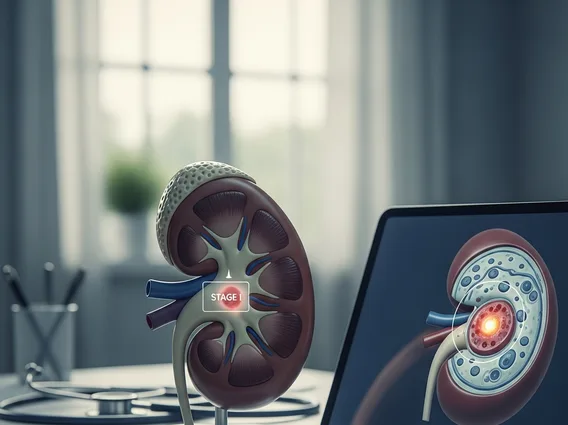
Stage I Kidney Cancer refers to the earliest stage of kidney cancer, where the tumor is relatively small and confined to the kidney. Early detection is crucial for successful treatment and favorable outcomes, often leading to a high chance of recovery.
Key Takeaways
- Stage I kidney cancer is an early-stage malignancy, characterized by a tumor typically less than 7 centimeters and fully contained within the kidney.
- Symptoms are often subtle or absent, with many cases discovered incidentally during imaging for other conditions.
- Diagnosis relies on imaging tests such as CT scans or MRIs, sometimes followed by a biopsy.
- Treatment primarily involves surgical removal of the tumor or the affected part of the kidney, offering excellent prognosis for most patients.
- Regular follow-up is essential after treatment to monitor for recurrence and overall health.
What is Stage I Kidney Cancer?
Stage I Kidney Cancer is defined as a tumor that is 7 centimeters (about 2.75 inches) or smaller and is entirely confined within the kidney, without spreading to nearby lymph nodes or distant organs. This early classification indicates that the cancer is localized, making it highly treatable. Kidney cancer, also known as renal cell carcinoma (RCC), is among the ten most common cancers in both men and women. According to the American Cancer Society, kidney cancer accounts for about 4% of all adult cancers, with a significant portion diagnosed at these early, localized stages, which greatly improves the outlook for patients.
Understanding the staging of kidney cancer is vital for determining the most appropriate course of action. Stage I represents the most favorable stage, as the cancer has not invaded surrounding tissues or metastasized. Factors such as tumor size and location within the kidney are key determinants in this staging, guiding oncologists and urologists in developing personalized treatment plans.
Symptoms and Diagnosis of Stage I Kidney Cancer
The challenge with stage i kidney cancer symptoms is that they are often minimal or entirely absent in the early stages. Many Stage I kidney cancers are discovered incidentally when a patient undergoes imaging tests, such as an ultrasound, CT scan, or MRI, for an unrelated condition. When symptoms do occur, they can be subtle and non-specific, making early self-diagnosis difficult. Potential symptoms, though rare in Stage I, might include:
- Blood in the urine (hematuria), which may be visible or microscopic.
- Persistent pain in the side or back, just below the ribs.
- A lump or mass in the abdomen or side.
- Unexplained fatigue or weight loss.
Diagnosis typically begins with imaging studies. A computed tomography (CT) scan or magnetic resonance imaging (MRI) of the abdomen and pelvis are the most common and effective methods to identify kidney tumors and assess their size and location. In some cases, a biopsy may be performed to confirm the diagnosis and determine the specific type of kidney cancer, although for small, localized tumors, surgery is often performed without a prior biopsy if imaging is highly suggestive of cancer.
Treatment Options and Prognosis for Stage I Kidney Cancer
The primary treatment for stage 1 kidney cancer is surgical removal of the tumor. The choice of surgical procedure depends on the tumor’s size, location, and the patient’s overall health. The two main surgical approaches are:
| Treatment Option | Description | When Used |
|---|---|---|
| Partial Nephrectomy | Surgical removal of only the cancerous part of the kidney, preserving the healthy kidney tissue. | Preferred for Stage I tumors to maintain kidney function, especially if the other kidney is compromised. |
| Radical Nephrectomy | Surgical removal of the entire kidney, along with surrounding fatty tissue and sometimes the adrenal gland. | Considered if the tumor is large, centrally located, or if partial nephrectomy is not feasible. |
Minimally invasive techniques, such as laparoscopic or robotic-assisted surgery, are often used for both partial and radical nephrectomies, leading to smaller incisions, less pain, and quicker recovery times. For select patients who are not candidates for surgery due to other health issues, alternative local therapies like radiofrequency ablation (RFA) or cryoablation may be considered. These procedures destroy the tumor using heat or cold, respectively, without requiring major surgery.
The stage 1 kidney cancer prognosis is generally excellent due to the localized nature of the disease. For patients with localized kidney cancer, which includes Stage I, the 5-year survival rate is over 90%, according to data from the National Cancer Institute. This high survival rate underscores the importance of early detection and effective treatment. After treatment, patients typically undergo regular follow-up appointments, including physical exams and imaging scans, to monitor for any signs of recurrence or new tumor development. While the prognosis is favorable, ongoing surveillance is crucial for long-term health management.